Sacred Art
Paintings on wood
Small sizes
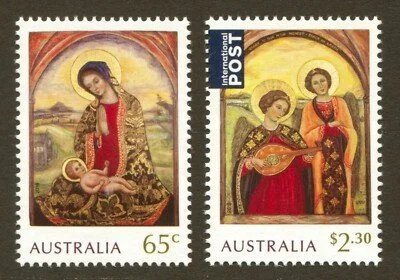
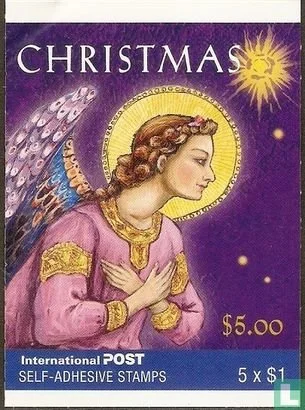
Ursula’s paintings were selected for representation on the Australian Christmas stamp for 2005 and 2018.
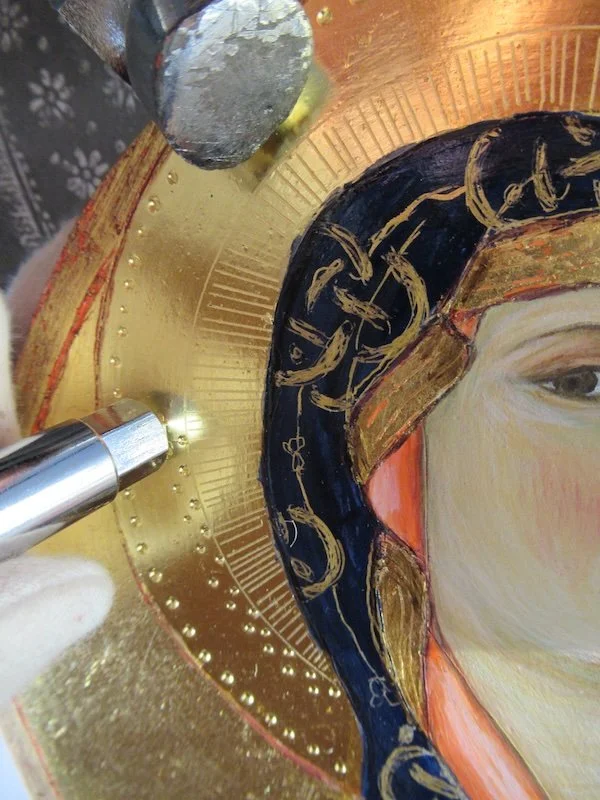
These works of sacred art are hand-painted originals using the age-old method of egg tempera on wood panel. In this traditonal medium we make our own paint using colour powder pigments with egg yolk as a binder. The white ground beneath the painting is produced by mixing warm rabbit-skin glue with gesso (gypsum - Calcium Carbonate).
The late-fourteenth century masters-apprentice Cennino Cennini, in his Il Libro delle’Arte, records the painting and gilding practices used in the bottege or art workshops of Florence and beyond. Sacred images of the Madonna and Child, Saints and Angels were the main subjects for painting and found their focus for devotion and meditation in churches, chapels, monasteries and homes. With their icongraphic origins in the Holy Land and Europe, these contemporary panel-paintings revive and celebrate a time-honoured tradition of devotional art.
By incorporating fields of 23 karat gold leaf and decorative gilding methods with traditional pigment colours, these luminous gems convey an art form that embraces ideas of ethereal and transcendental beauty.
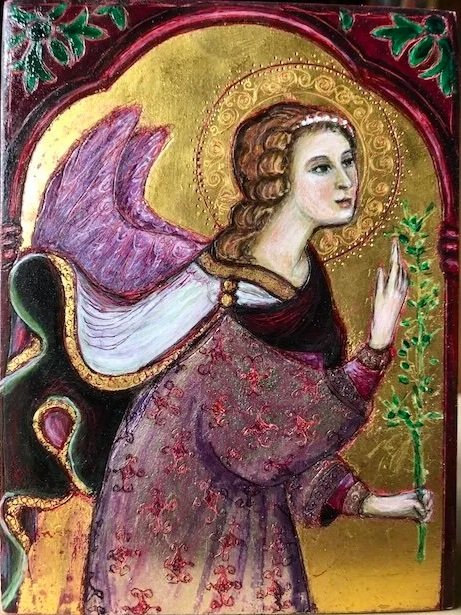
Angel of the Annunciation: On aged Cypress wood, relief pastiglia and tooled gold and silver leaf. Side framing with embossed silver metal foil. (Inspired by Bartolo di Fredi, c.1388, Siena) 13cm x 10 cm x 4 cm.
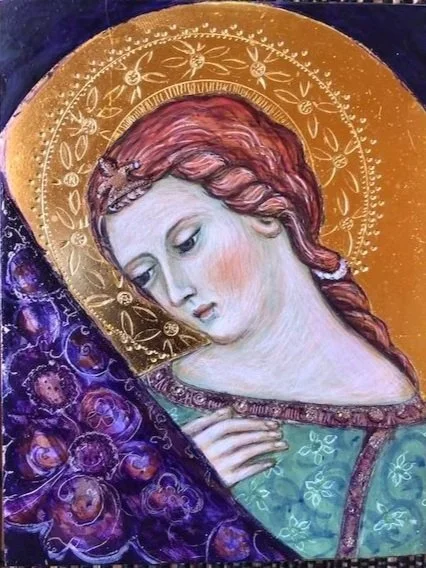
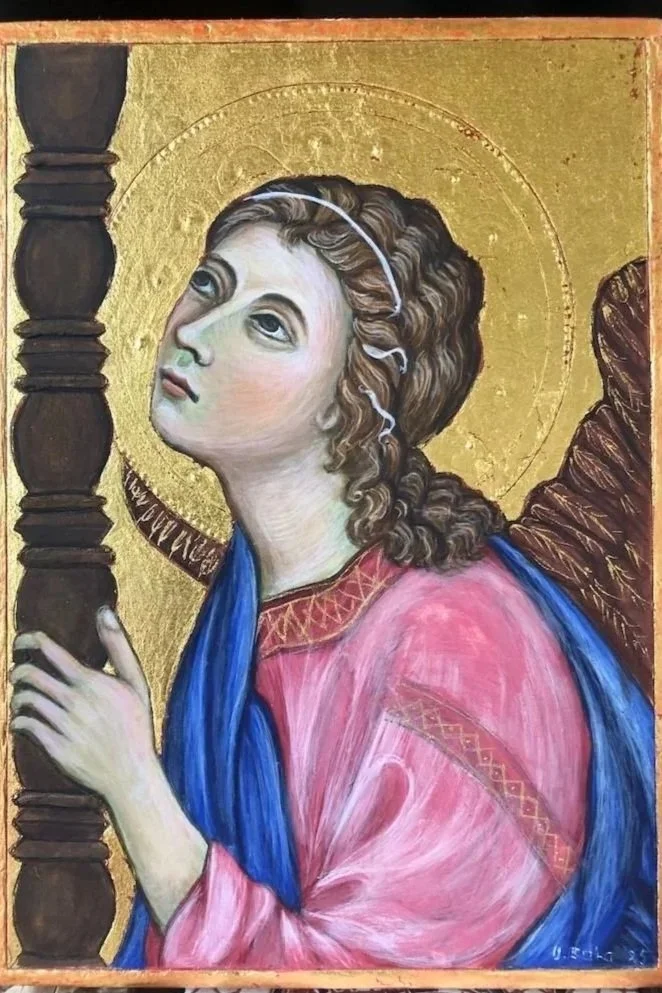
Angel in Adoration: On aged Cedar wood, 23 Karat gold leaf with punchwork, silver leaf with sgraffito decoration. (Inspired by Luca Di Tomme, c1390, Florence) 14cm x 11cm x 3cm.
Adoring Angel: Egg tempera painting with 23 Karat gold leaf with pastiglia & sgraffito decoration, on aged Cypress wood, (Inspired by Duccio, 1285). 20.5 x 14.5 x 2.5cm.
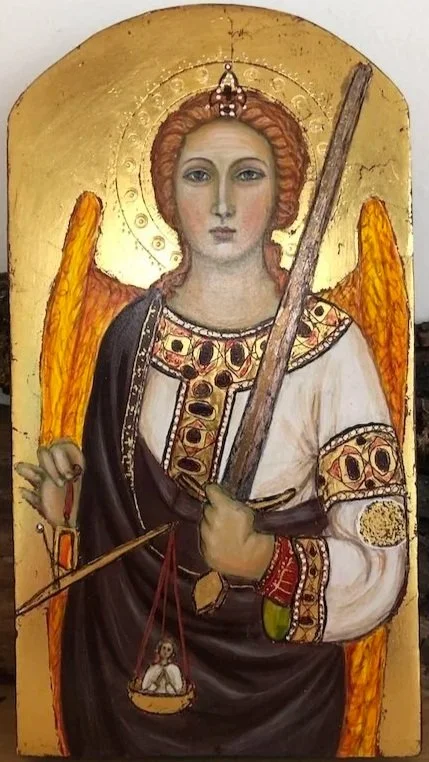
Archangel Michael: On aged Cypress wood with gold leaf punchwork and sgraffito decoration. (Inspired by Taddeo Gaddi, c.1360, Florence) 19cm x 10cm x 2cm.
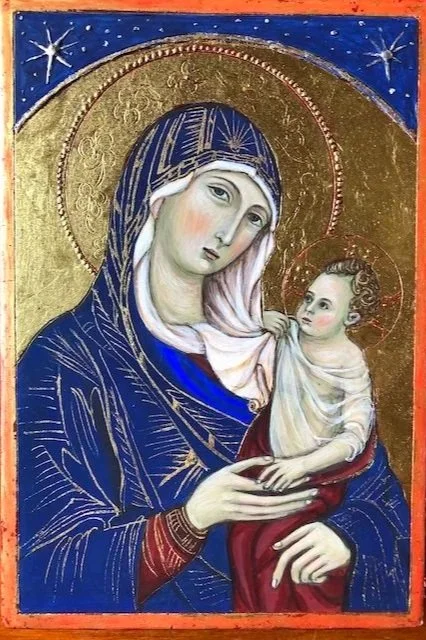
Madonna and Child with a starry sky: On aged Cypress wood with raised pastiglia and gold striations. (Inspired by Duccio di Buoninsegna, c1300, Siena). 22cm x 15cm x 2cm.
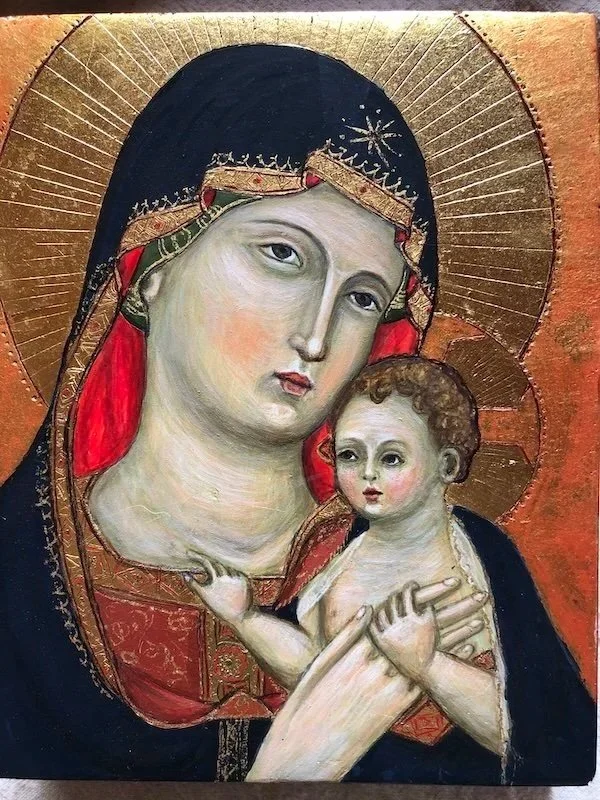
Mary and the Christ Child: On aged Cedar wood, with engraved gesso and mordant gilding. (Inspired by Pietro di Niccolo da Orvieto, c.1470, Fitzwilliam Museum). 17cm x 14cm x 3cm.
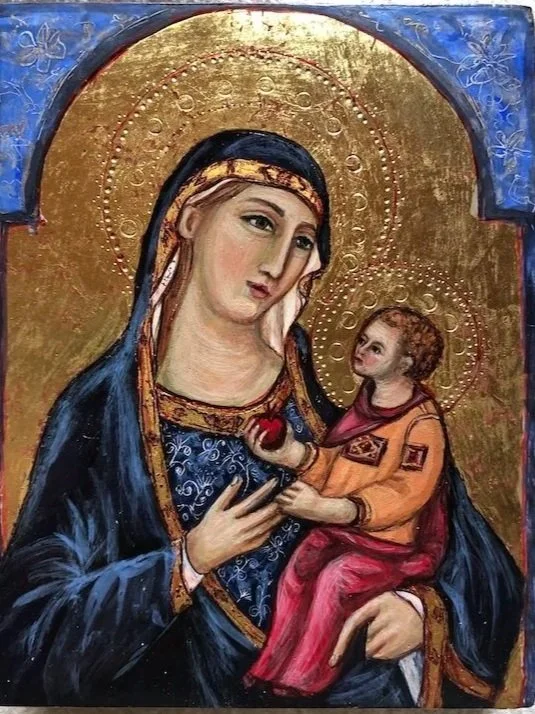
Madonna and Child with Pomegranate. On aged Cypress wood with tooled water gilding. (Inspired by Meo di Guido da Siena, c.1360). 14cm x 11cm x 2.75cm.
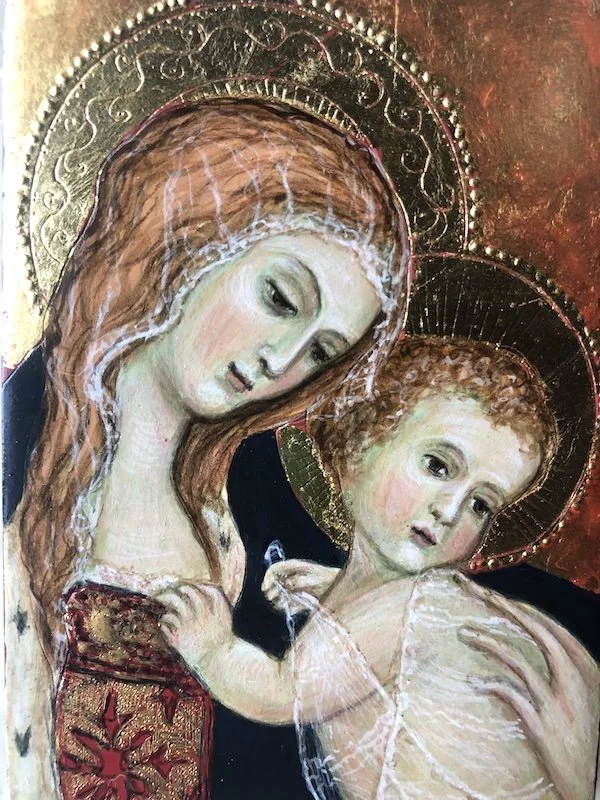
Madonna and Child with White Veils: On aged Cypress wood. Pastiglia and engraved gesso decoration. (Inspired by Pisanello, c.1420) 11cm x 8cm x 2cm.
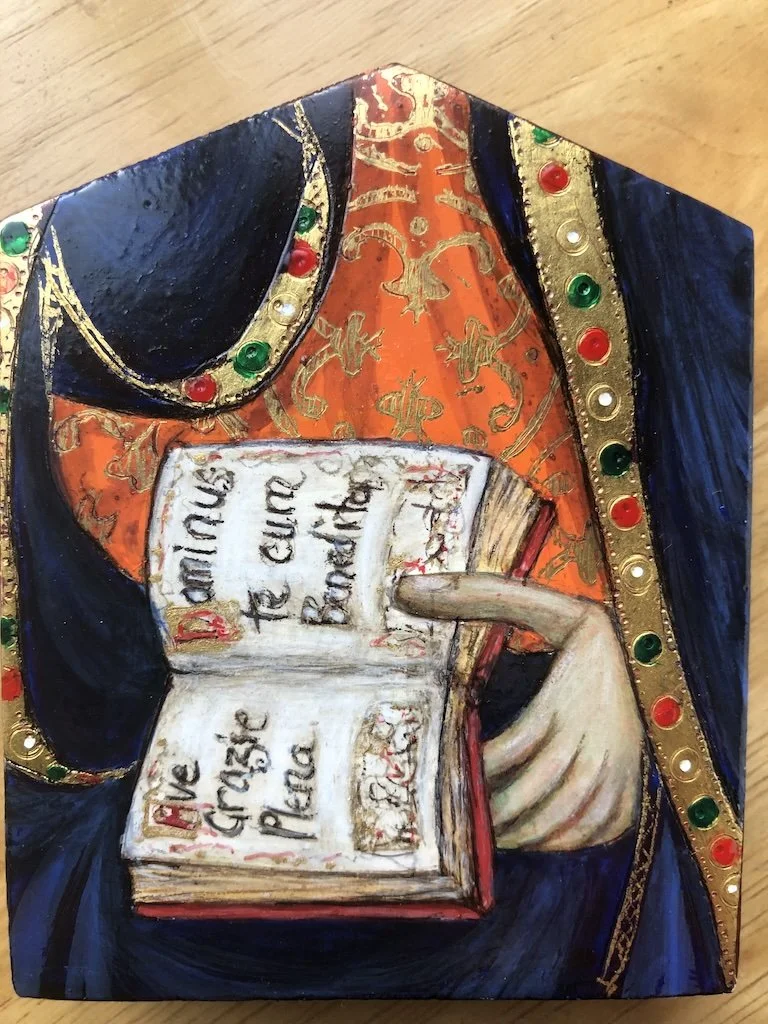
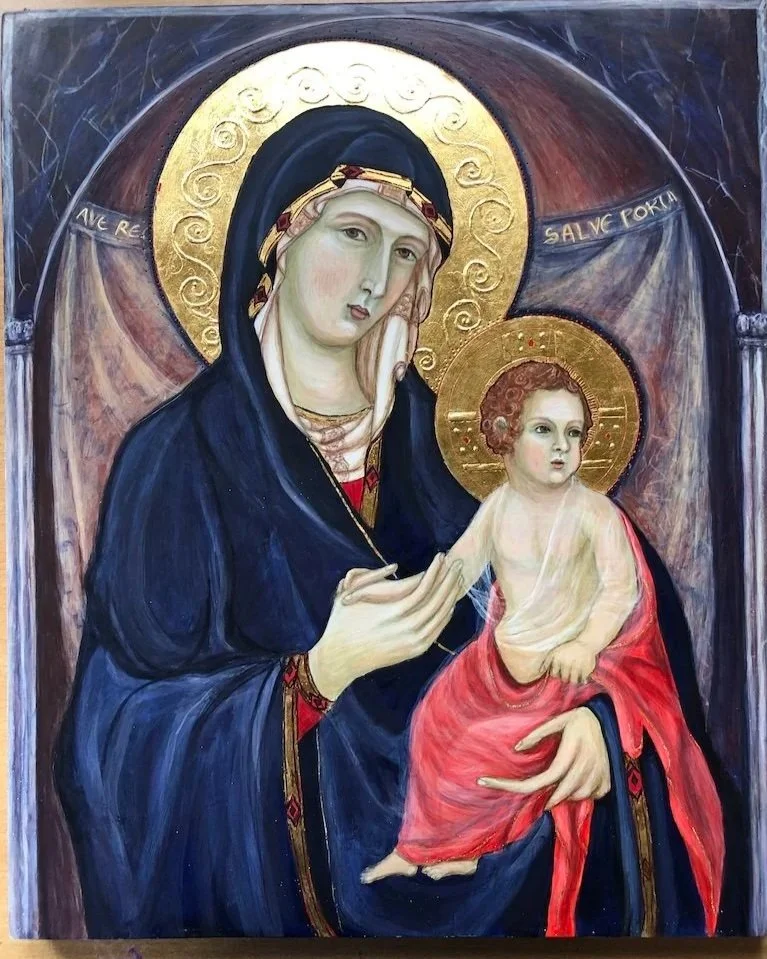
Ave Grazie Plena ('Hail full of Grace') - Madonna's Prayerbook. Egg tempera with tooled 23 Karat gold leaf on aged Cypress wood. 0.50 gm 9cm x 7.5 cm x 1.5 cm.
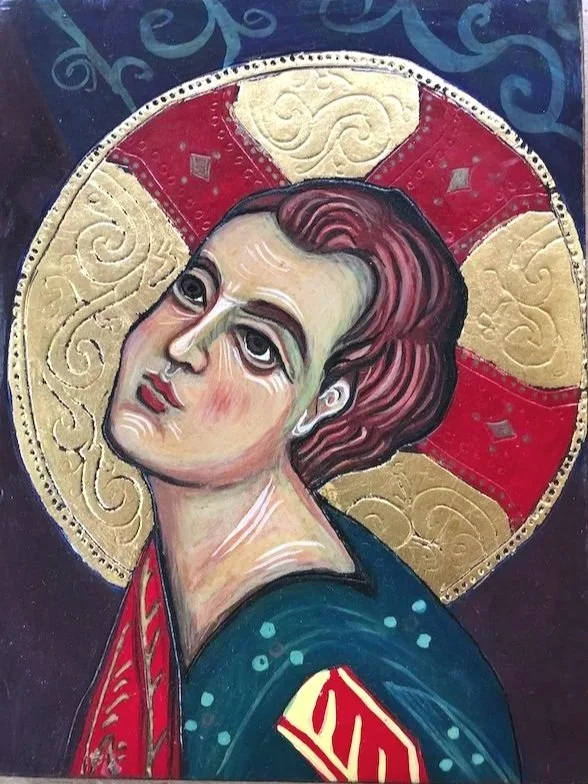
Christ Child - Redeemer: On pine wood, 23 Karat gold leaf with sgraffito relief decoration. (Inspired by a detail from a Cypriot prototype). 19 x 15 x 1.5cm.
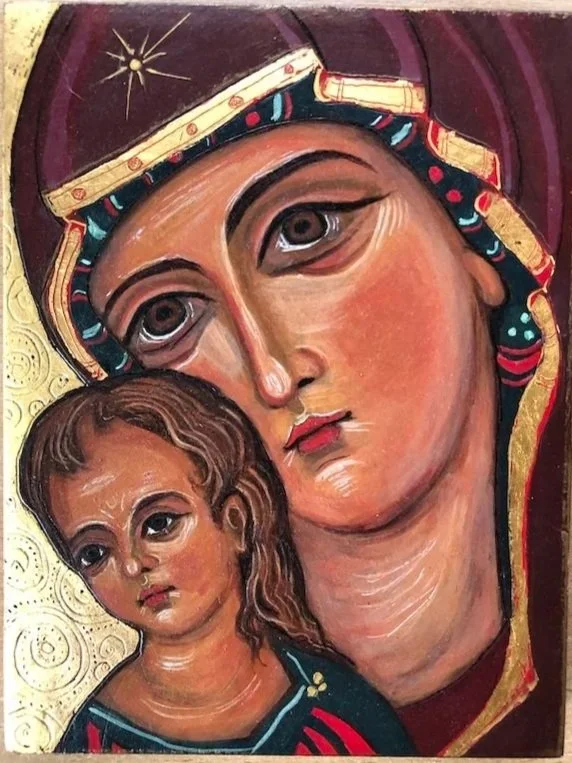
Virgin and Child: On pine wood, 23 Karat gold leaf with sgraffito relief decoration. (Inspired by a detail from a Cypriot prototype). 19 x 15 x 1.5cm.
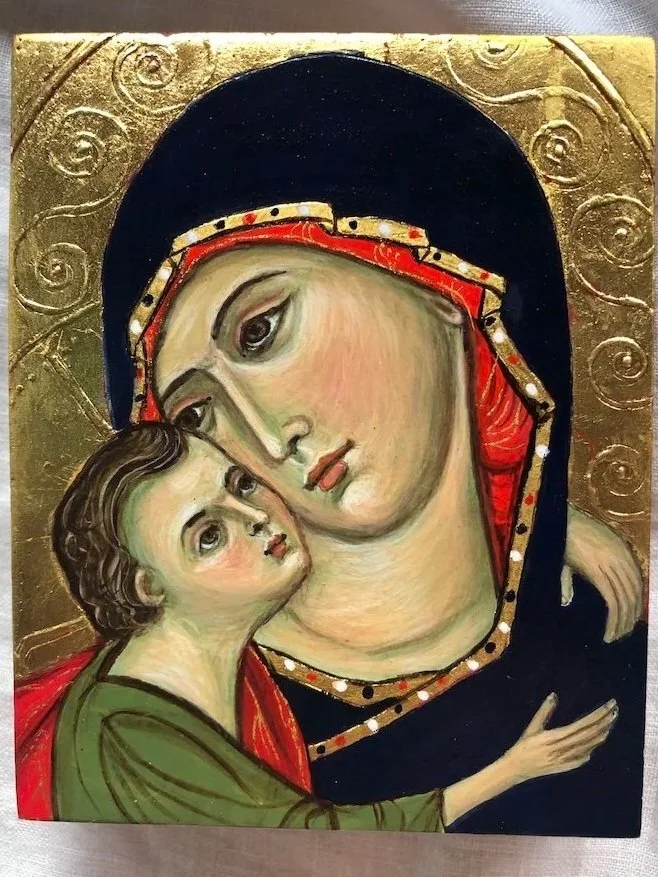
Madonna and Child of Lovingkindness. (2024) (Close-up). Egg tempera painting on aged Cedar wood, with engraved gesso, and raised pastiglia under 23 karat gold leaf. (Inspired by Madonna and Child, Rimini, c.1320). 12cm x 9.5 cm x 3.5cm. Stands alone.
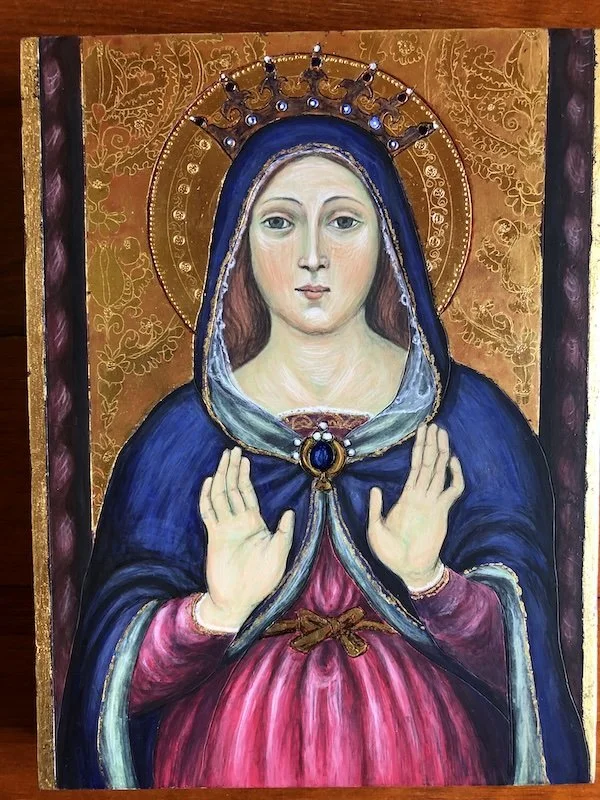
Madonna della Grazie '(Madonna of Grace') Inspired by the miracle-working pillar fresco in the Cathedral of St Laurence, Perugia, 16th c. SOLD Available for commission.
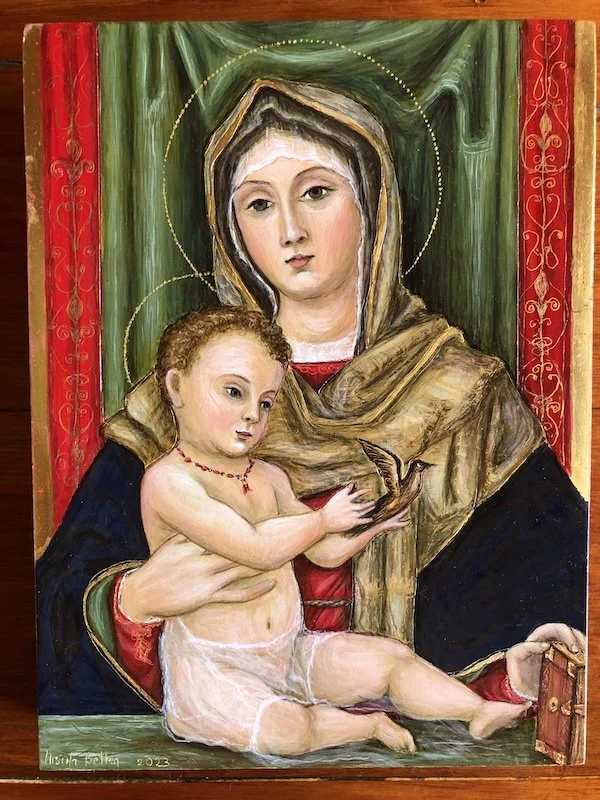
Madonna and Child with a Goldfinch. (2023). SOLD. Available for commission
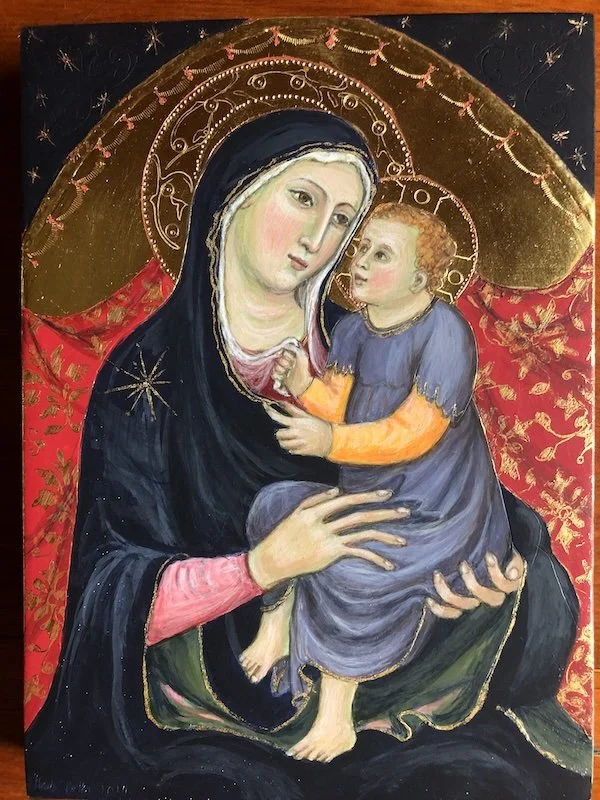
Madonna and Child Enthroned with a Red Cloth of Honour (2024) SOLD Available for commission
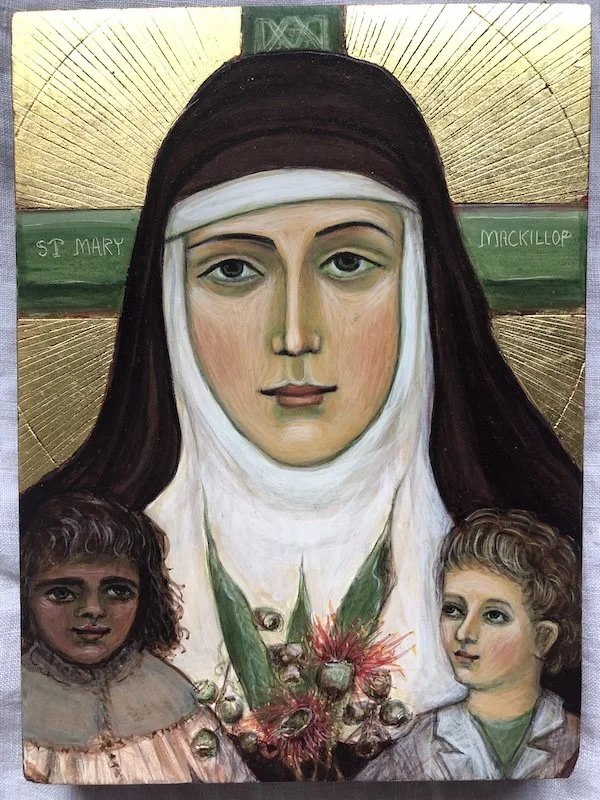
Mary of the Cross MacKillop. (2026) Egg Tempera painting with tooled 23 karat gold leaf on aged pine wood. Inspired by St Mary MacKillop, the compassionate and caring educator of children. Size: 16 x 14 × 2cm.
Paintings on wood
Medium sizes
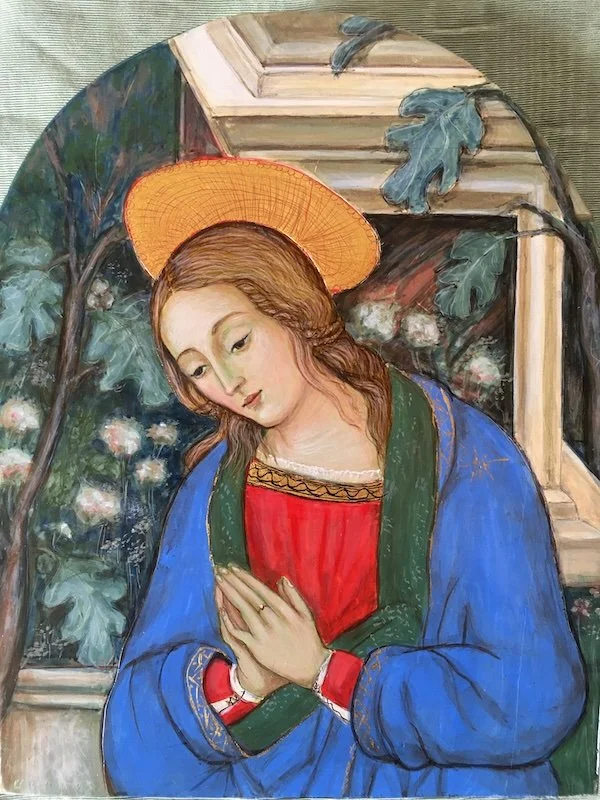
Madonna in the Garden: On aged Pine wood. (Inspired by Pinturicchio, 15thc., Spello). 23cm x 18cm x 2cm.
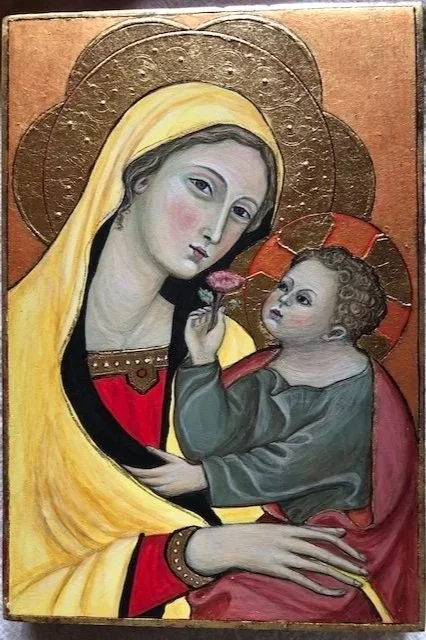
Madonna and Child with a Rose: On aged Cypress, with raised pastiglia decoration. (Inspired by Bartolo di Fredi, c.1388, San Gimignano.) 22cm x 15cm x 2cm
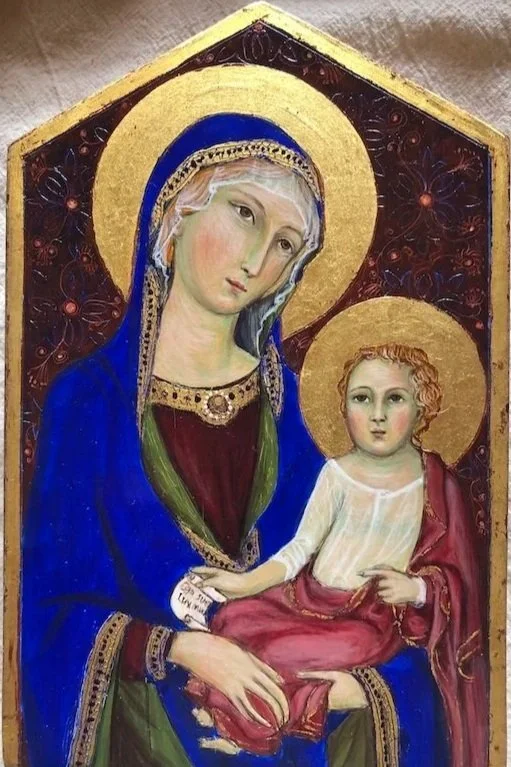
Madonna and Child: "I am the light of the world." On aged Pine wood. Decorative sgraffito in gesso, paint and gold leaf. (Inspired by Simone Martini, c.1323, Orvieto). 20cm x 13cm x 3cm.
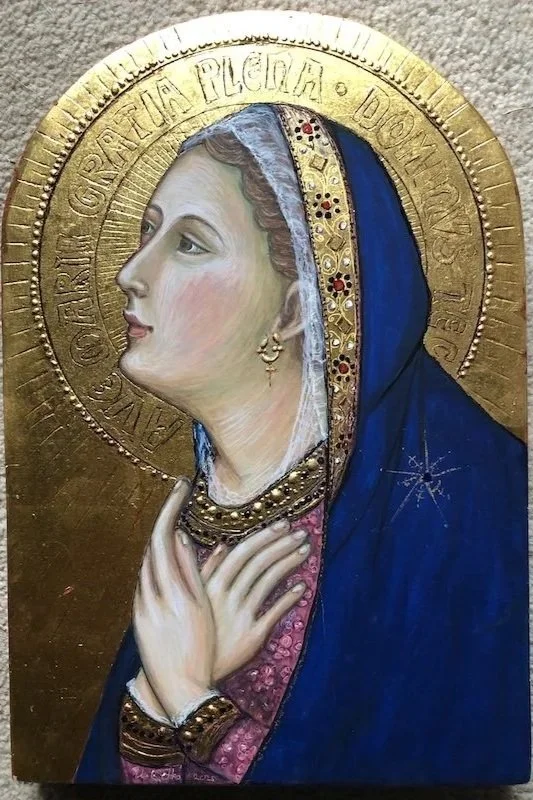
Madonna in Adoration: On aged Cypress wood, with sgraffito and pastiglio raised decoration. (Inspired by Ambrogio Lorenzetti, c1320, Siena). 24.5cm x 17cm x 2cm. 'Ave Gratia Plena. Dominus Tecum' (Hail Full of Grace. The Lord is with You)
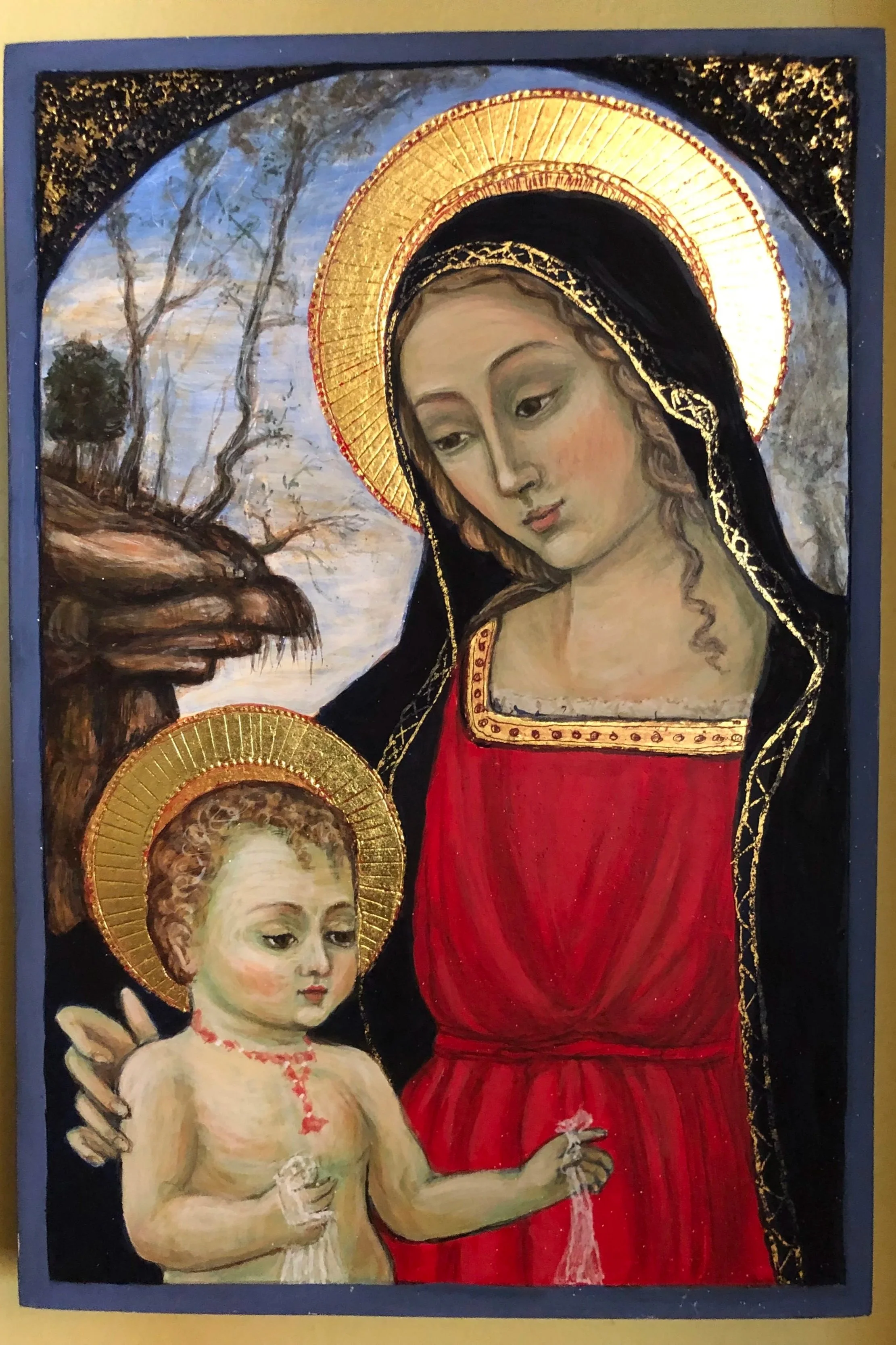
Madonna and Child in the Forest: On aged Cypress wood with pastiglia decoration and gold striations. (Inspired by Bartolomeo Montaga, c.1490, Brera). 22cm x 15cm x 2cm.
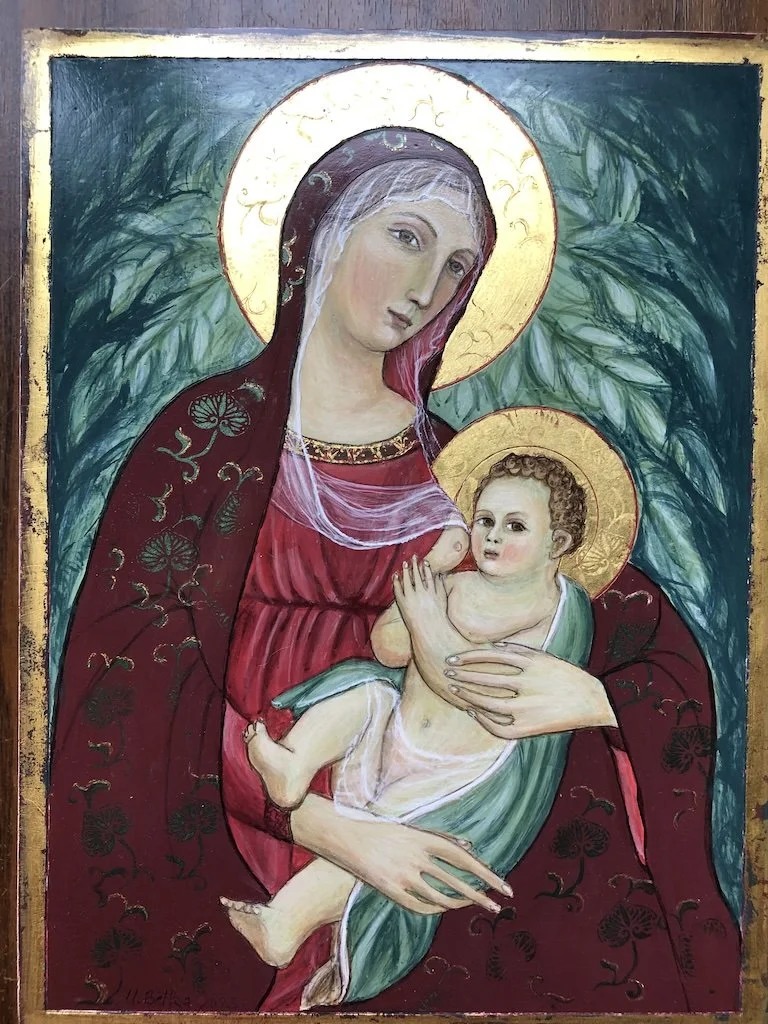
Madonna of the Earth: On aged thick Cedar wood, 23 Karat gold leaf with Japanese stamp decoration. 25 x 19 x 3cm.
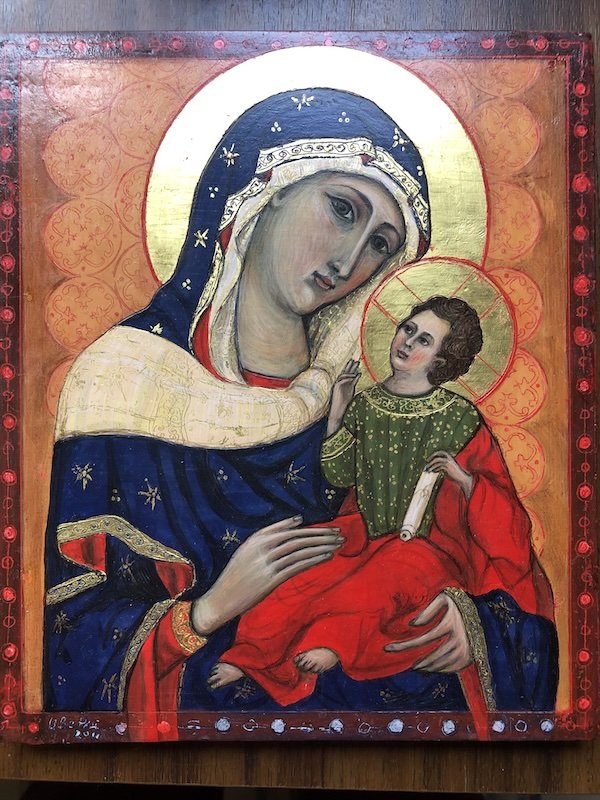
Madonna and Child: On four-ply wood, 23 Karat gold leaf with sgraffito and gold assist decoration. 25 x 21 x 1cm.
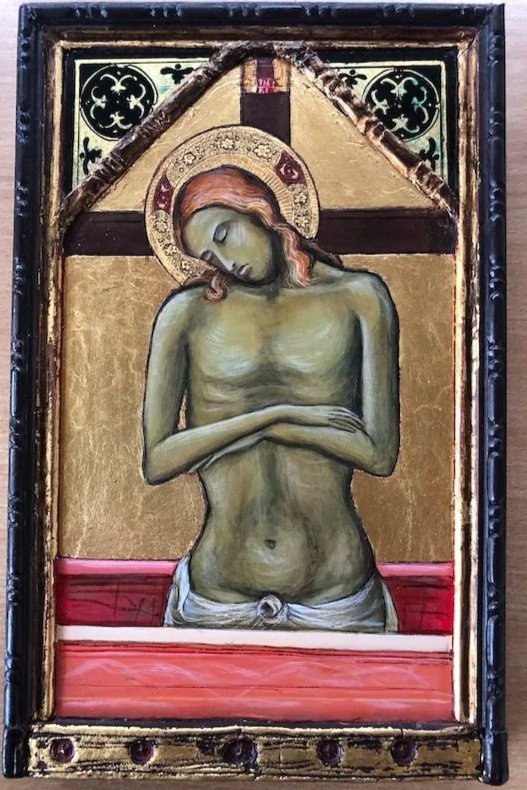
Man of Sorrows: On Pine wood, 23 Karat gold leaf with Pastiglia and verre eglomise as a symbolised frame. (Inspired by a 14th century. Italian prototype) 28 x 18 x 3cm includes frame.
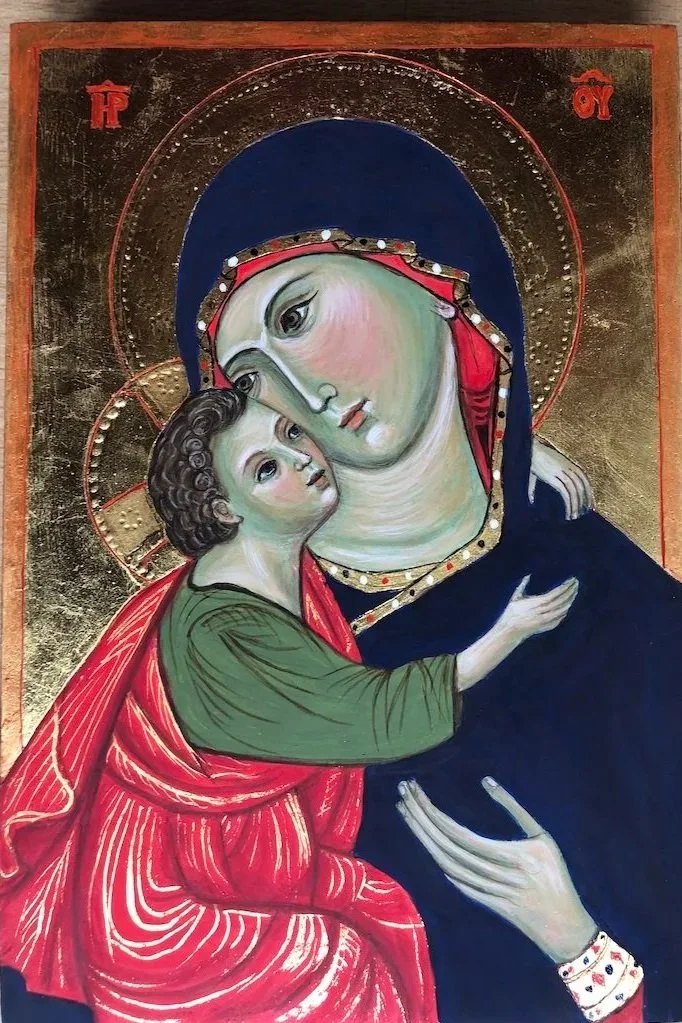
Madonna and Child Lovingkindness: On aged Cypress wood, 23 Karat gold leaf with Pastiglia decoration. (Inspired by Rimini artist, 1320.) 21.5 x 14.5 x 1.5cm.
Paintings on wood
Larger sizes
Sacred images on large wood panels depicting the Madonna and Child, the Angels and the Saints proliferated in Europe from the thirteenth century. Most of these resplendent works - wrought with rich bright colour and light-reflective gold leaf, can now be viewed in galleries and museums worldwide.
Originally though large panel paintings adorned an altar in a church, chapel or shrine; and so, came to be known as ‘altarpieces’. In the Eastern Orthodox tradition, such sacred images are referred to as Icons and are venerated in the context of the Iconostasis - a structure that conceals the holy altar in churches. Smaller paintingsinstead, are found in ‘prayer corners’ of the home or small private family chapels.
We are witnessing a revival of deep curiosity in hand-made sacred paintings on wood. And while the imagery speaks of the religious devotion and commitment of peoples over the ages, the expression of certain themes such as loving kindness, compassion, and spiritual vision are more universal and timeless.
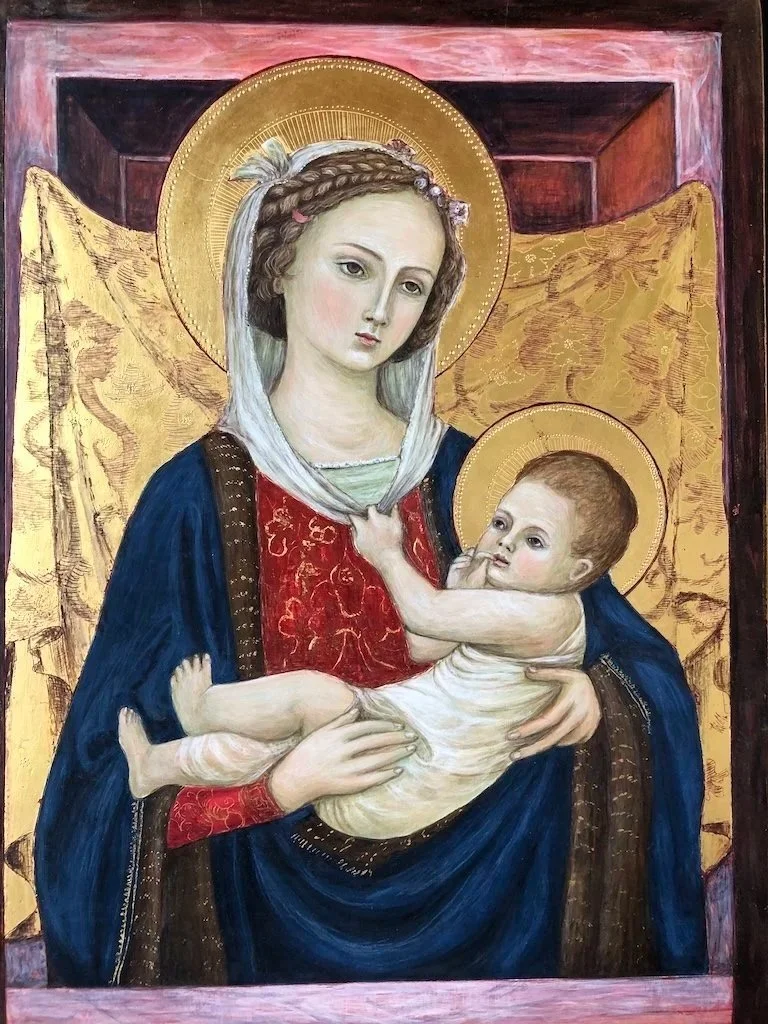
Madonna and Child with a Golden Cloth of Honour (2024): On NZ Kauri wood with egg tempera painting and 23 Karat gold leaf with punchwork and sgraffito decoration. (Inspired by Filipp Lippi c.1450). 40.5 x 29.5 x 1.5cm.
Madonna with Christ Child in a red cape (2026): On aged Cypress wood with egg tempera painting, with 23 karat gold leaf and pastiglia decoration. (Inspired by Simone Martini, 1305). 41 x 234 x 1.5cm.
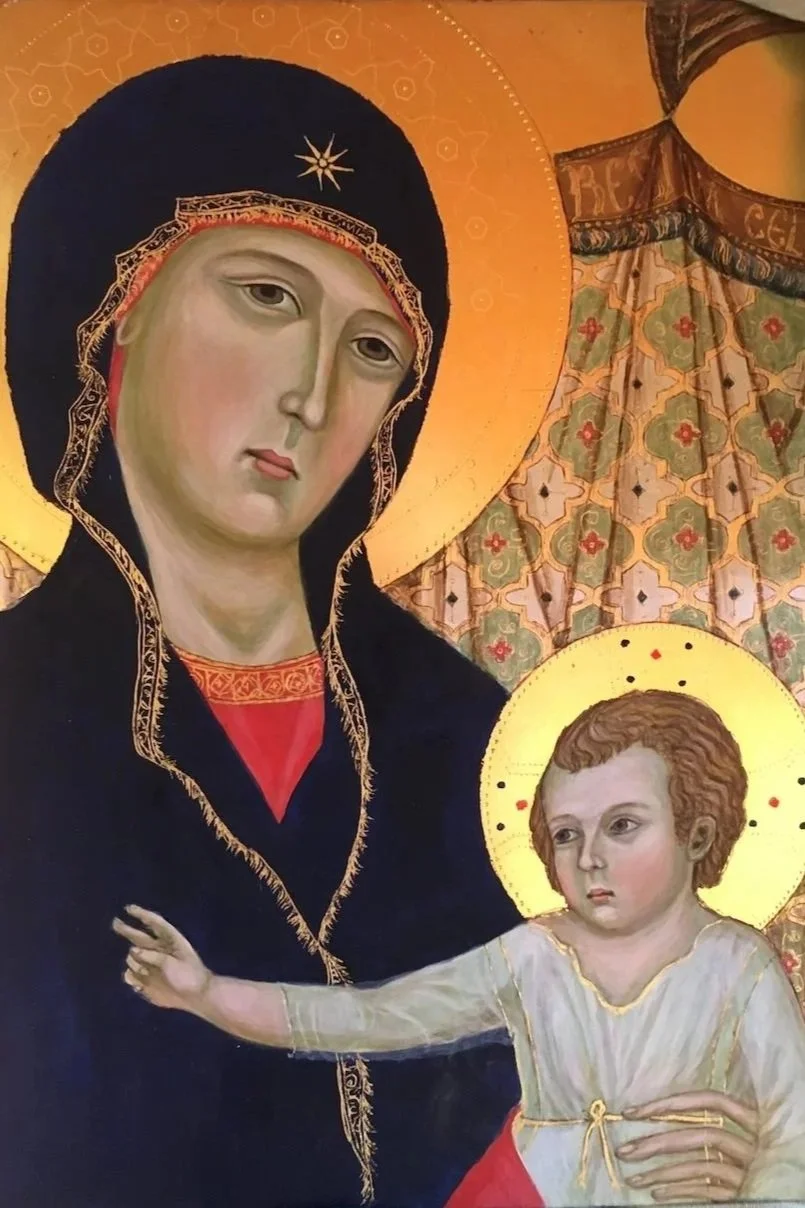
Madonna and Child Enthroned (2020): After Duccio’s Rucellai Madonna. Aged Cypress wood. (wood frame). Complex sgraffito and punchwork on gold leaf with mordant gilding. (42 x 30 x 1.5cm)
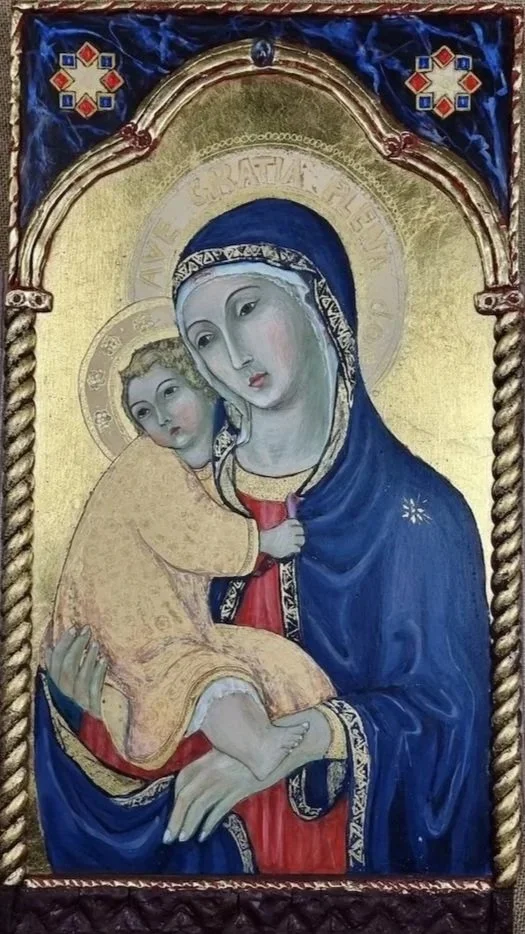
Madonna and Child (2014): 23 Karat gold leaf with raised pastiglia and barley-sugar wood framing feature, on aged Western red Cedar. (Inspired by Sano di Pietro). 52 x 29 x 3cm. SOLD. Available for commission
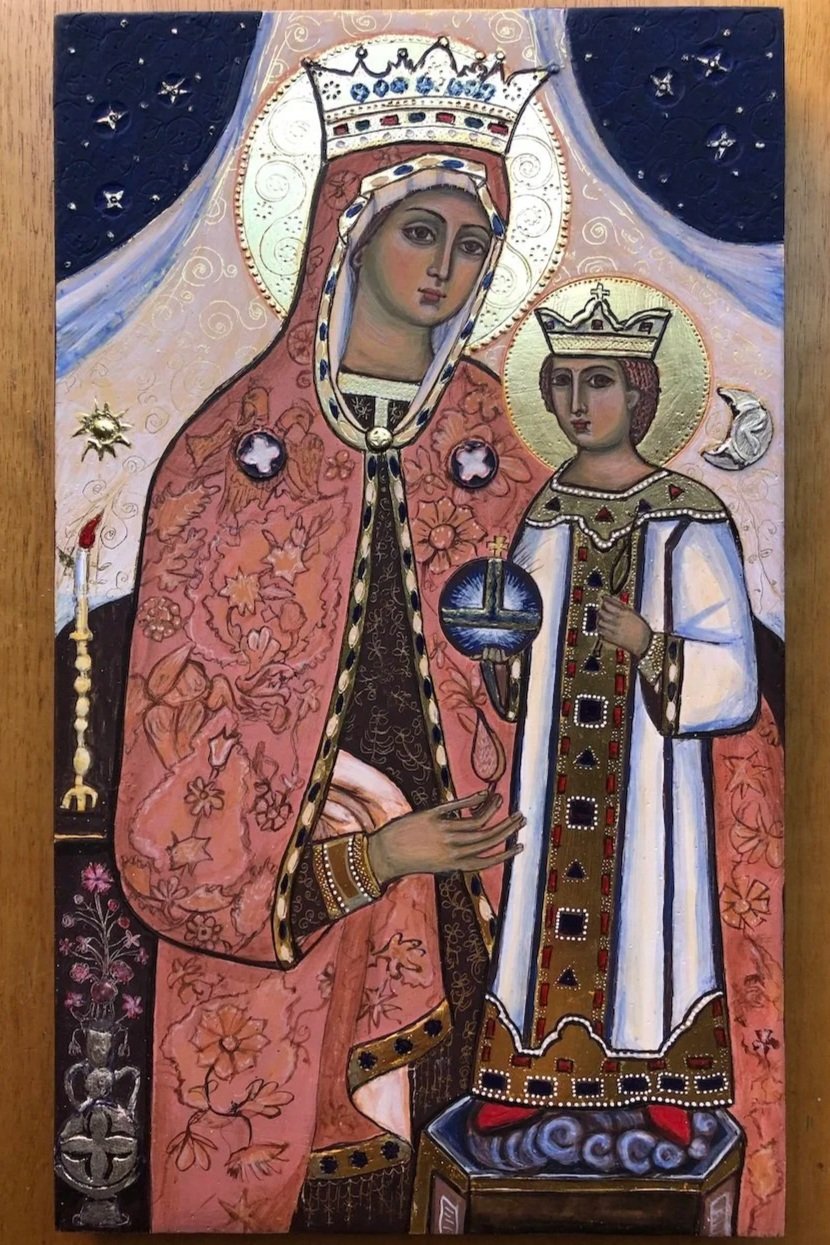
The Unwithering Rose (2025): Egg tempera painting on aged Cypress wood. 23-Karat gold leaf embellished with raised pastiglia, sgraffito and inks. Inspired by a Greek prototype, 17th c.). 32 x 19 x 2cm.
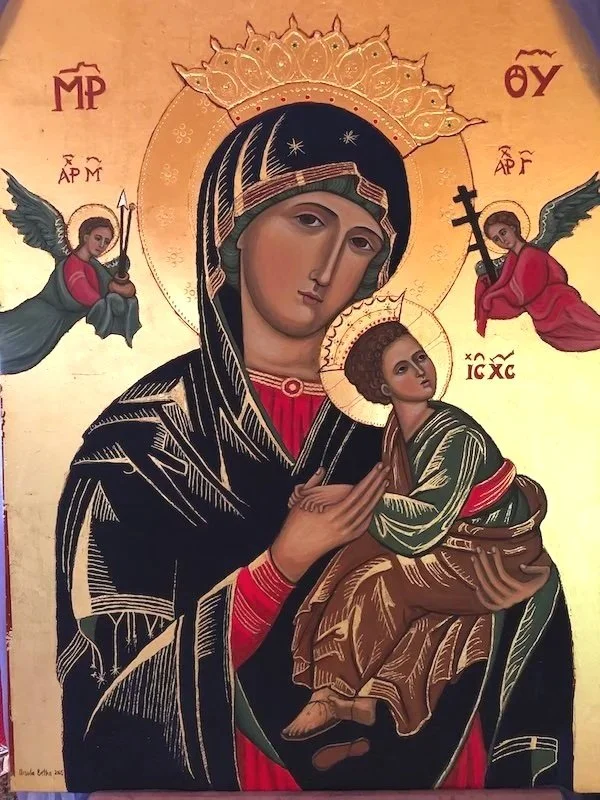
Our Lady of Perpetual Help (2025): Egg tempera with 23 karat gold leaf and raised pastiglia (crown); gold assist, on aged Cypress wood. SOLD. Available for commission.
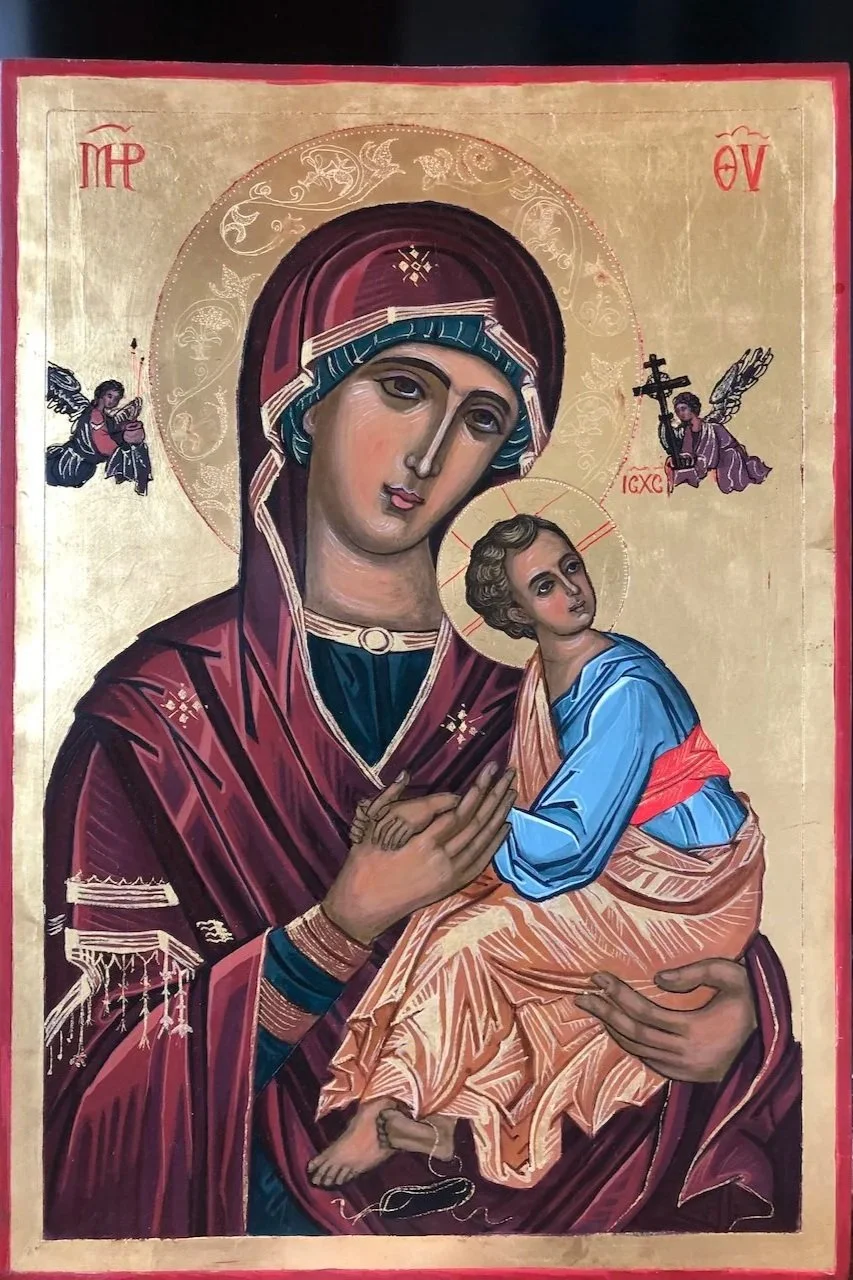
The Virgin of the Passion "Pammakaristos". (2014): On Western red Cedar with egg tempera painting and 23 karat gold leaf, gold assist. (Prototype: Cretan workshop, 16th c.). 42 x 29 x 2cm.
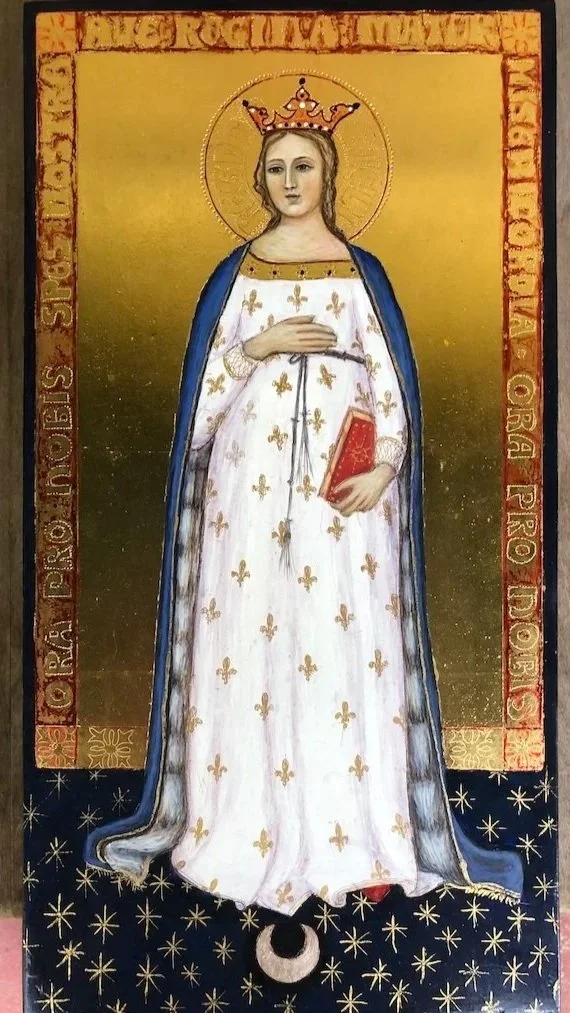
Regina Caeli, Queen of Heaven (2024): Egg tempera painting with 23 karat gold leaf on aged Cypress wood with gold punchwork, mordant gilding and acrylic ink calligraphy. (Inspired by Nardo di Cione, Madonna del Parto, Museo Bandini, Fiesole) 37 x 19 x 3 cm.
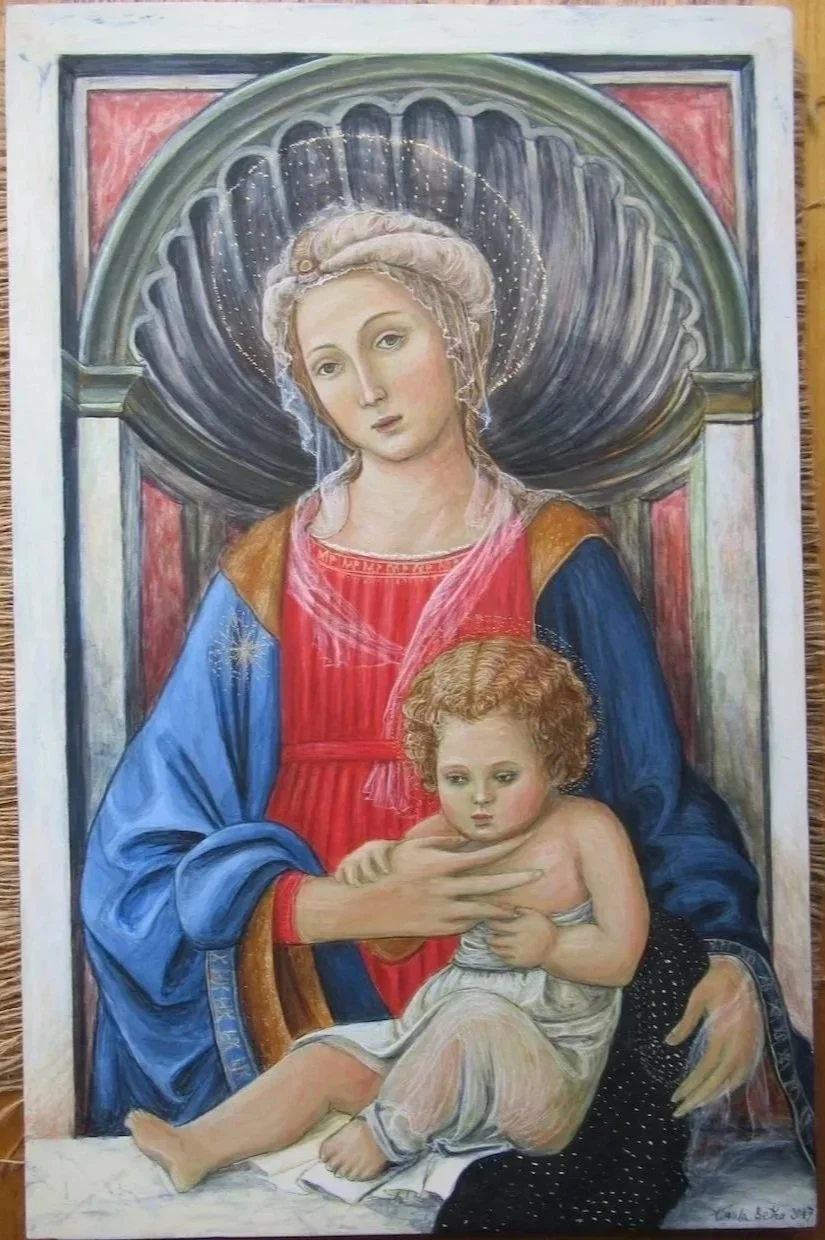
Madonna and Child in a Marble Church (2017): Egg tempera on Gelutong wood. (Inspired by Fra Filippo Lippi c.1450). 48 x 31 x 2 cm
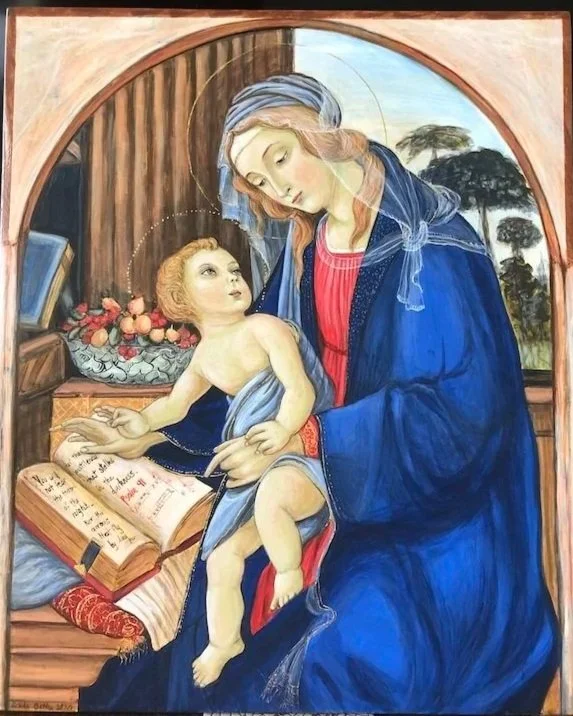
Mary teaching Jesus how to read with Psalm 91 (2020): Egg tempera painting on aged Cypress wood. (Inspired by Sandro Botticelli, c.1480 Museo Poldi Pezzoli, Milan). 42 x 35 x 1.5cm.
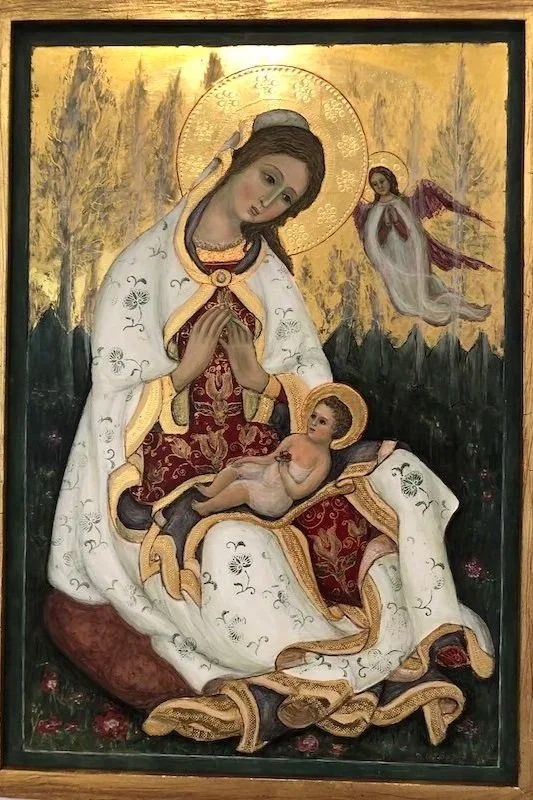
Madonna in the Mystic Garden (2024): Egg tempera painting on aged Cypress wood. Sgraffito and punchwork on gold leaf; Hanko stamping. 43 x3 1cm incl. frame). SOLD. Available for commission.
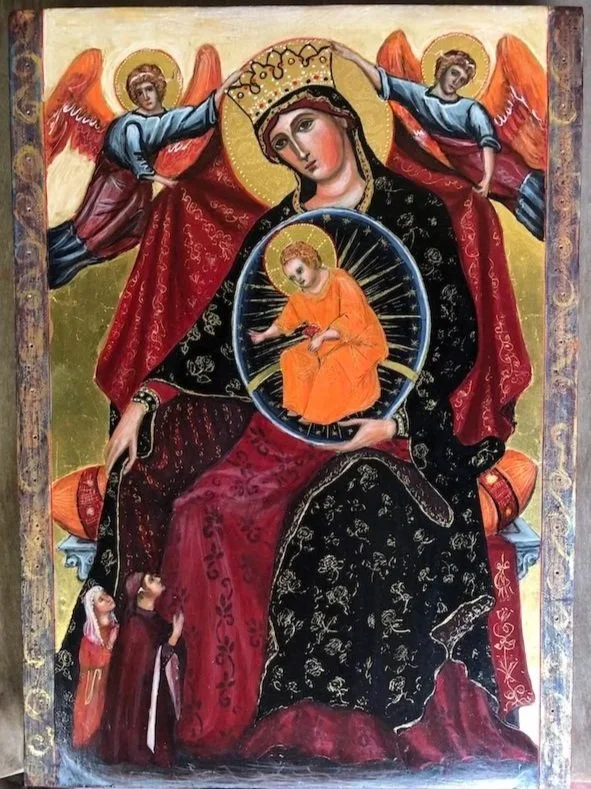
Coronation of the Virgin Mary (2011): On 4-ply wood with egg tempera painting and 23 karat gold leaf with sgraffito decoration. (Inspired by Paolo Veneziano, c.1325, Venice). 25 x 25 x 1cm
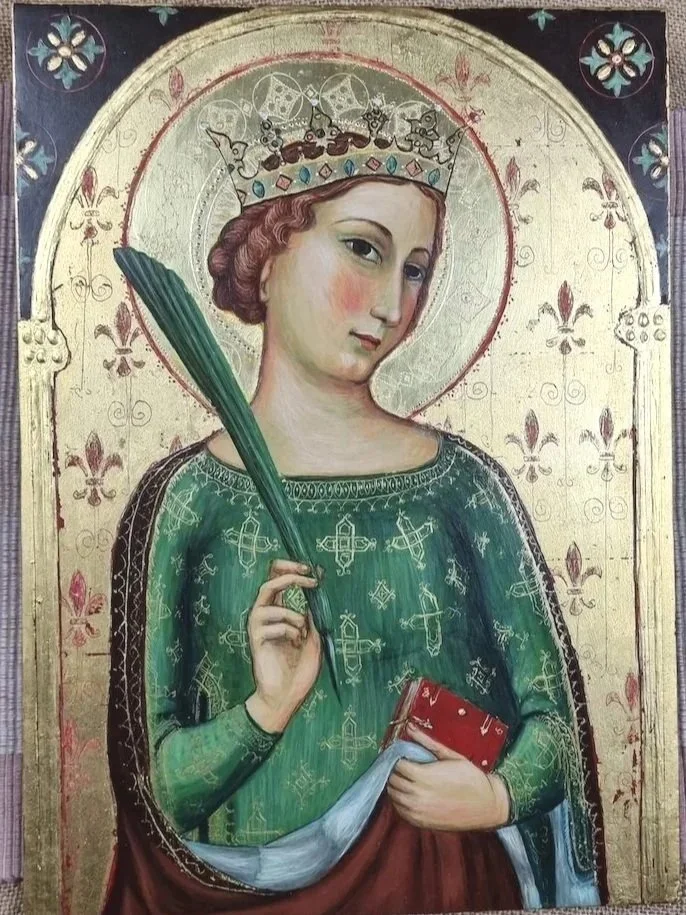
St Catherine of Alexandria (2014): Egg tempera painting on four-ply wood, 23 Karat gold leaf with punchwork, sgraffito and raised pastiglia work. 35 x 25 x 1cm.
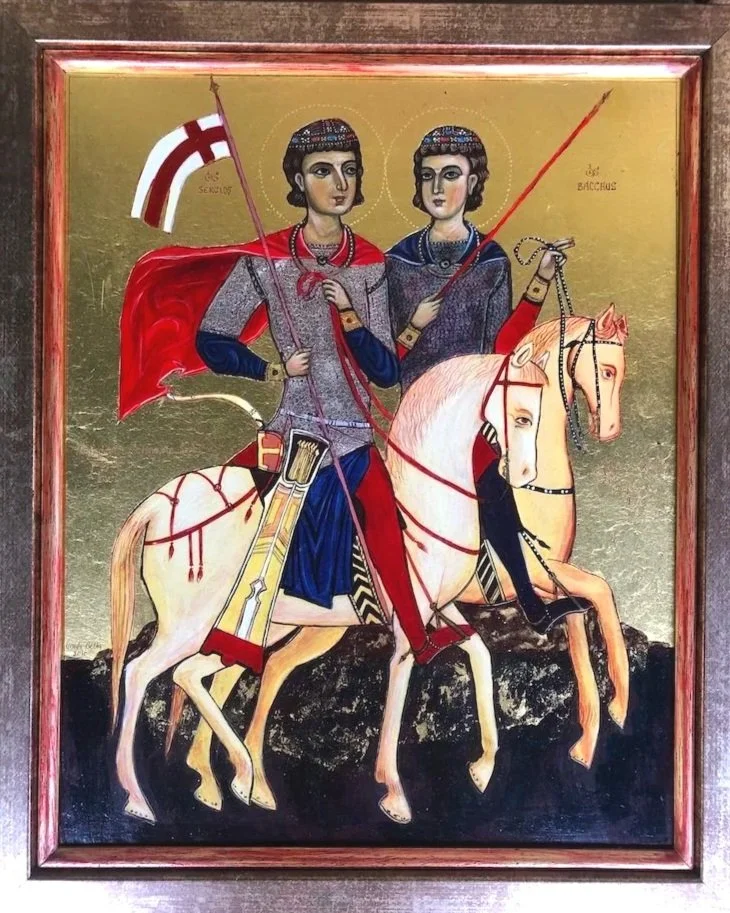
Saints Sergius and Bacchus (2012): Egg tempera with 23 karat gold leaf and silver leaf with sgraffito, on Western red Cedar. Professional frame of solid wood. (Prototype: St Catherine's Monastery, Mt Sinai, 12th C.) 42 x 34 x 4cm.
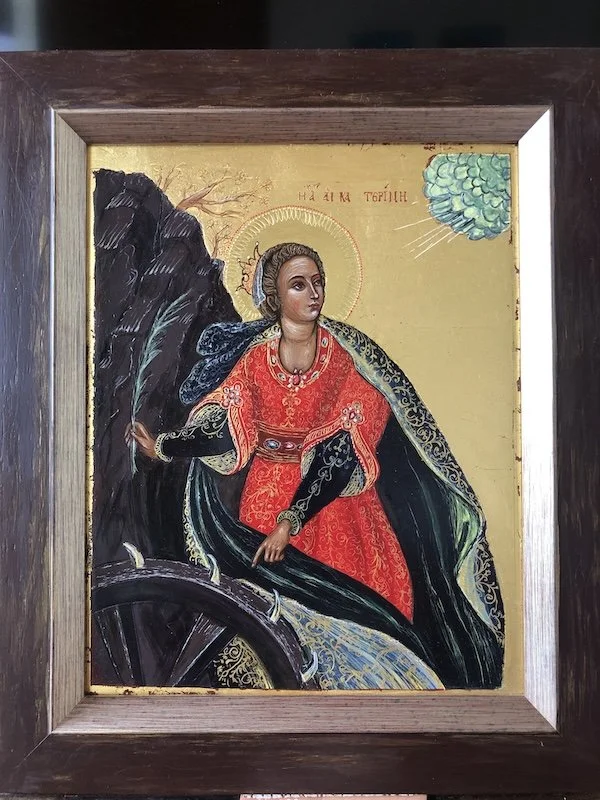
St Catherine of Alexandria (2011): Egg tempera painting with sgraffito in 23 karat gold leaf on Pine wood. (Prototype: S. Giorgio dei Greci, c.1600, Venice). Professionally framed. Frame incl: 39 x 33 x 3cm.
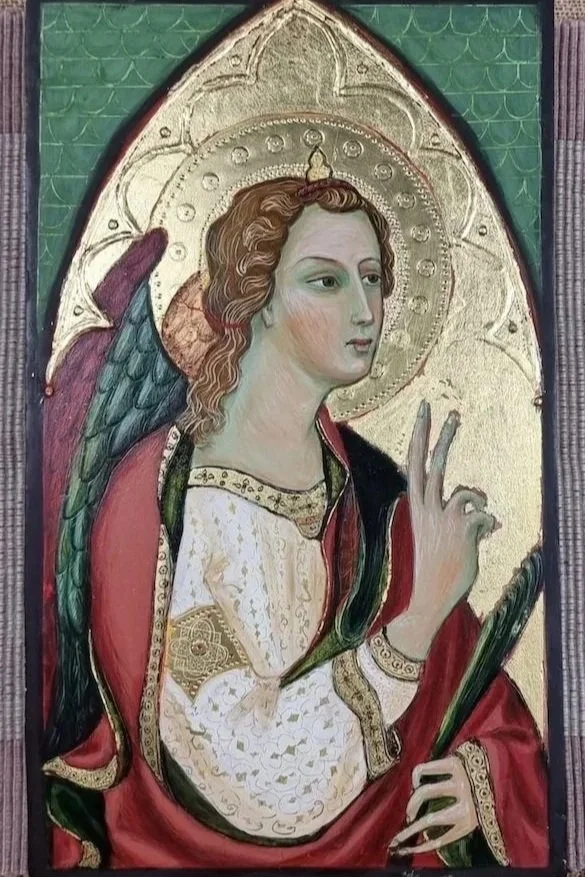
Angel Gabriel Annunciate (2015): Egg tempera painting and 23 Karat gold leaf on aged Pine, with relief gesso (pastiglia) and decorative gold leaf. (Inspired by Andrea di Bartolo, 1425) 30cm x 18 cm x 2.5cm.
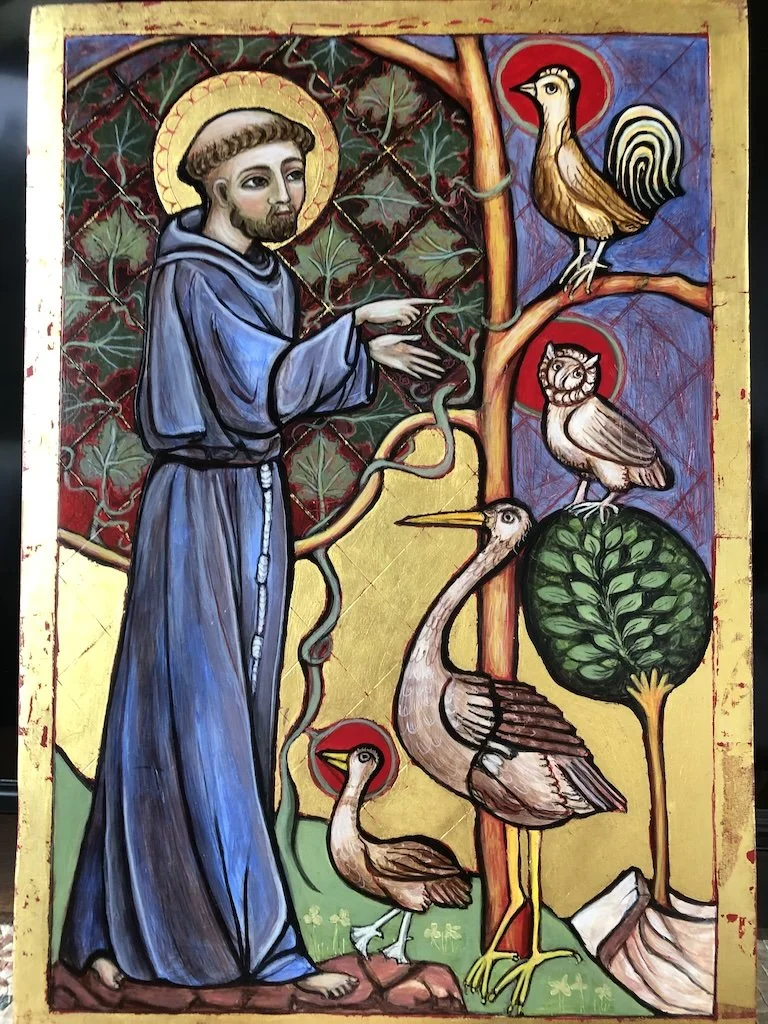
St Francis of Assisi in Paradise (2020): Egg tempera with 23 karat gold leaf on aged Cypress wood. 42 x 29.5 x 1.5cm.

The Buddha (2023): On aged European Cypress wood with egg tempera painting and 23 karat gold leaf with punchwork and sgraffito decoration. (Inspired by Japanese wall painting 9th c. Nara). 38 x 27 x 2.5cm.
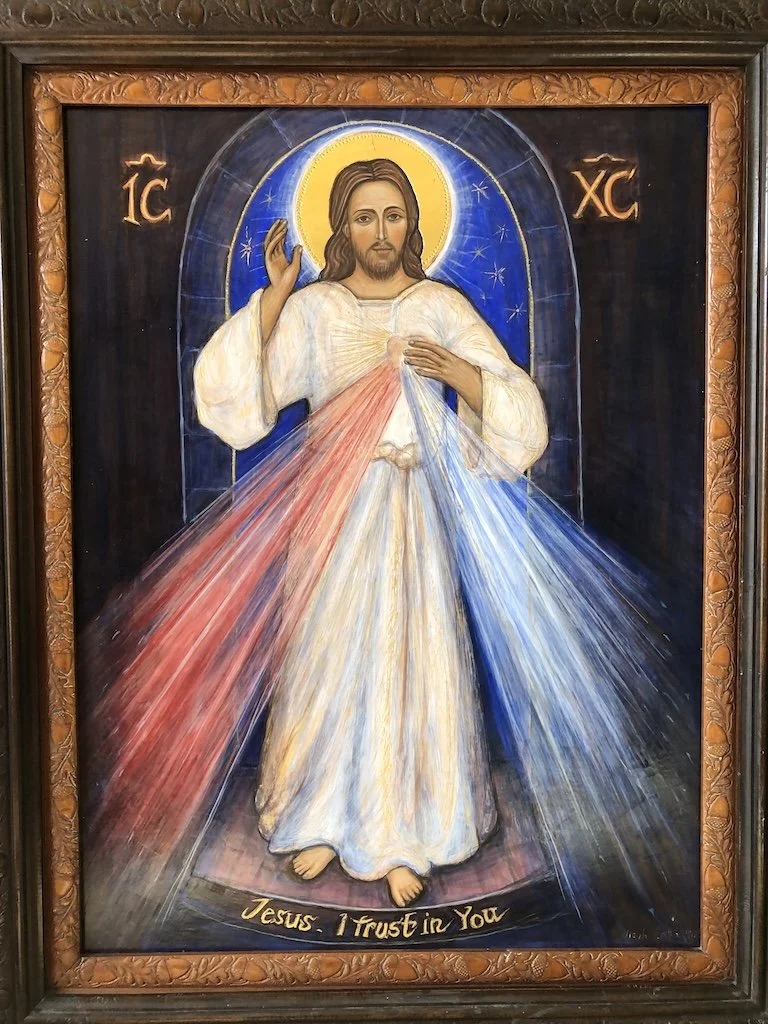
Divine Mercy (2025): Egg tempera painting with 23 karat gold leaf, on aged Cypress wood. SOLD. Available for commission.
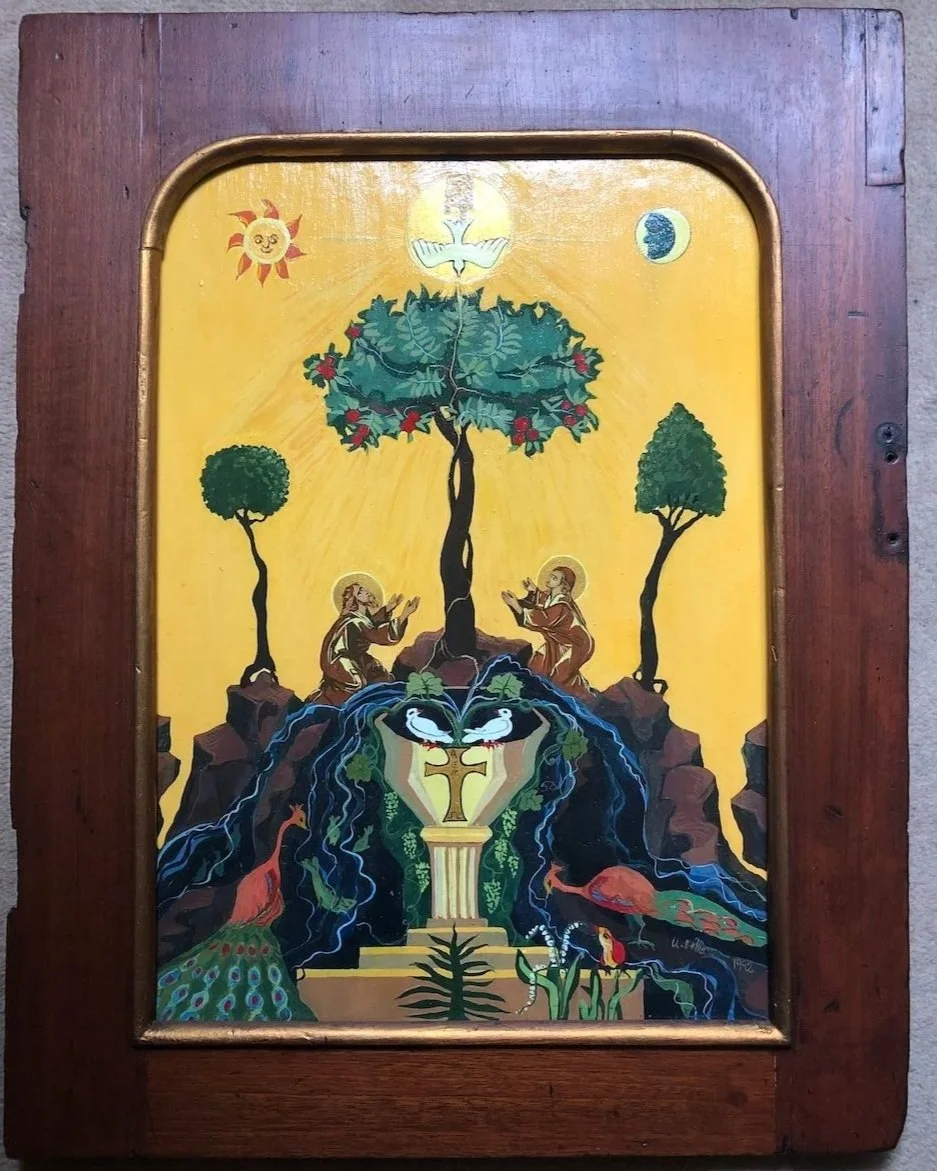
'A New Creation' (1990): Egg tempera on pine wood set within an antique cupboard door. Painting size: 45 x 30 x 2cm. Frame width 7cm.
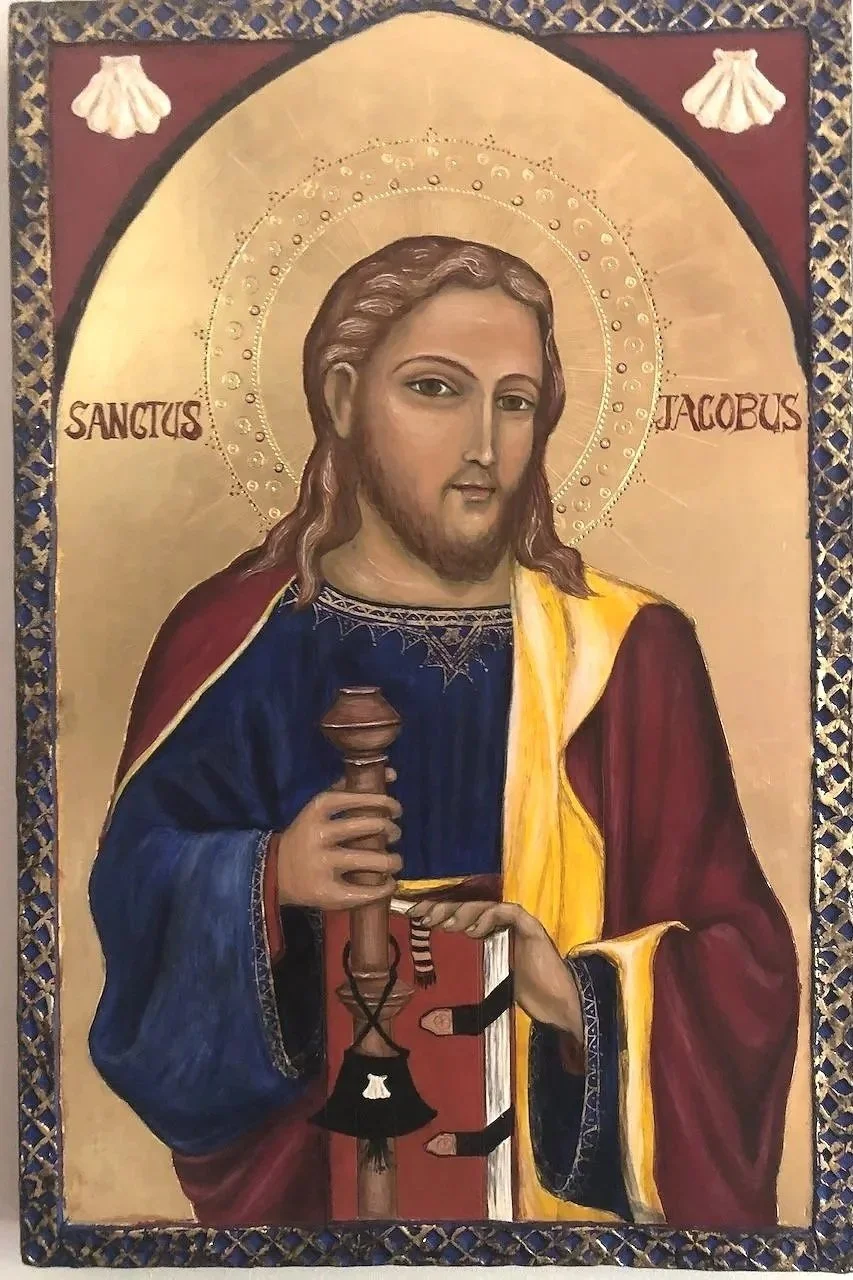
St James the Pilgrim (2016): Egg tempera with 23 karat gold leaf and raised pastiglia work frame, on Western red Cedar. 44 x 29 x 2cm.
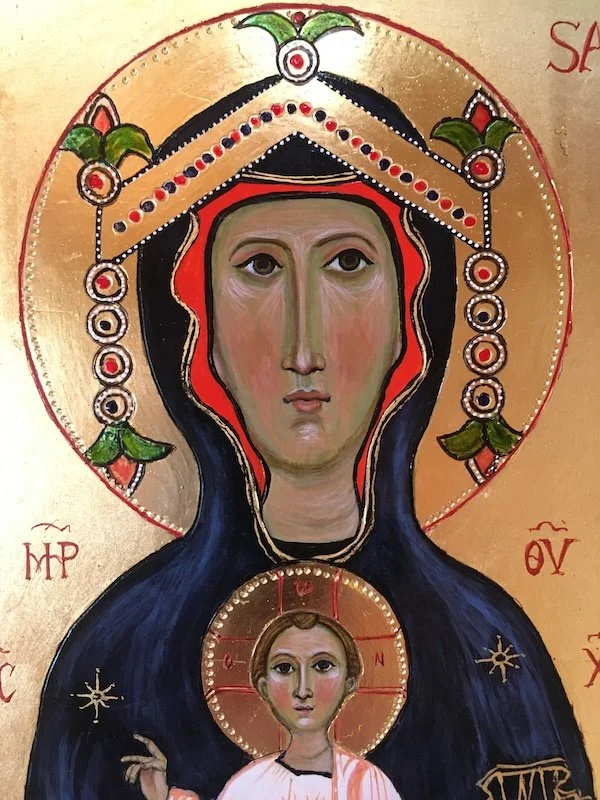
Seat of Wisdom - Sedes Sapientia (2021): Egg tempera painting with decorated 23 karat gold leaf on aged Cypress wood. SOLD. Available for commission.
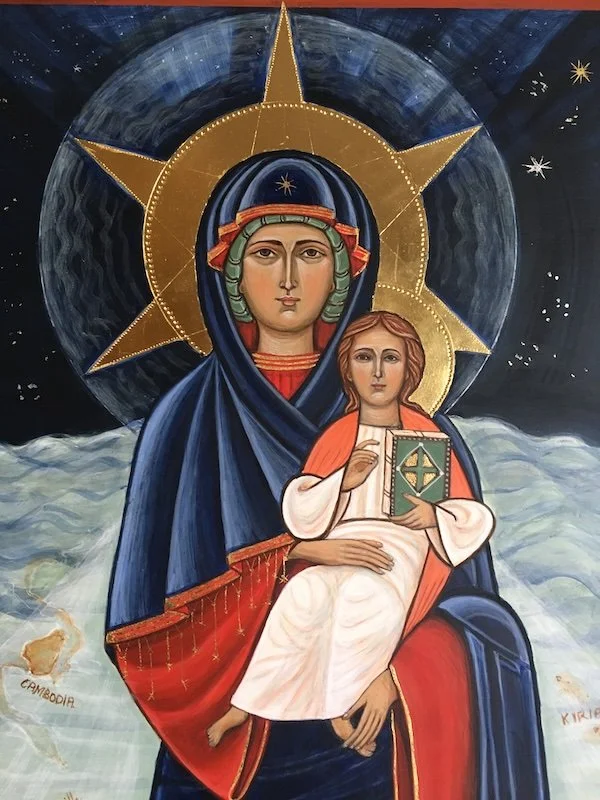
Mary, Star of the Sea (2023): Egg tempera painting with 23 karat gold leaf on aged Cypress wood. SOLD. Available for commission.
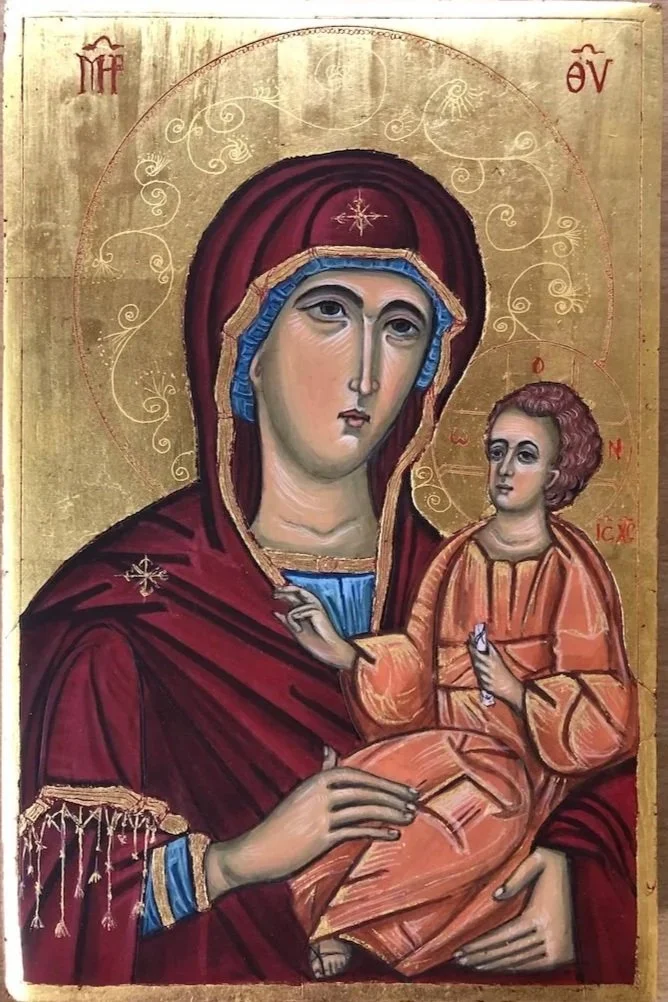
The Mother of God Hodegetria - Our Lady of Mahloula (2021): Egg tempera painting and 23 Karat gold leaf, with gold assist. (Prototype: Church of Sts Sergius and Bacchus, Mahloula Syria 14th C.). 29 x 19 x 4cm.
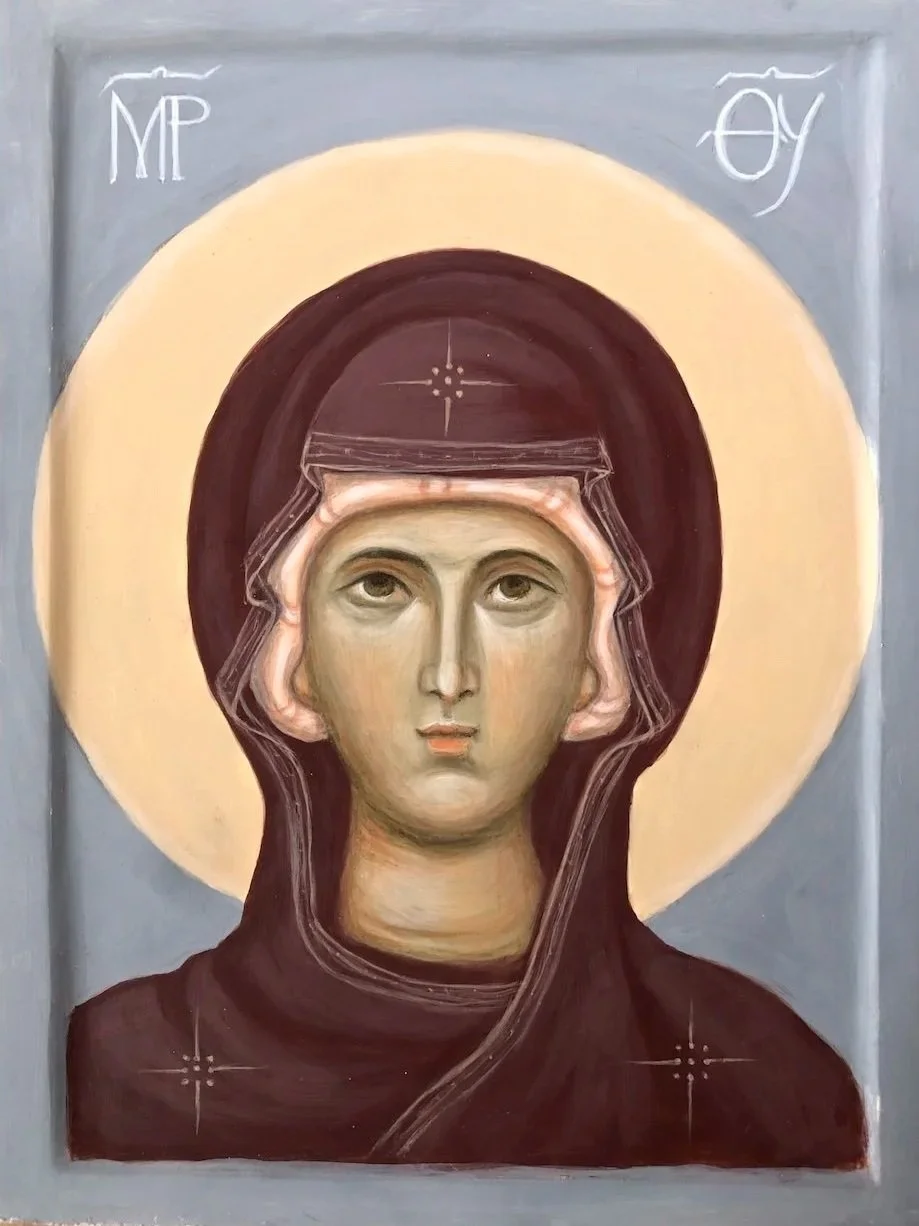
Mary, Mother of God (2026): On 5-ply wood with raised frame. Egg tempera painting. (Prototype: Mosaic, 11th c.). 29 x 19 x 4cm.
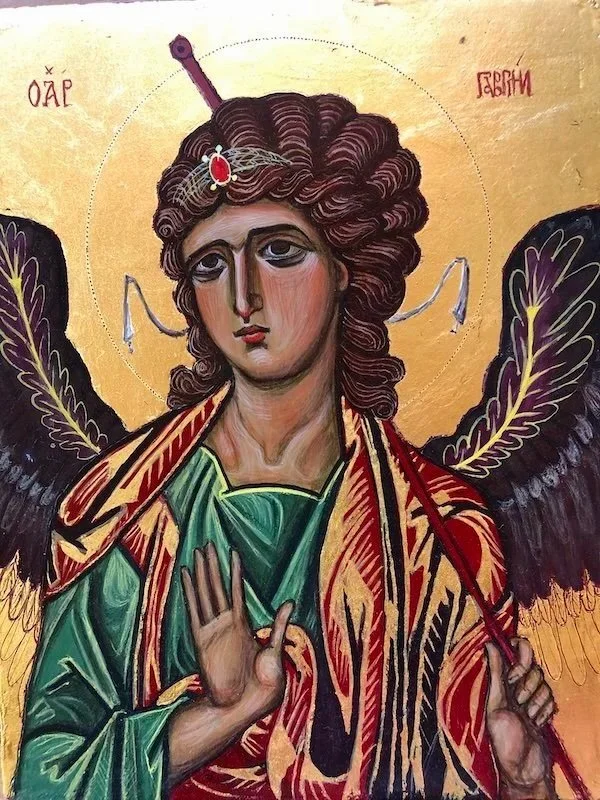
St Gabriel Archangel (2019): Egg tempera with 23 Karat gold leaf on Western red Cedar. (Prototype: St Catherine's Monastery, Mt Sinai, c.1300.) 24 x 19 x 2cm. SOLD. Available for commission.
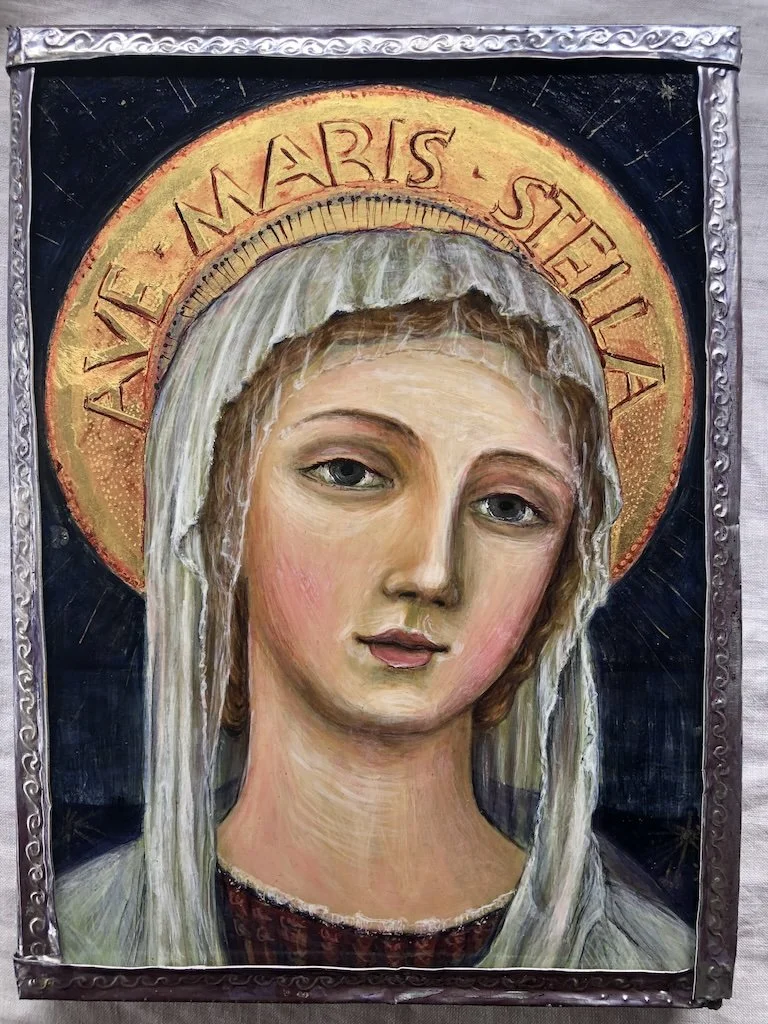
Ave Maris Stell ('Hail Star of the Sea') (2011): Egg tempera painting on Western Red Cedar with 23 karat gold leaf and sgraffito inscription. Hand-made repousse silver metal-sheet frame. (Inspired by Matteo di Giovanni c.1475). 29 x 22 x 2 cm
PAPER & PARCHMENT
Illuminations
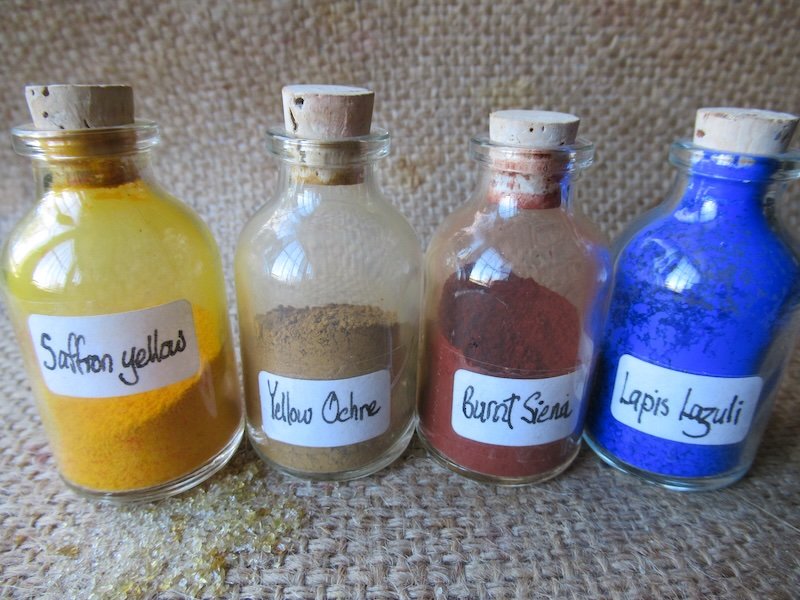
‘Ilumination’ refers to the painted decoration of a medieval manuscript (a hand-written and painted book), usually on parchment (prepared animal skin such as sheep, goat, pig or calf). The word is derived from the Latin illuminare ("to light up") because of the glow created by the radiant colours along with gold and silver leaf, which is often burnished to a high shine.
Traditional binders for making paint in illuminated manuscripts:
Dry powder pigment, the illuminator’s source of colour, are mixed with a binding agent or medium. The binder allows the pigment to adhere to the parchment surface and works to preserve the colour over time.
Egg glair was the main binding agent used in manuscript illumination up until the late 14th century. Untreated egg white, being slimy and irregular in consistency, is unsuitable to make smooth paint. When ‘clarified’ to make egg glair, the medium is runny, smooth, and sticky. To make egg glair by the medieval method, beat an egg white to a stiff foam, leave it overnight, skim away the froth, then extract the clear liquid. Medieval illuminators preserved their glair by encasing the solution between two broken egg shells, which allowed a degree of air to circulate and thus prevented rancidity.
Medieval egg glair recipe
When a mix of pigment and glair alone is painted onto the malleable parchment, cracks sometimes developed. A little honey was often added to the mixture, allowing greater flexibility and paint viscosity. Earwax, too, was also recommended to inhibited the formation of froth in the medium!
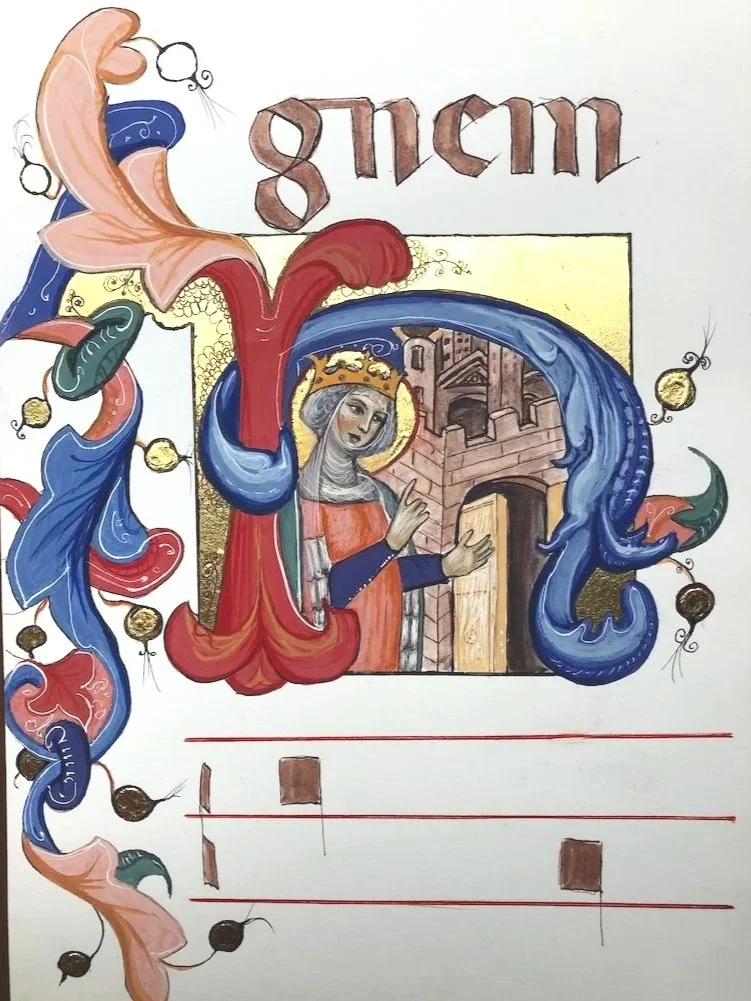
St Helena in Constantinople, in an historiated initial H (Helena): Egg glair tempera, 23 karat gold leaf and sepia ink, on Arches Hot Press watercolour paper. Inspired by a Florentine Choir book, 14th c. (A4)
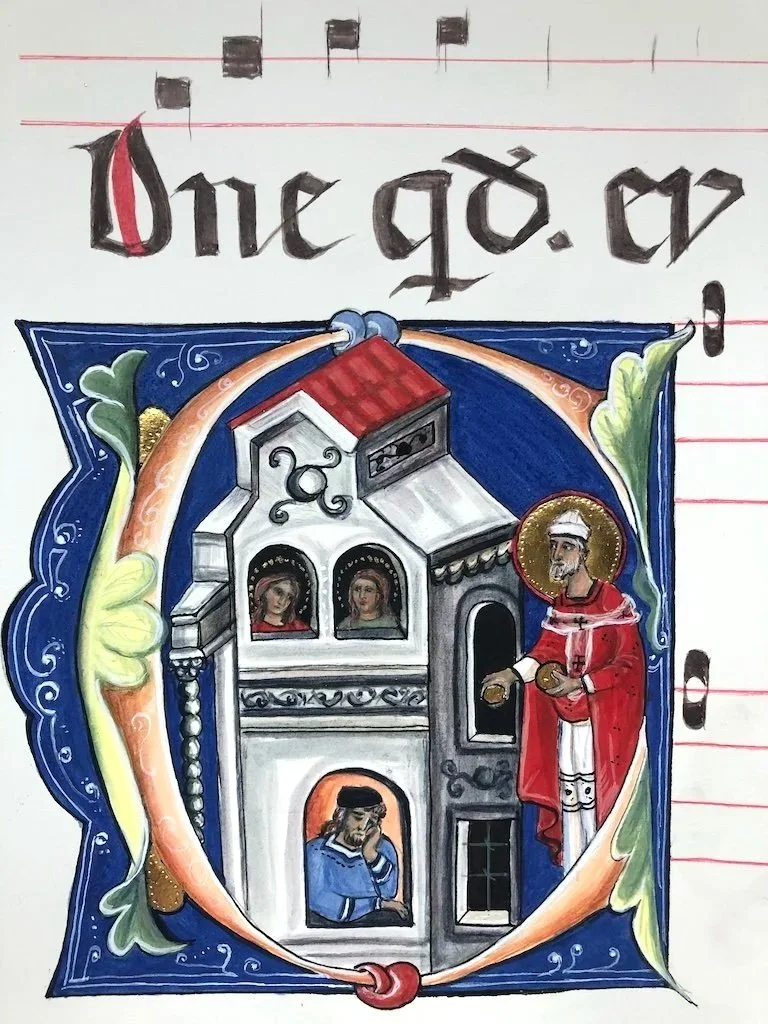
St Nicholas of Bari, in an historiated initial C (Cunctis beneficia 'kindnesses to all...'): (2026). Egg glair tempera, 23 karat raised gold leaf and sepia ink, on Arches 300gm Hot Press watercolour paper. Inspired by a Florentine Choir book (Antiphonal) by Master Gerona, 14th c. (A4)
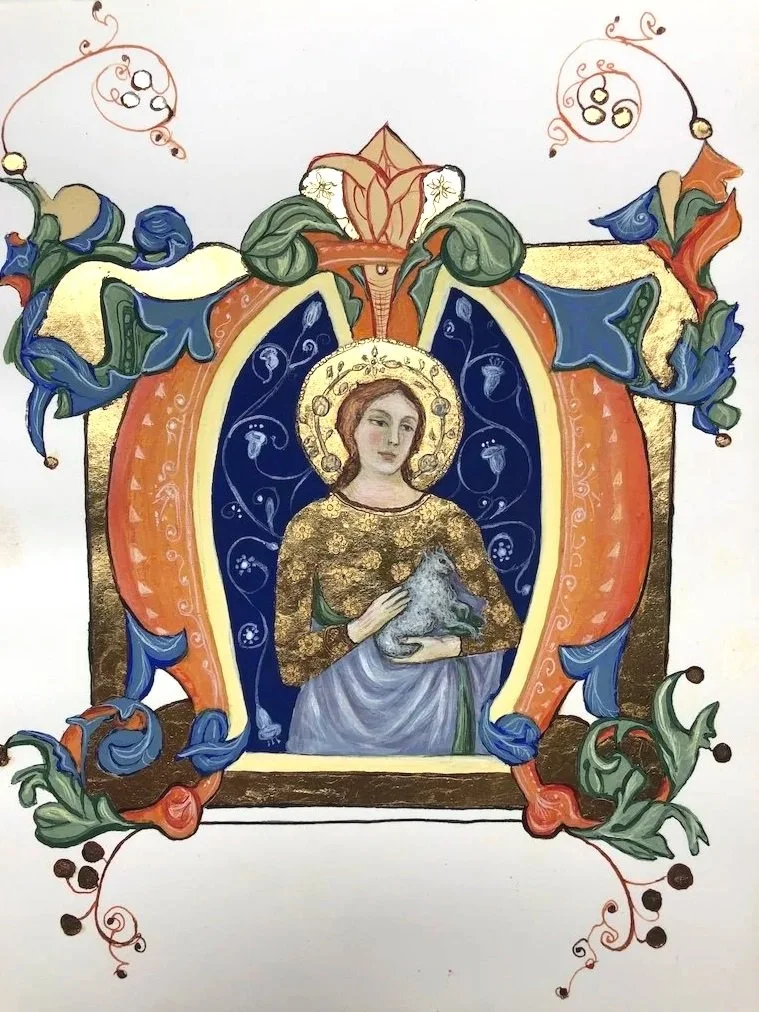
St Agnes with her Lamb: Egg glair tempera, tooled 23 karat gold leaf and sepia ink, on Arches Hot Press watercolour paper. Inspired by a Florentine Choir book, 14th c. (A4)
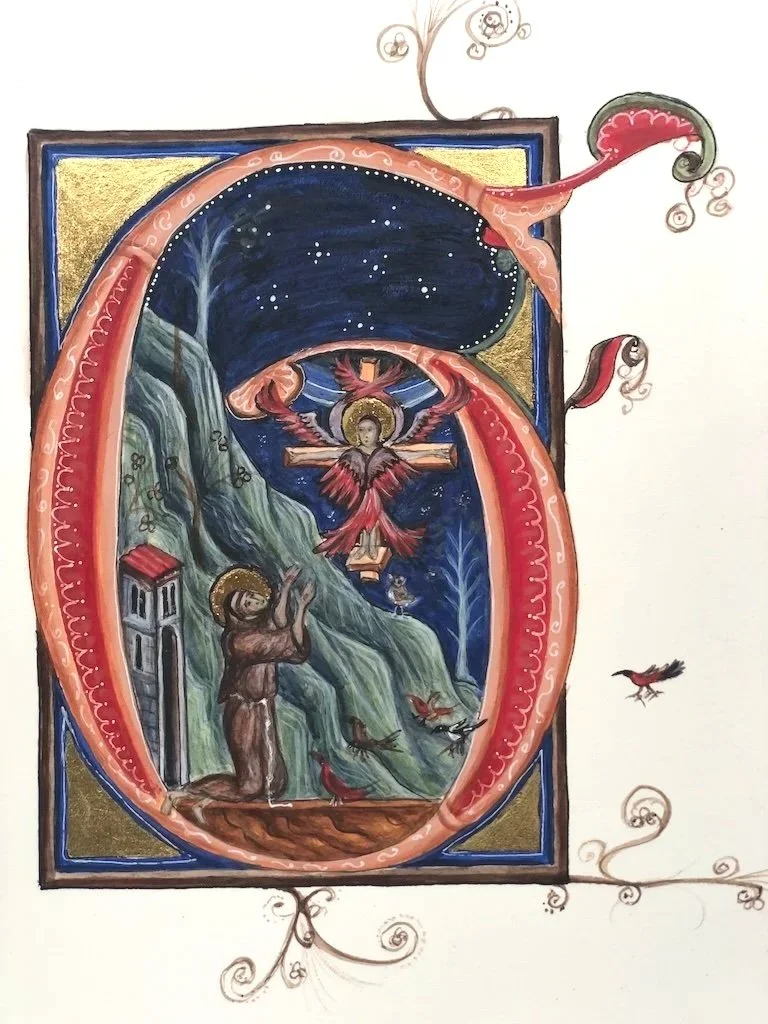
The Stigmatization of St Francis of Assisi. (2026). Egg glair tempera painting with sepia ink and 23 karat gold leaf on Arches Hot Press watercolour paper 300gms. A4 Size.
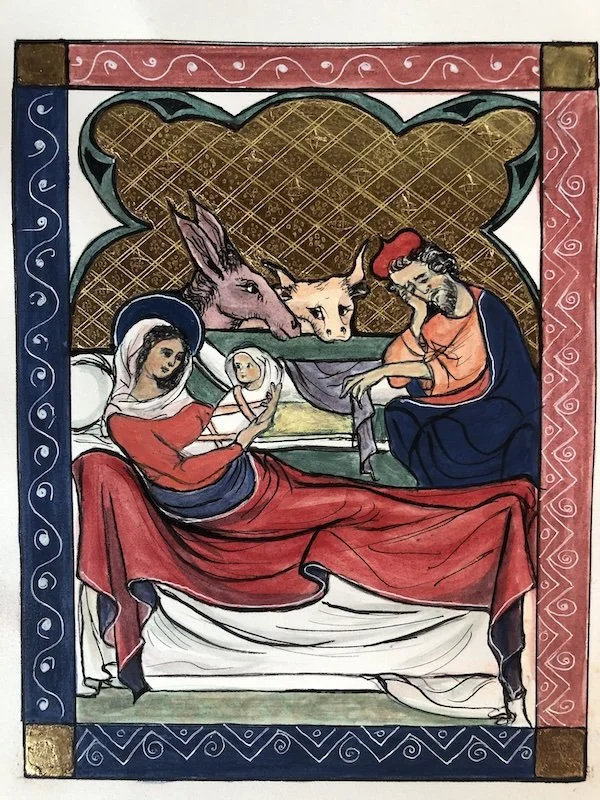
The Nativity of Christ: Egg glair tempera, raised and tooled 23 karat gold leaf and sepia ink, on Arches Hot Press watercolour paper. Inspired by an English choir manuscript, early 14th c. (A4)
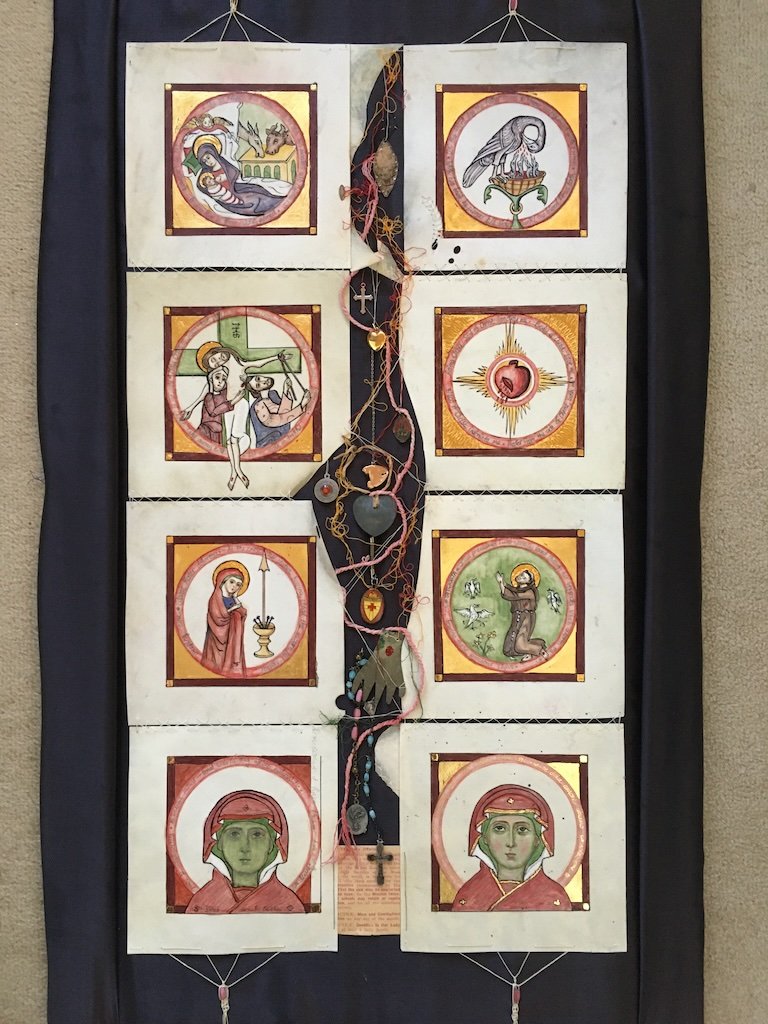
Transforming Wounds (2021): On eight 15cm x 15cm squares of Wallaby parchment, egg glair tempera, 23 karat gold leaf, silk thread, ex-votos, rosary beads. Framed. 74 x 47 x 4cm. Not for sale.
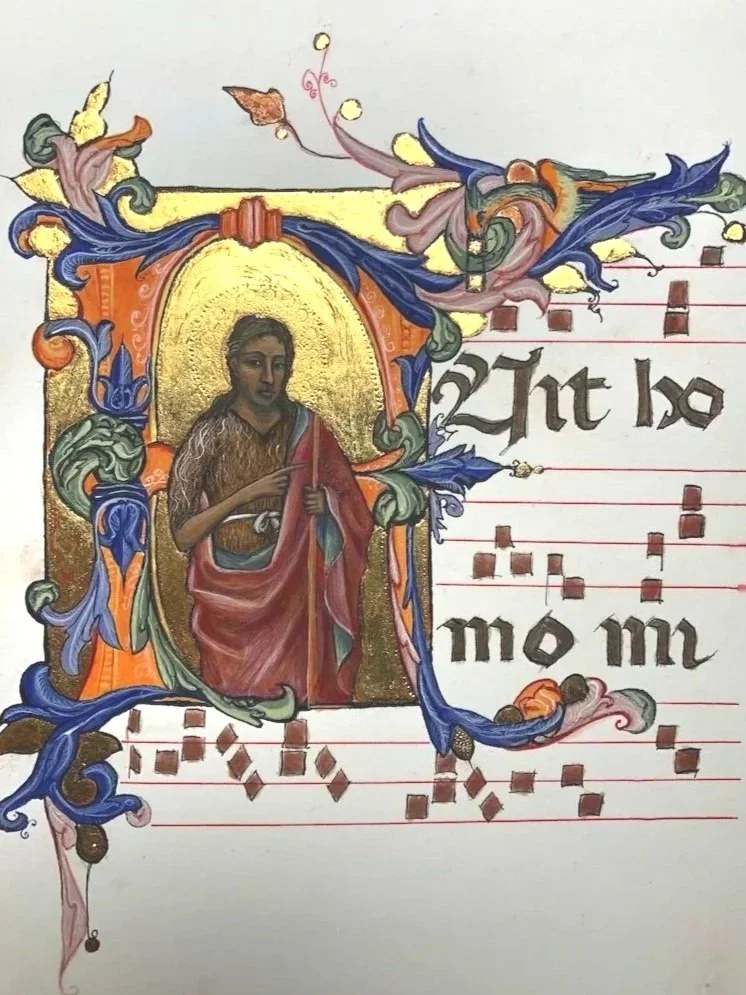
St John the Baptist, in an historiated initial F (Fuit homo 'There was a man...'): Egg glair tempera, 23 karat tooled gold leaf and sepia ink, on Arches Hot Press watercolour paper. Inspired by a Florentine Choir book, 14th c. (A4)
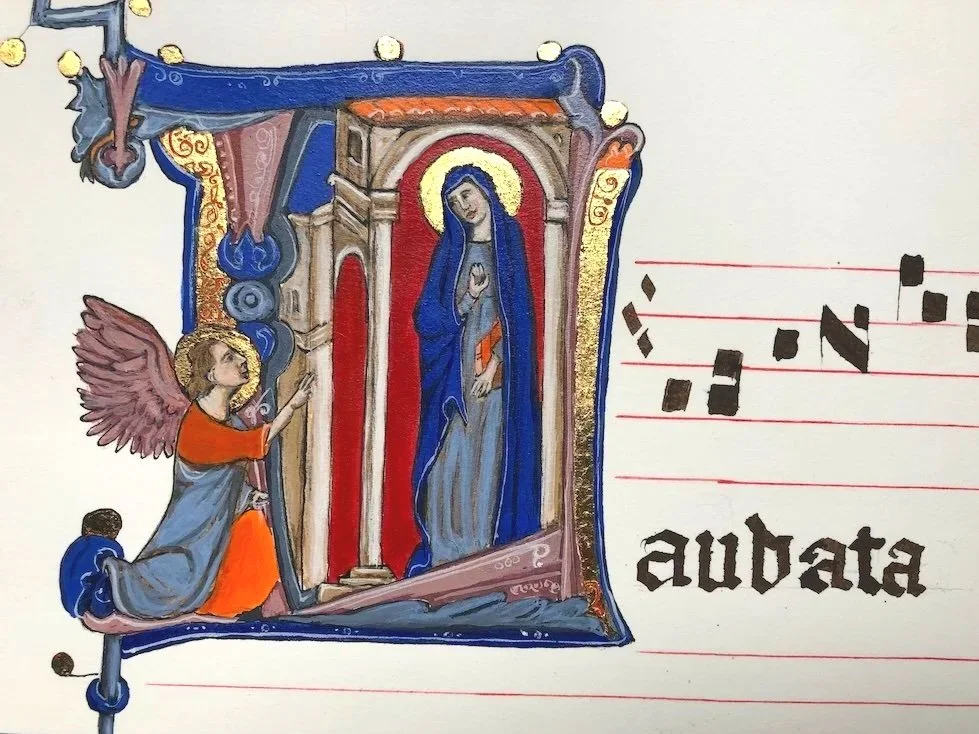
The Annunciation in an historiated initial L (Laudata): Egg glair tempera, 23 karat gold leaf and sepia ink, on Arches Hot Press watercolour paper. Inspired by a Florentine Laudario manuscript, early 14th c. (A4)
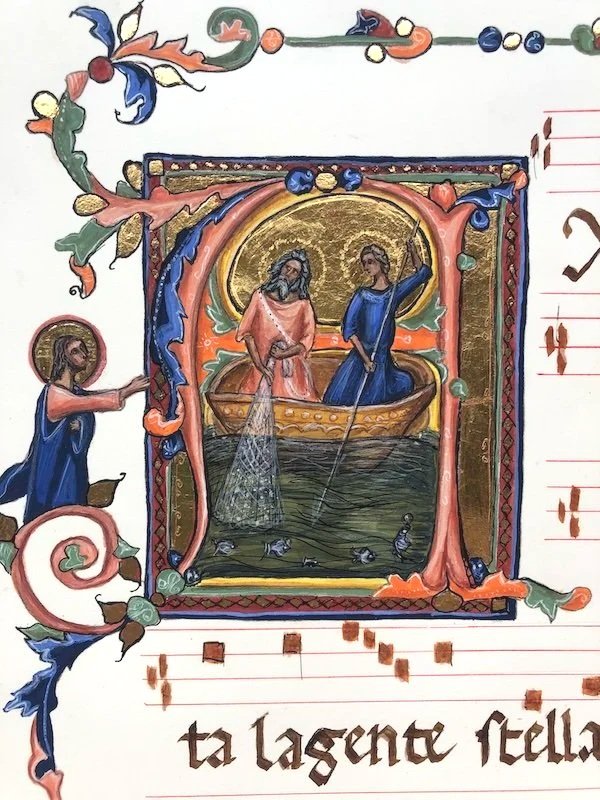
The Calling of St Andrew (in an initial A). Inspired by a 14th c. Florentine choir book by the Master of the Dominican Effigies. (Based on Matthew 4: 18-20). Egg glair tempera painting with 23 karat gold leaf and sepia ink on Arches Hot Press paper 300gms. A4 size.
ETCHED GOLD GLASS
Verre églomisé
Verre églomisé as a pictorial art form has its origins in Roman antiquity with a revival in the 14th and 18th centuries. The technique involves applying gold or metal leaf with gold size (glue) on the reverse side of the glass. The design is then etched into the still-moist gold leaf using fine tools. When dry, the background or ‘negative spaces’ are painted, traditionally in black or red oil paint, to produce intricate and light-reflective designs.
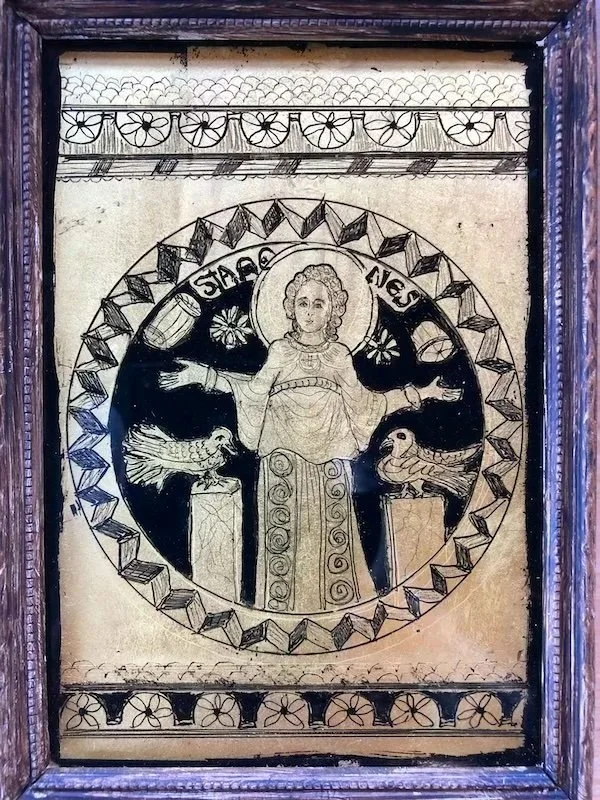
St Agnes in Glory (2020): Based on a 4th c. prototype (Rome). 18 x 13cm includes frame.
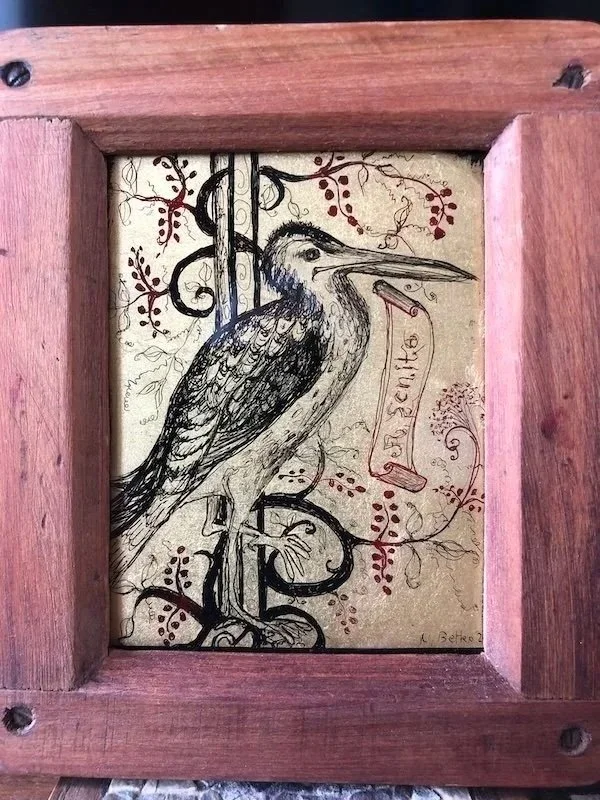
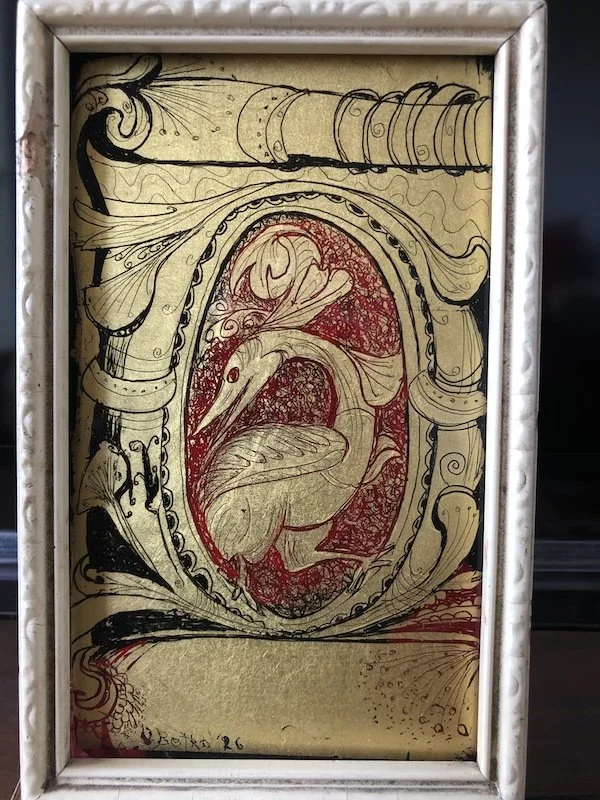
A Scnite bird (2026): Based on a 13th c. English manuscript illumination. Frame: Antique mahogany & brass camera plate double-darks. 15 x 12cm includes frame.
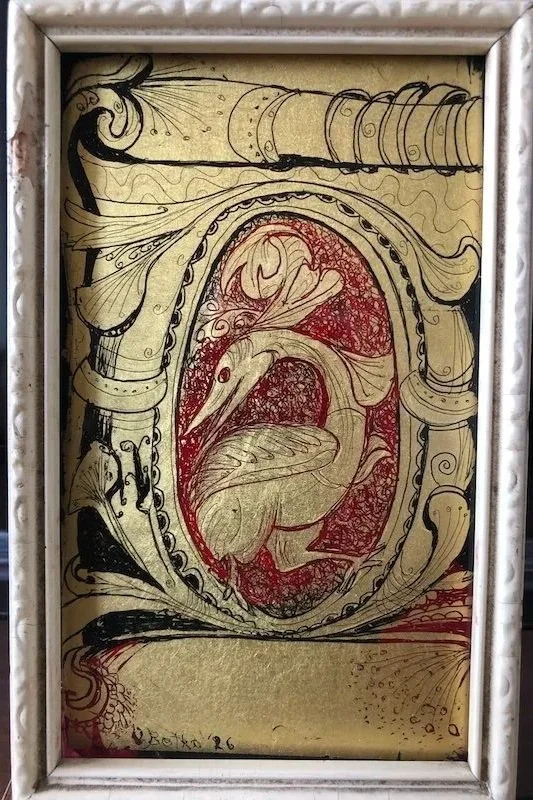
Fantastic Bird (2026): Based on a 12th c. manuscript illumination. 14 x 9cm includes frame.
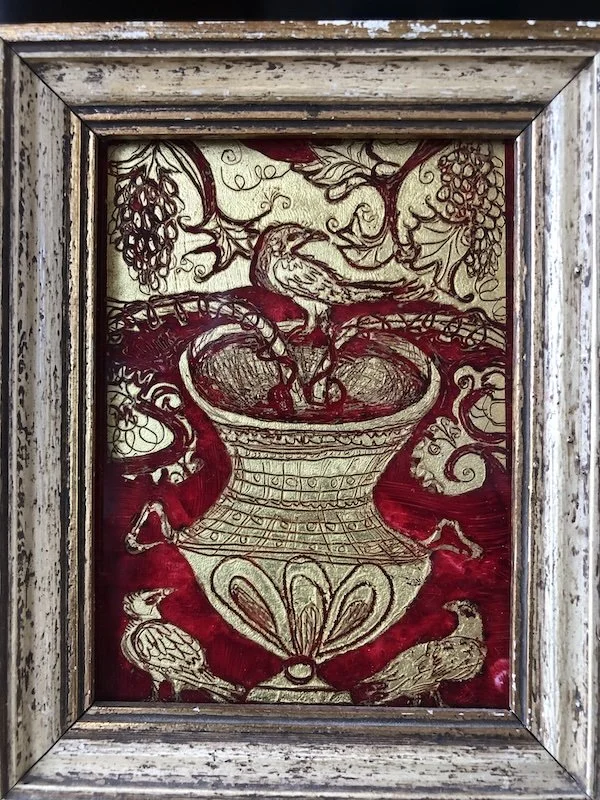
Fountain of Eternal Life (2020): Based on mosaic detail, Ravenna, 6th c. 15 x 12cm includes frame.
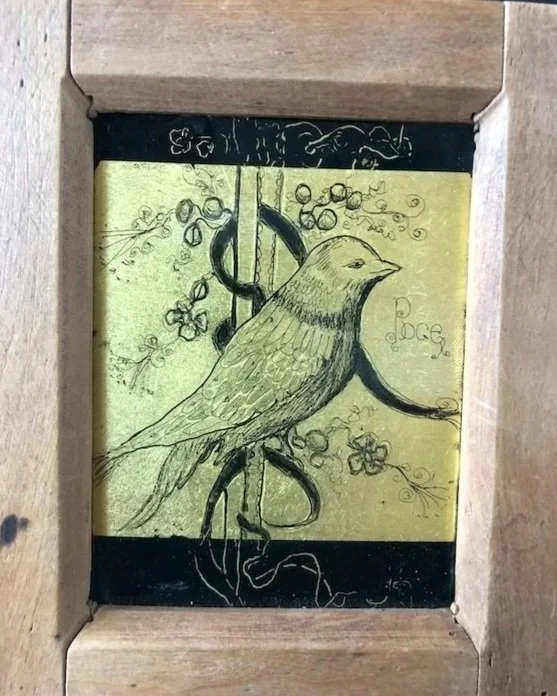
Bird of Peace (2019): 15 x 12cm includes frame of antique wood & brass camera plate double-darks.
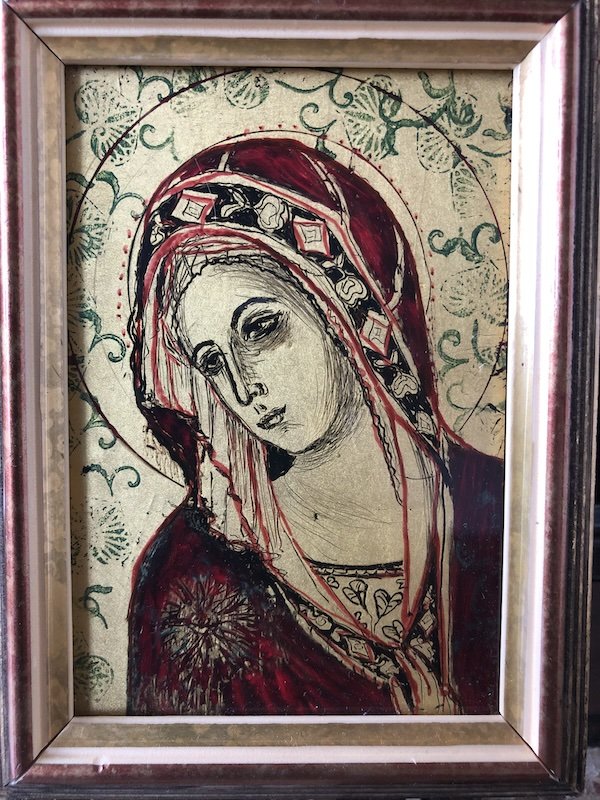
Madonna in Prayer (2023): Verre Eglomise with Hanko stamp. 15 x 11cm
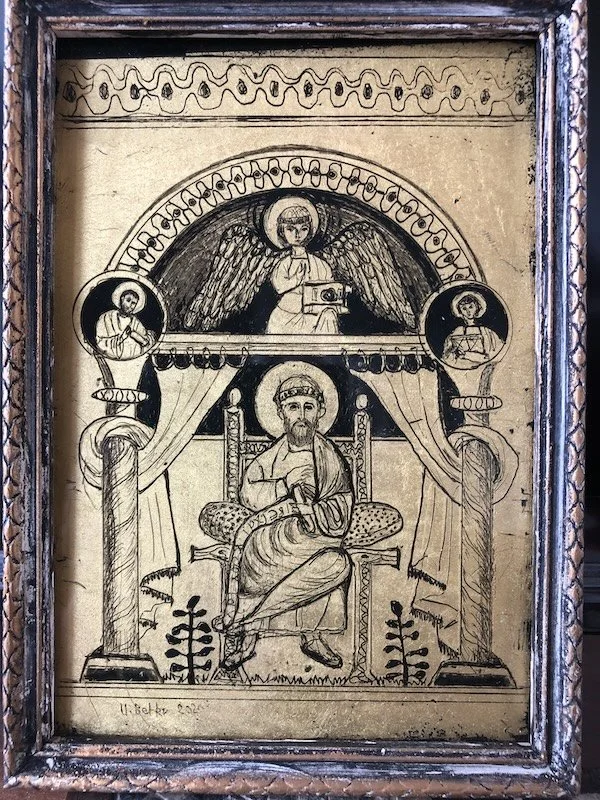
St Matthew writing his Gospel (2020): Based on illumination, Canterbury Gospels, 9th C. 18 x 13cm includes frame.
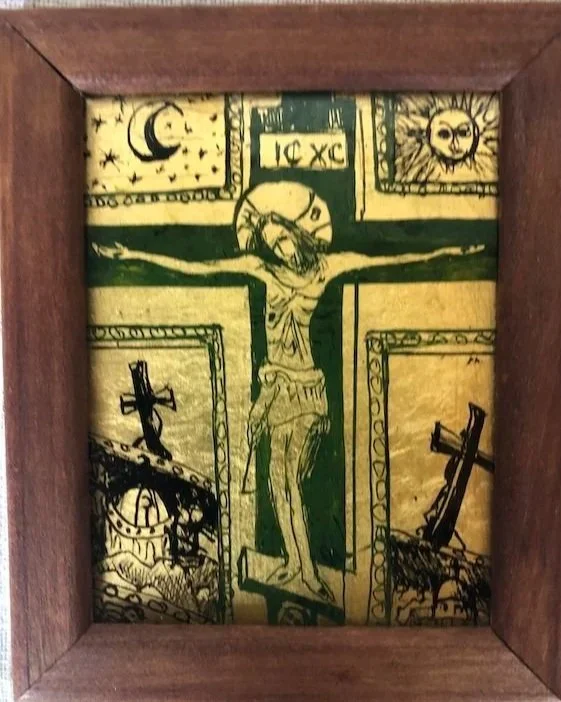
The Crucifixion (2019): 11 x 6cm includes frame.
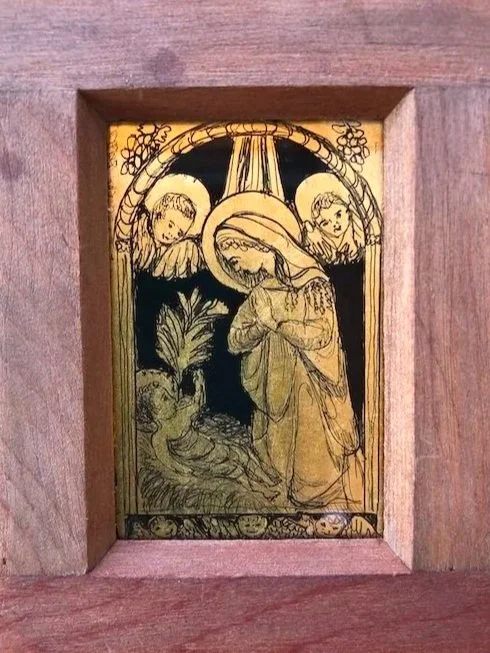
The Nativity (2020): 11 x 8 x 2 cm includes frame of antique wood and brass camera plate double-darks.
Reverse Glass Paintings
History and tradition
Reverse painting on glass is an art form widely used for sacred paintings since the medieval era, existing both in the Byzantine eastern empire and later spreading to Italy, where it was embraced from the 13th and 14th centuries.
A popular folk art tradition of Christian themes also emerged in the 19th century in countries such as Poland, Austria, Romania and Slovakia. Beautiful examples can still be found in situ within the wooden churches of the Tatra Mountains on the UNESCO World Heritage List. Jesuit missionaries also spread the art form to China and Japan where it flourished in the Edo period.
Techniques
A linear design is painted onto the reverse of the glass (often in black or brown), over which successive layers of paint colour are applied using both solid and transparent paint values. Gold or other metal leaf was sometimes added before or after a transparent paint layer; and Verre eglomise techniques of gold etching can also be incorporated into the bold design.
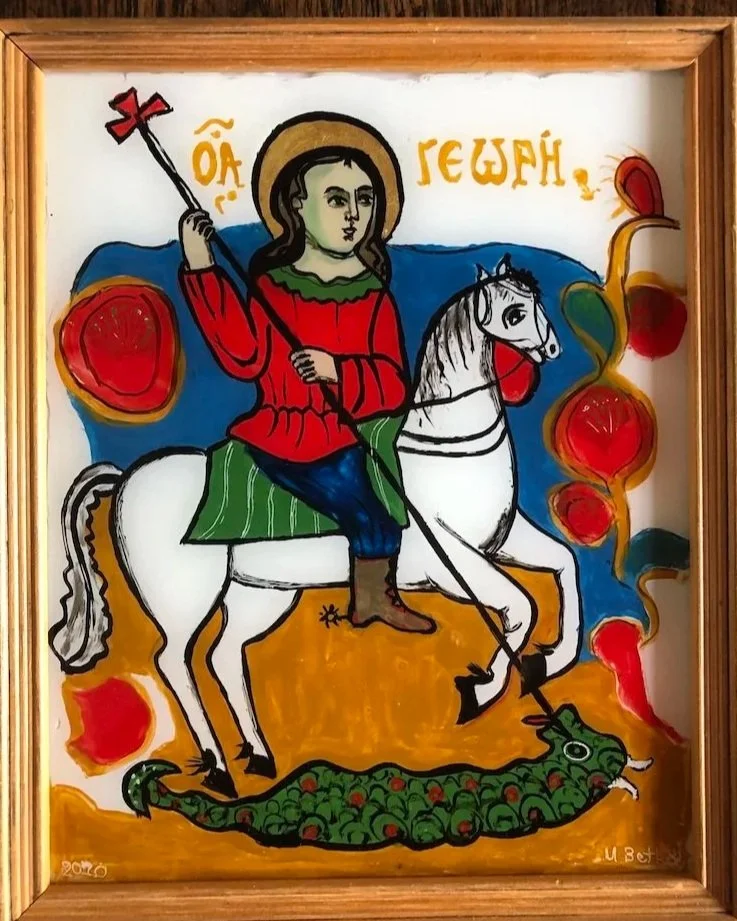
St George Slaying the Dragon (2023): Oil paint and gold leaf on glass (Inspired by a Romanian folk-art prototype). 28 x 22.5 x 1.5cm in a simple wood frame.
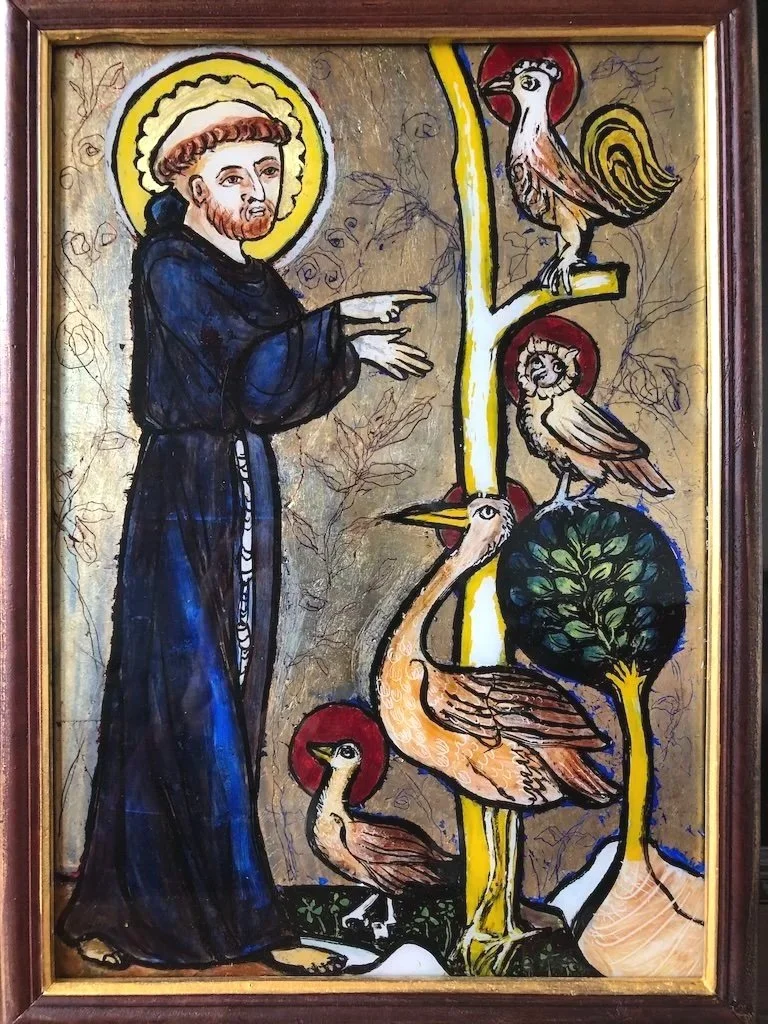
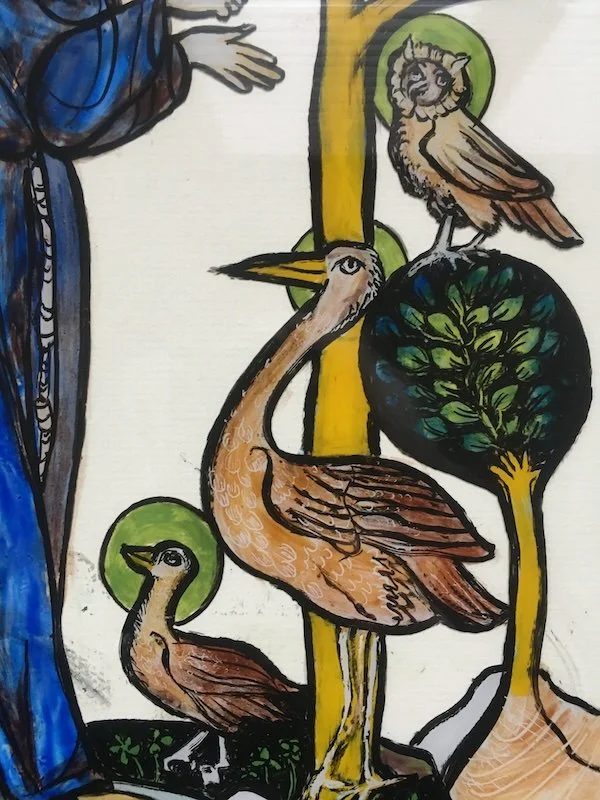
St Francis of Assisi in Paradise (2023): Oil paint, gold and silver leaf on glass (Inspired by a 13th c German stained-glass window). 32.5 x 23 x 1 cm in a simple wood frame.
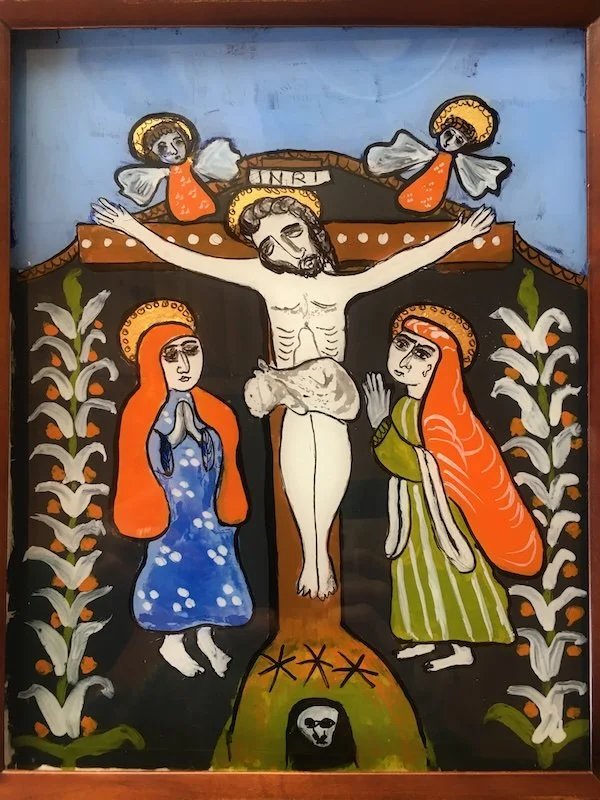
The Crucifixion (2022): Inspired by a work in a Polish wooden church (18th C) in the Tathra Mountains. SOLD. Available for commission.
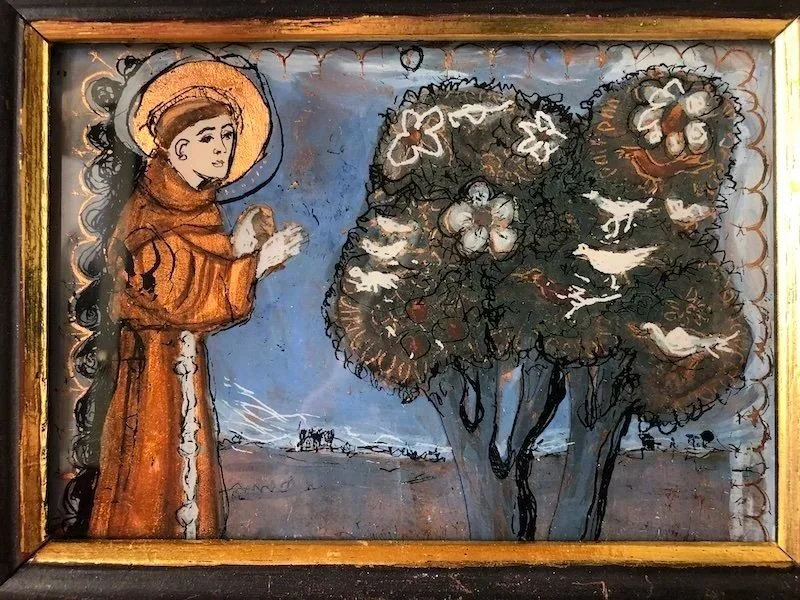
St Francis of Assisi Preaching to the Birds: Oil paint, sgraffito, bronzed metal foil on glass. Simple wood frame. 21 x 16 x 1cm.
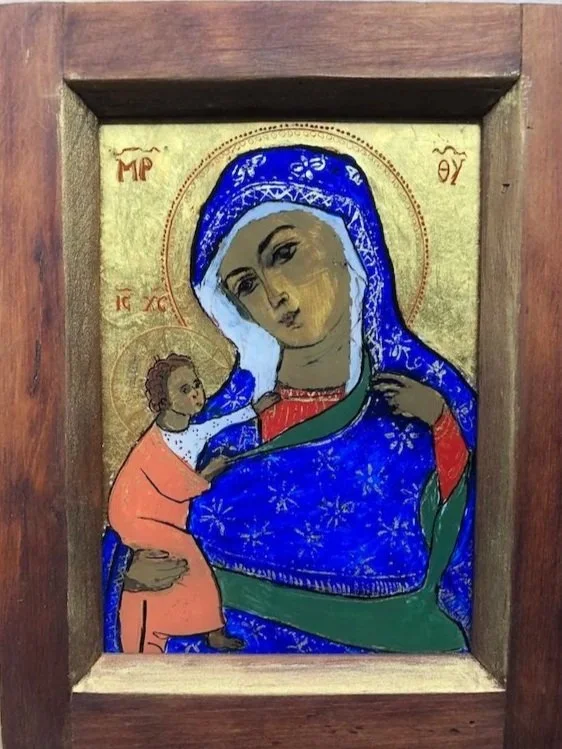
Madonna and Child (2023): Inspired by Italian Icon 13thc. Frame: antique wood & brass camera plate double-darks; 21.5 x 16.5 x 2.5 cm.
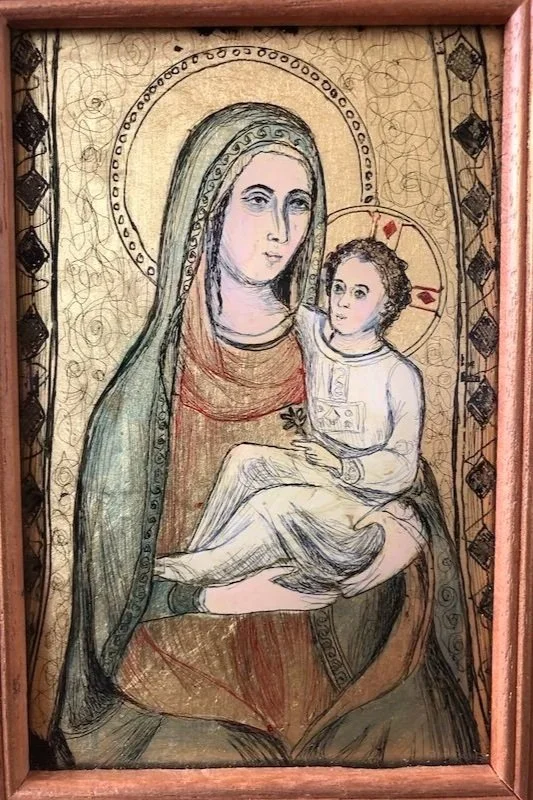
Madonna and Child (2024): Oil paint, gold leaf with Verre eglomise. (Inspired by Lorenzo Monaco, 14th c. Florence). Simple wood photo frame. Approx. 15 x 12 x 1 cm.
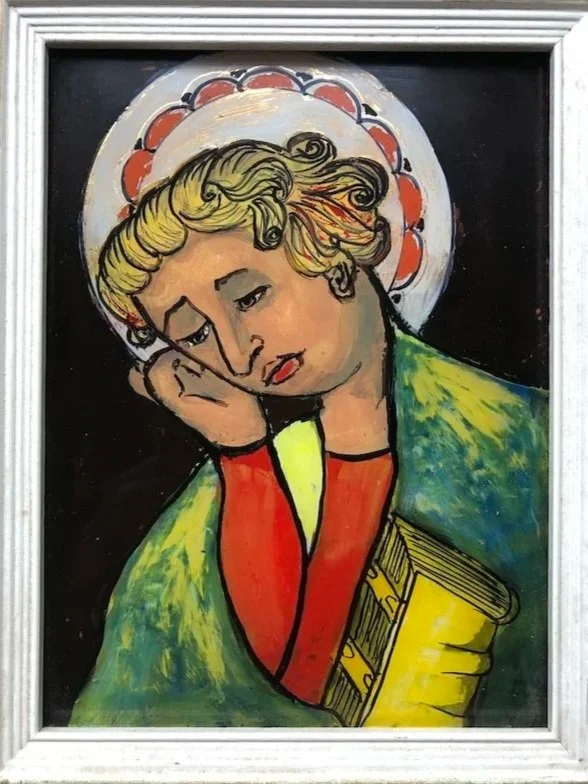
St Matthew Evangelist (2022): Oil paint and gold leaf. Inspired by a 12th c. German stained-glass window. Simple wood frame. 22.5 x 17 x 1 cm.