Painting illusions of marble
Chemical Basis of Marble Colours
Marble colours are derived from various minerals within the crystal structure of marble. It is rarely pure white. the pure white value of the stone isderived from limestone or dolostone which has very few impurities.
The red, brown, yellow and orange colours that streak and stain the white marble was caused over millenia due to the presence of iron oxides (hematite); while Green marble (such as Carrara marble - verde antique), is causd by serpentine, with impurities like chromium oxide (green oxide).
By contrast, gray, blue and black marble is caused by the presence of graphite, pyrite or bitumin matter.
Painterly rendering of marble colours and patterns in egg tempera painting has readily use all of the mineral pigments anciently used in the artists palette.
Mary McGillivray learns how to paint fictive marble using traditional earth-mineral pigments
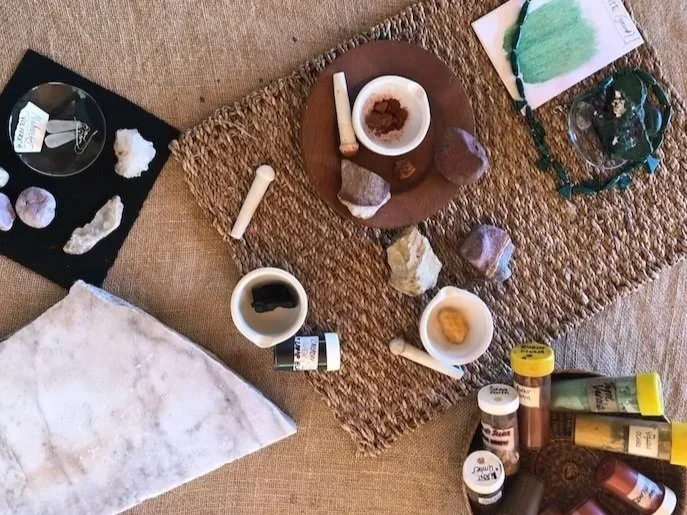
Mineral earth pigments
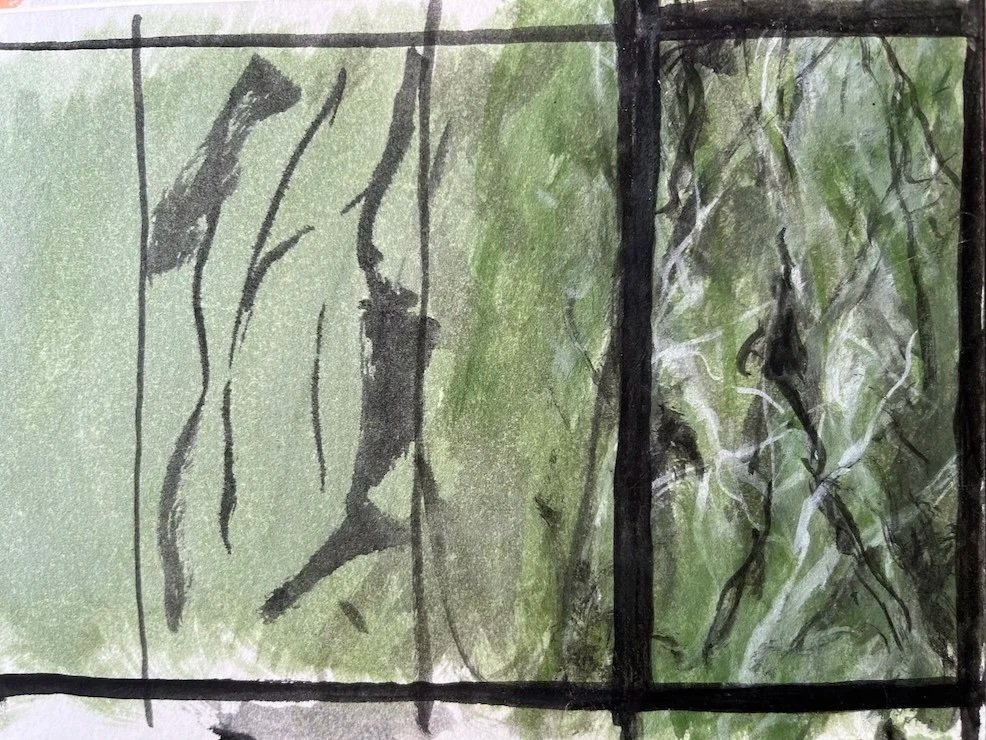
Serpentine green marble
Green ‘Serpentine’ marble (from Appenines in Tuscany)
BASE COLOUR: Green Oxide + Titanium White = TINT. Apply as flat layers over entire area.
DARK VEINS = SHADE of Green Oxide: (Mix with Black); Apply as irregular linear shapes over green base.
GREEN OXIDE - apply randomly for depth and accent.
WHITE VEINS and reflective surface sheen: Titanium white - apply as random long and broken lines, cross-crossing at angles; Add transparent white glazes to areas, creating the illusion of reflection.
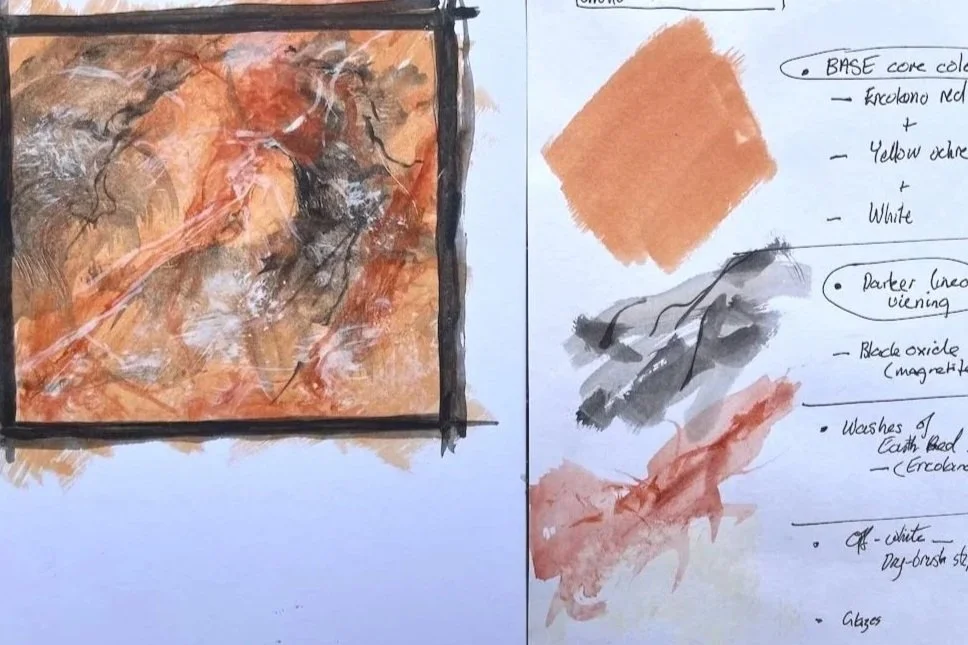
Coloured marble - based on Giotto, Ognissanti Madonna c.1300
Fictive marble on the throne of Giotto’s Ognssanti Madonna c.1300.
BASE COLOUR: orange-earth pigments. Mix Earth Red + Yellow ochre + Titanium white. Flat sweeping layers
DARK VEINS: Black oxide pigment (Magnatite). Free-form dragging of a long-line brush - twisting and dragging the brush for irregular density and movement of the ‘veins’. sweep glazes of black with a large dry brush technique
EARTH RED shapes: Red ochres (Ercolano) or red iron oxide; Apply as transparent wash lines and glazes as irregular shapes
OFF-WHITE shine: Titanium white (substitute for traditional lead white); Glazes and dry-brush stipples with a larger course brush (eg. hog-hair)
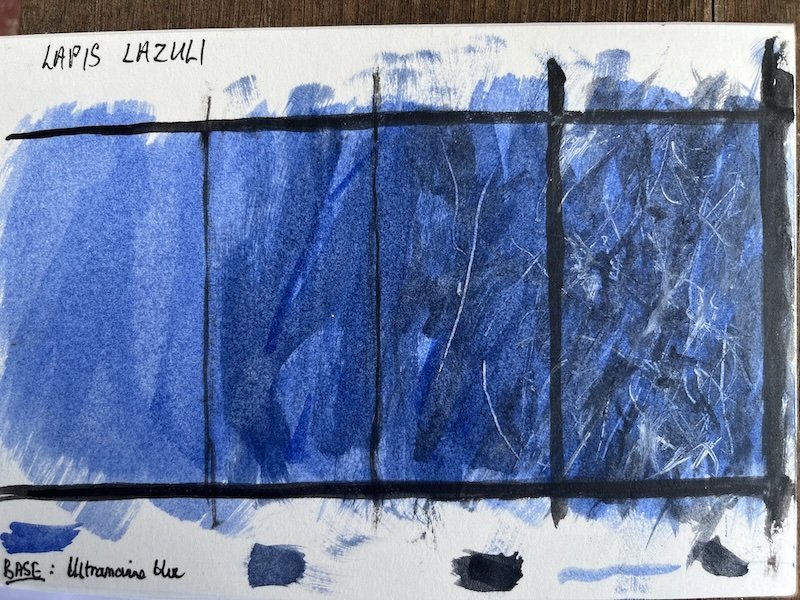
Lapis Lazuli: stages of painting (Pigments: Ultramarine blue, Oxide black, and Titanium white)