Shot-silk drapery
In the workshops of Florence artists invented new painting techniques to suggest the delicate, bright and light-reflective qualities of silk fabric, especially as drapery.
The silk industry was already highly developed in cities like Lucca, and Florence during the fourteenth century and prior to the Black Death around 1347. The fabric was high-quality and expensive - a luxury item.
NOTE: Shot silk is created with the warp (downward) threads as the main colour, while the weft (across) thread provide a contrasting reflective colour value.
Cennino Cennini gives a short explanation in his art treatise: “If you want to make a silk cloth,…lay it in with vermilion, and hatch or sprig it with red lead. Or hatch with dark sinoper; or hatch with vermilion or with giallorino …”. (T’he Craftsman’s Manual’. pp.90-91).
In my book ‘Techniques of Painting and Gilding….”, Chapter 7 ‘Painting Costumes and Figure Adornament’, I elaborate Cennini’s instructions with step-by-step visualizations of the evolutionary stages..See pp.192-197.
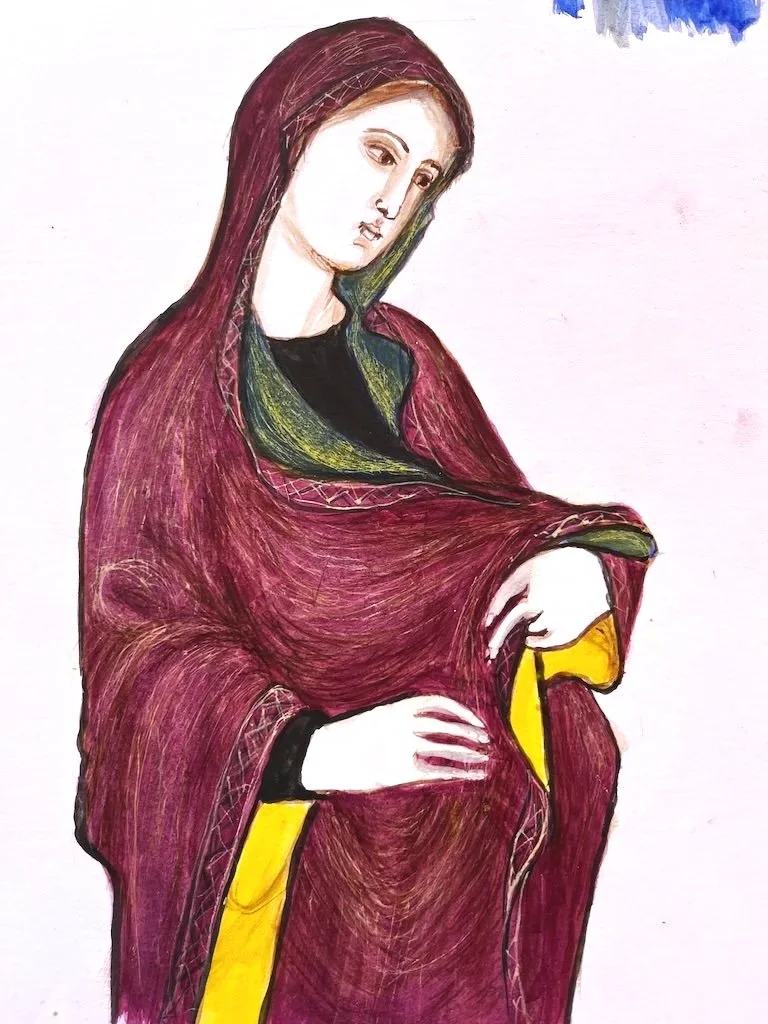
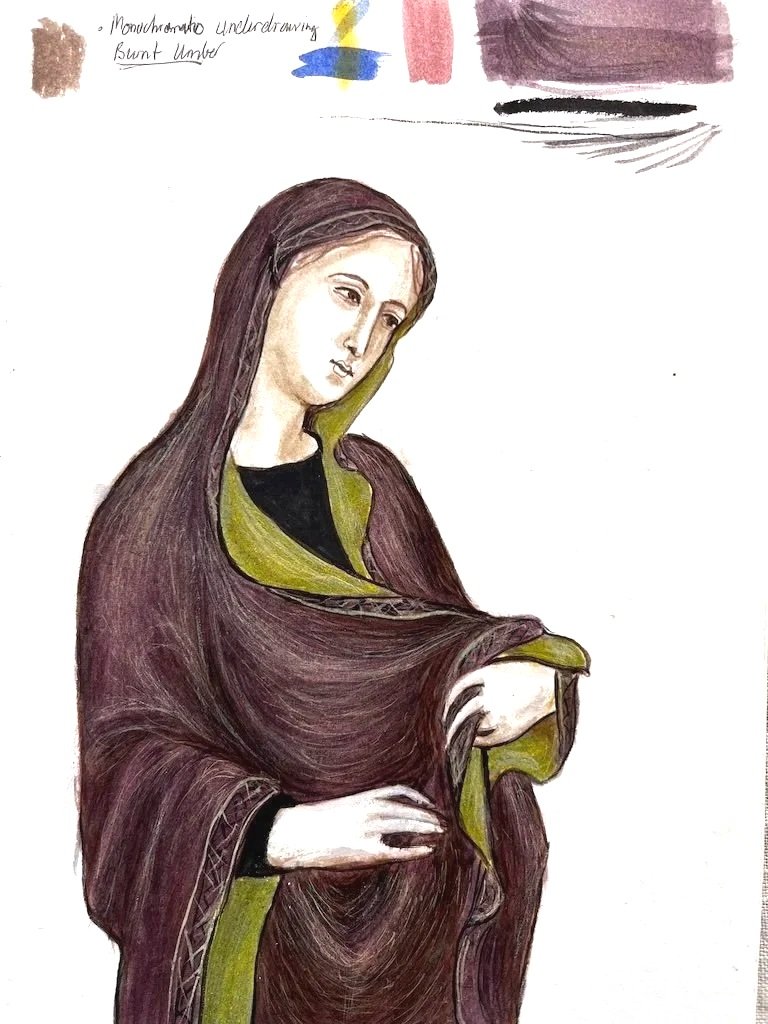
Vermillion & yellow shot-silk. Green & lemon shot-silk lining

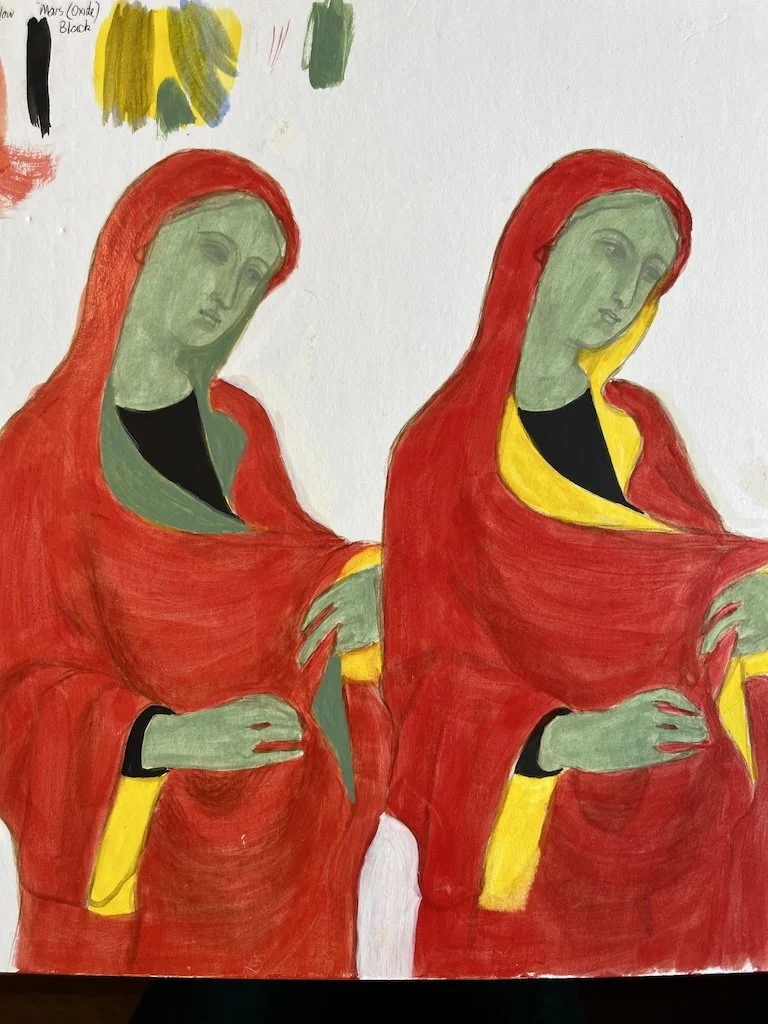
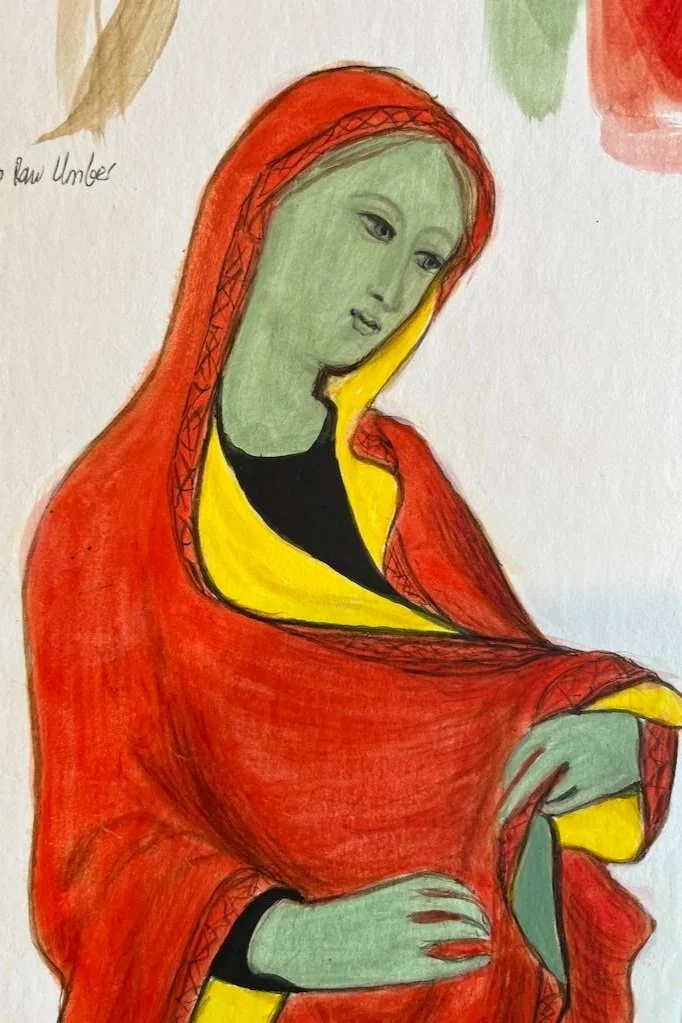
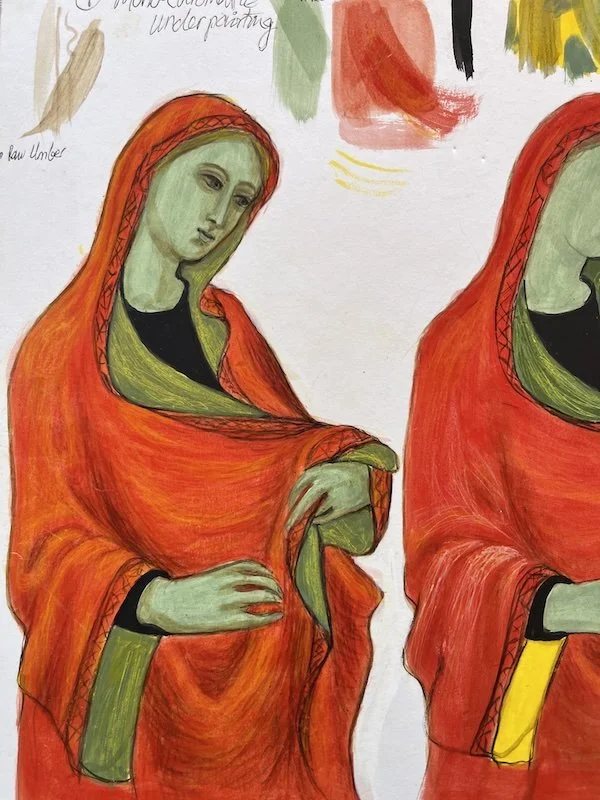
Traditional painting method (Cennino Cennini, 14th-15th centuries)
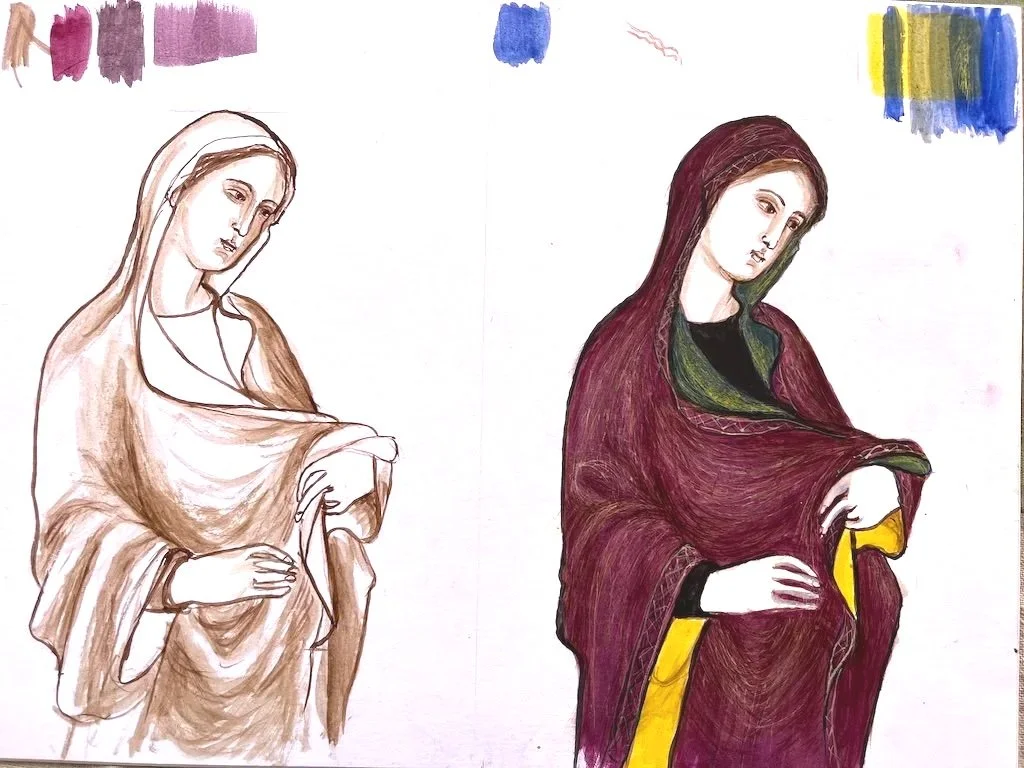
Drawing: Monochromatic painting in Raw Umber pigment.
.Step 1: Paint 2-4 glaze layers of the core drapery colour. In this case, Vermilion (Cadmium red light subst.). Large soft brush.
Step 2: Hatch or ‘sprig’ in the shadow areas, using ‘Sinoper’ or Red ochre or Burnt Siena pigments and a fine rigor or long pointed-round brush). Suggest the lightness and gentle soft fall of silk fabric.
Step 3: Suggest the weft colour threads, which are lemon-yellow in this fabric. Cennini suggests Giallorino or Orpiment, both toxic. I suggest trying Cadmium Yellow light, perhaps with a touch of Titanium White.
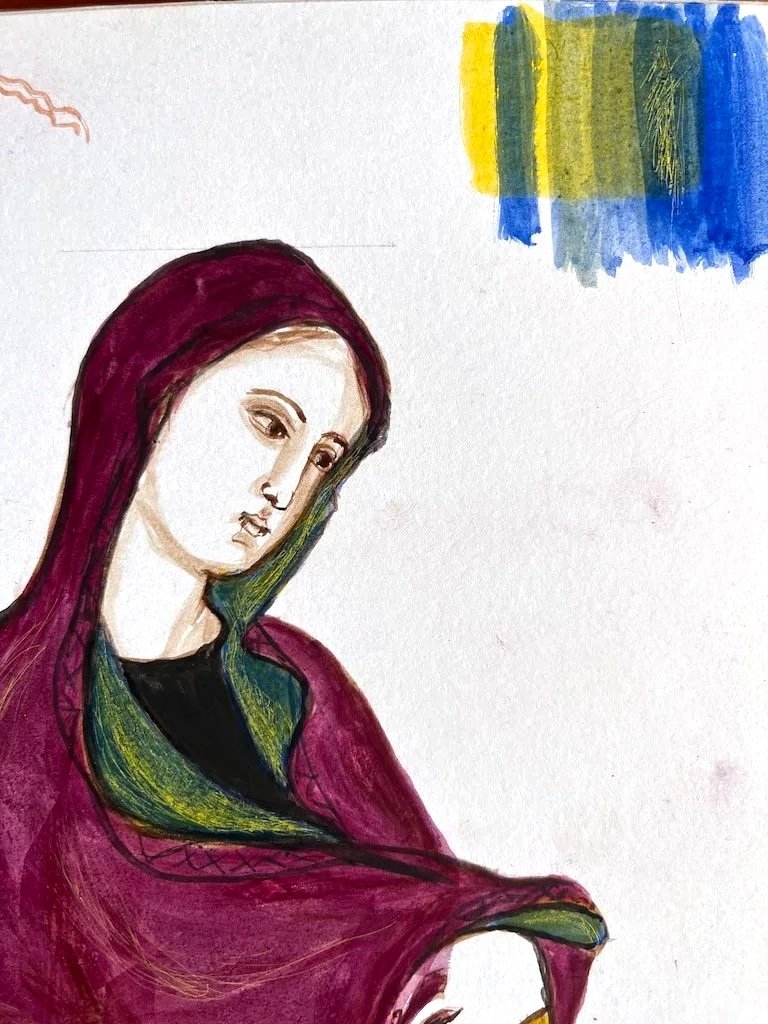
Modern technique: Sgraffito in paint layers - green and lemon shot-silk garment lining (See visual examples above and below)…
Step 1: Paint base colour lemon-yellow (weft threads). Allow to dry.
Step 2: Overlay with glazes of ultramarine blue - visual colour mix to create green. Dry for a few hours at least.
Step 3: Using a fine metal or wood tool, begin to scratch using a hatching motion - through the top layer of blue paints to reveal the base lemon layer below (See pp.191-196 in my book for an elaboration with further examples.)
Example 2: Purple silk with lemon weft reflections:
Step 1: For base purple and magenta colours, mix Cadmium red with Ultramarine blue. For a brighter magenta, add a little Dioxazine purple (break down to a paste using alcohol only, not water).
Step 2: Hatch shadows using Burnt Siena or Burnt Umber (darker than Cennini’s sSuggested Sinoper for Vermilion fabric .
Step 3: Hatch highlights with lemon-yellow mixed with a little white.