Florence - living history
Discover sacred art in Ursula’s writings, tutorials and exhibitions. Rooted in ancient and medieval traditions, the collection presents historical techniques, symbolic meanings, and practical insights for artists, scholars, and curious readers. Whether seeking technical guidance, context, or visual inspiration, it offers an accessible entry to a living heritage of devotional craft.
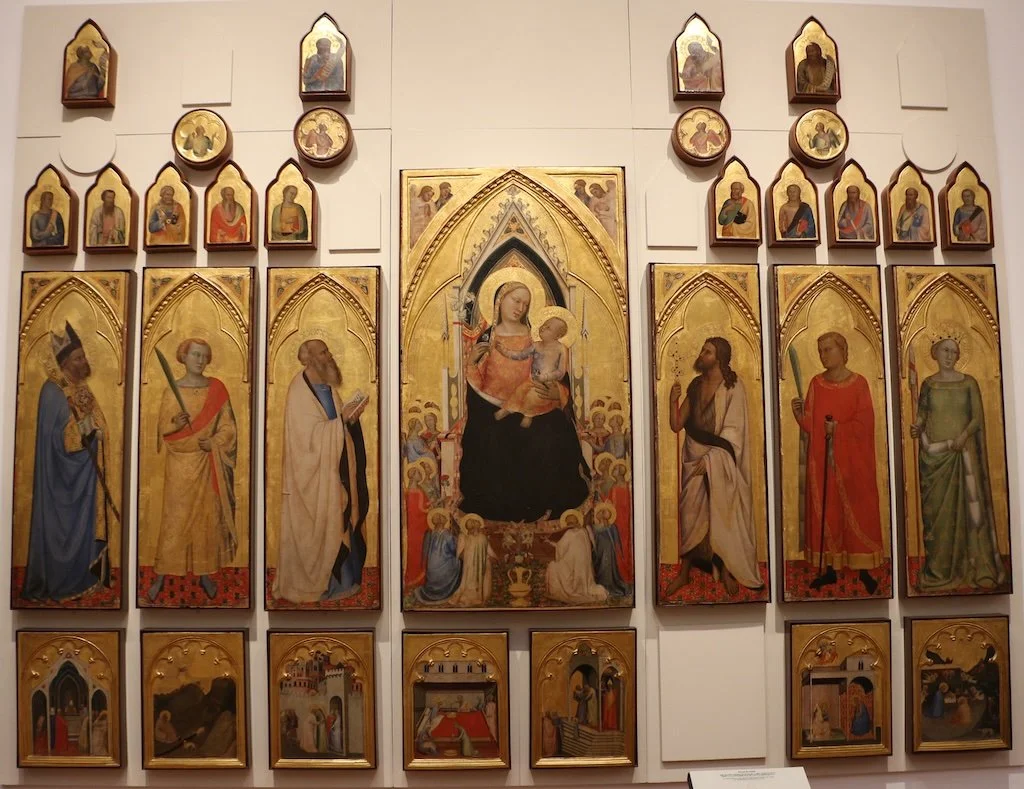
Fig.1 . Bernardo Daddi, St Pancrazio altarpiece, before 1338 (Uffizi gallery, Florence, Italy)
The people of Florence have least four patron saints … each holds the city in their care.
Bernardo Daddi’s St Pancrazio altarpiece was painted just before 1338. The now-dismembered polyptych once formed the high altarpiece for the Florentine church of San Pancrazio in the 1330s. The main section of the altarpiece represents the Virgin and Child Enthroned, with three full-length saints on each side of the main panel.
The side panels showcase the four patron saints of Florence:
To the left, Bishop Zenobius, then St Pancrazio, the titular saint of the parish church, and St John the Evangelistnext to the Madonna and Child, To the right of the Madonna stands St John the Baptist, beside St Miniato (in red), and the young female St Reparata (dressed in green).
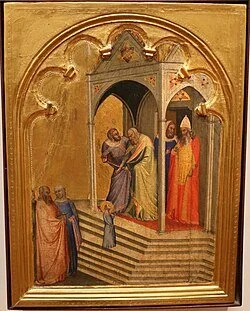
Fig.2. Predella: The martyrdom of St Reparata
St Reparata
An early-Christian martyr, died under the Roman Emperor Trajan Decius. Her significance is highlighted in a predella panel below the main altarpiece. Reparata, pictured at centre dressed in green and with a golden halo, is summoned to death for her Christian belief by an enthroned emperor.
The first Cathedral or Duomo of Florence was dedicated to St Reparata, where she was also buried in the subterranean crypt of the church. The extensive archaeological remains of the crypt can be visited today (the crypt of St Reparata).The ground level of this early church is about 1.7 metres below today's street pavement. By the 14th centuries, the crypt of the new Cathedral became a place of worship and devotional ritual for Florentine families and confraternities.
The‘new cathedral’, built in 1298, was re-dedication to the Virgin Mary as Santa Maria del Fiore – ‘Holy Mary of the Flowers’ - and is now the fourth largest church in the world.
Bishop St Zenobius

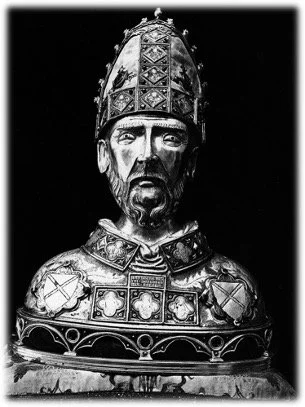
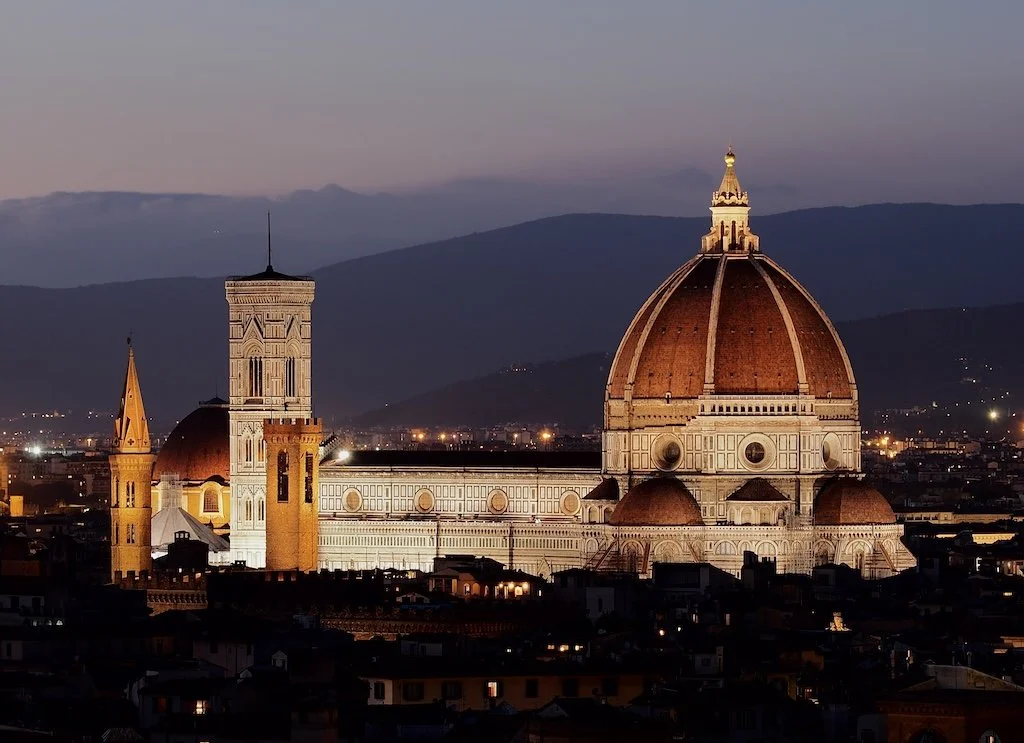
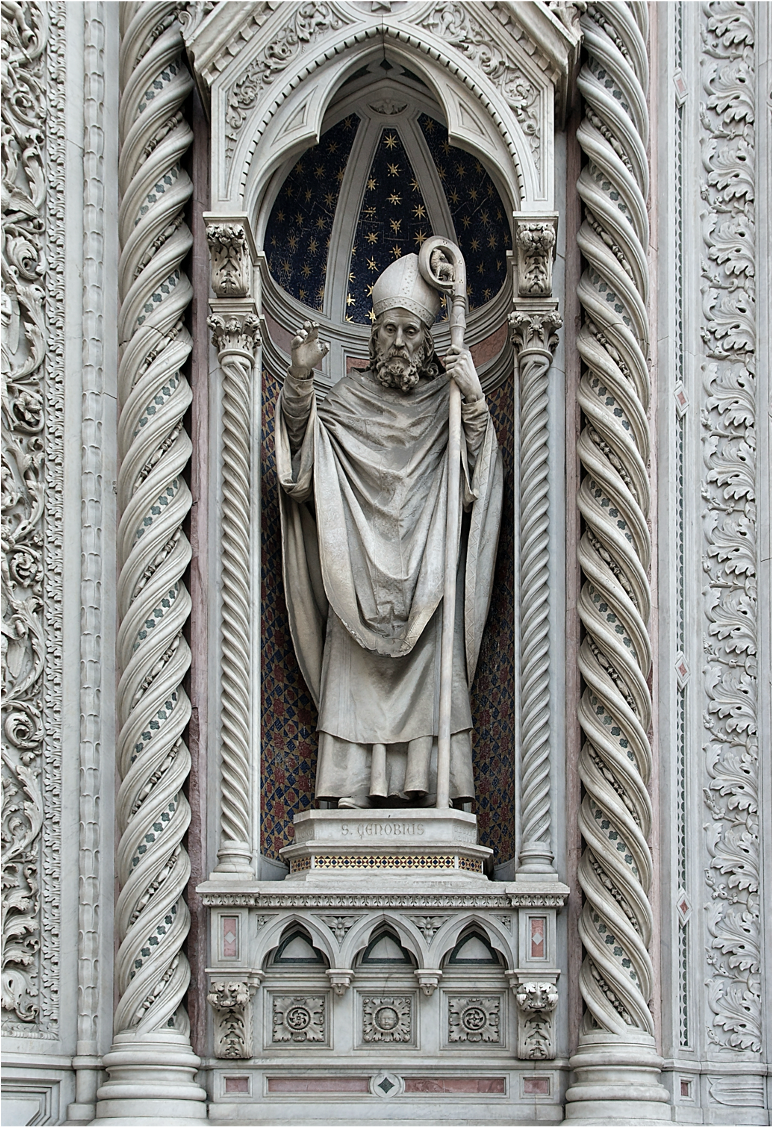
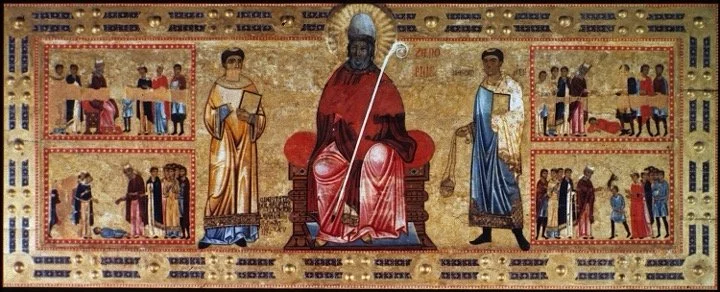
Fig.3. St Zenobius on left panel.
Fig 4. Reliquary Bust
Fig 5.Duomo - Santa Maria dei Fiore (Duomo)
Fig.6. Figural statue on Duomo facade.
Fig.7. St Zenobius altarpiece
St Zenobius, revered in Florence as their first bishop, is especially honoured in the Cathedral of Santa Maria Fiore (Duomo) with art and sculptural imagery. A 15th century sculpted figure of the bishop graces the façade of the cathedral; The metalworked Reliquary Bust of St Zenobius containing the skull bone of the bishop, dates to the 14th century. It takes a place of honour near the main altar.
A large altarpiece from as early as 1250 also depicts St Zenobius, seated as bishop of Florence wearing the red cape and mitre and holding the crozier, or shepherd’s staff.
St John the Baptist (San Giovanni di Battista)
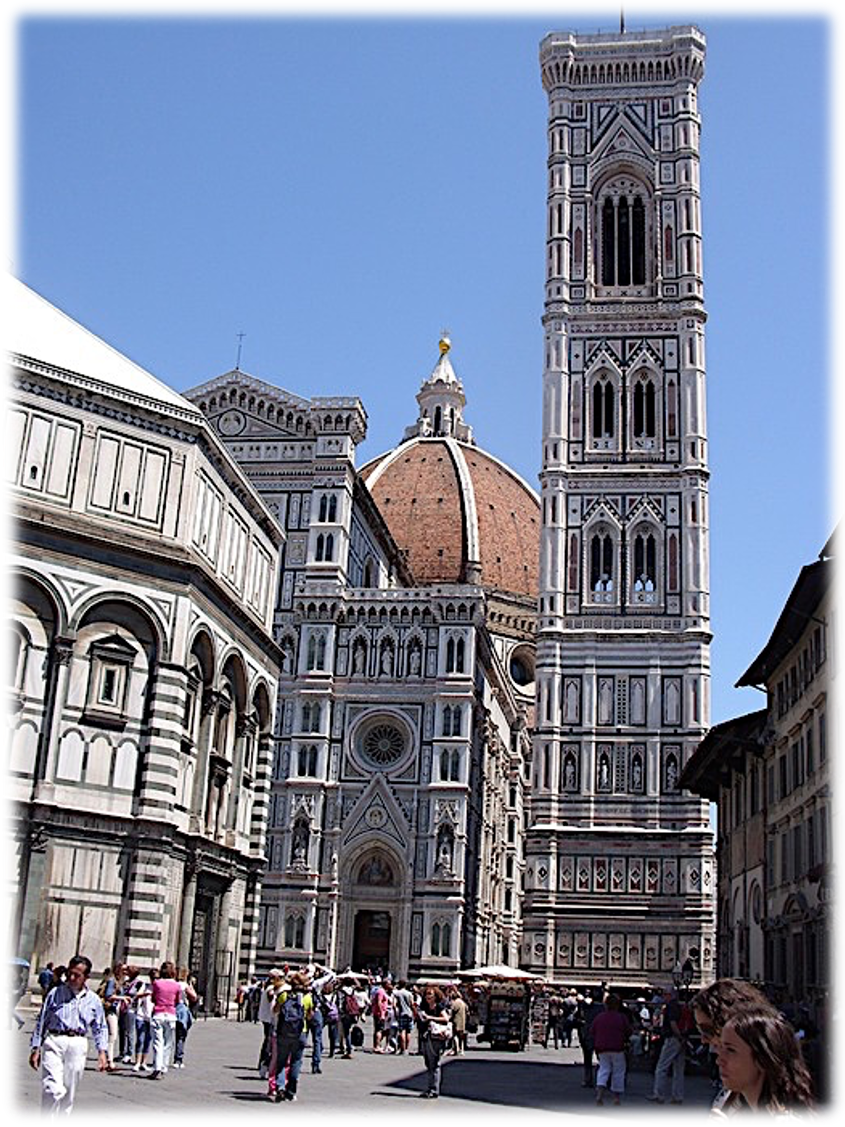
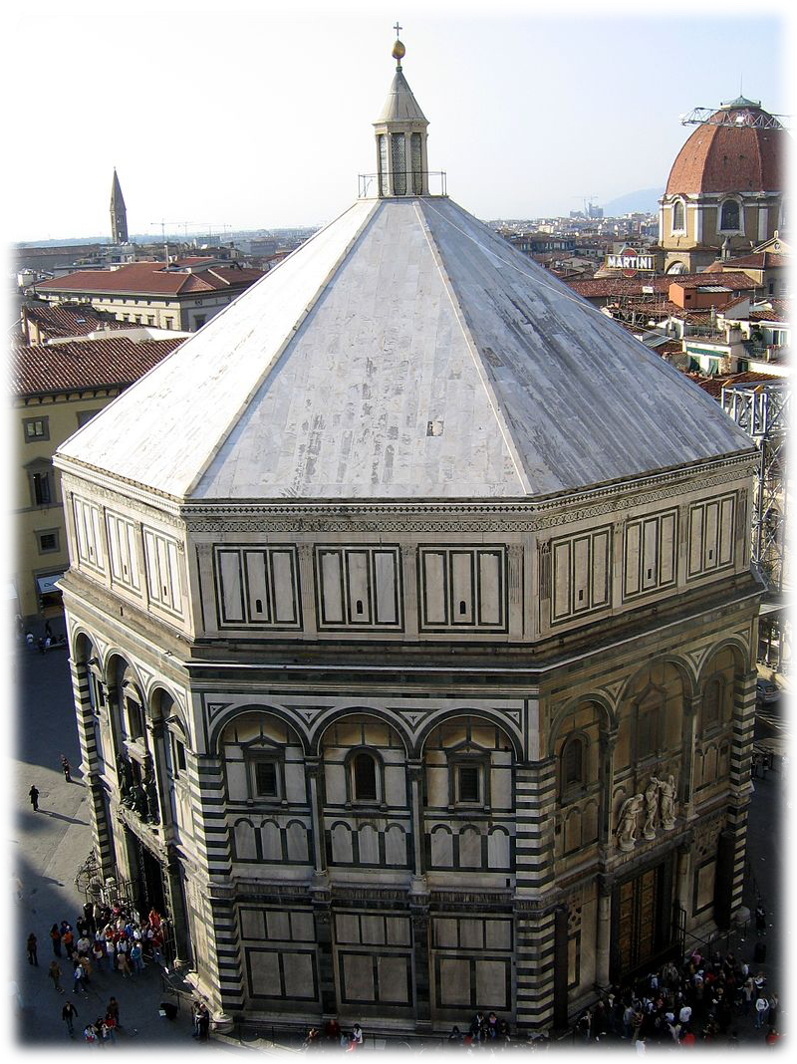
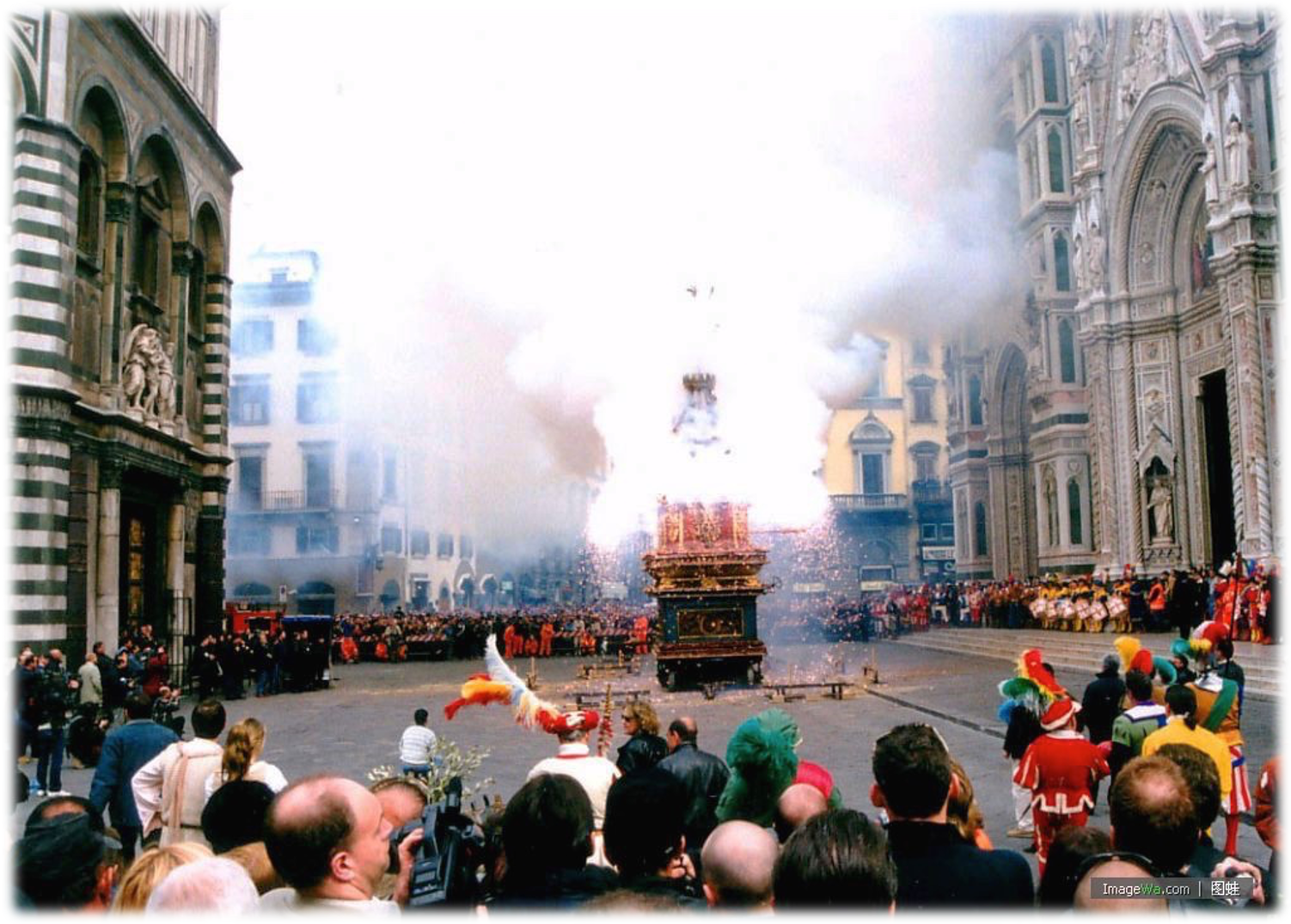
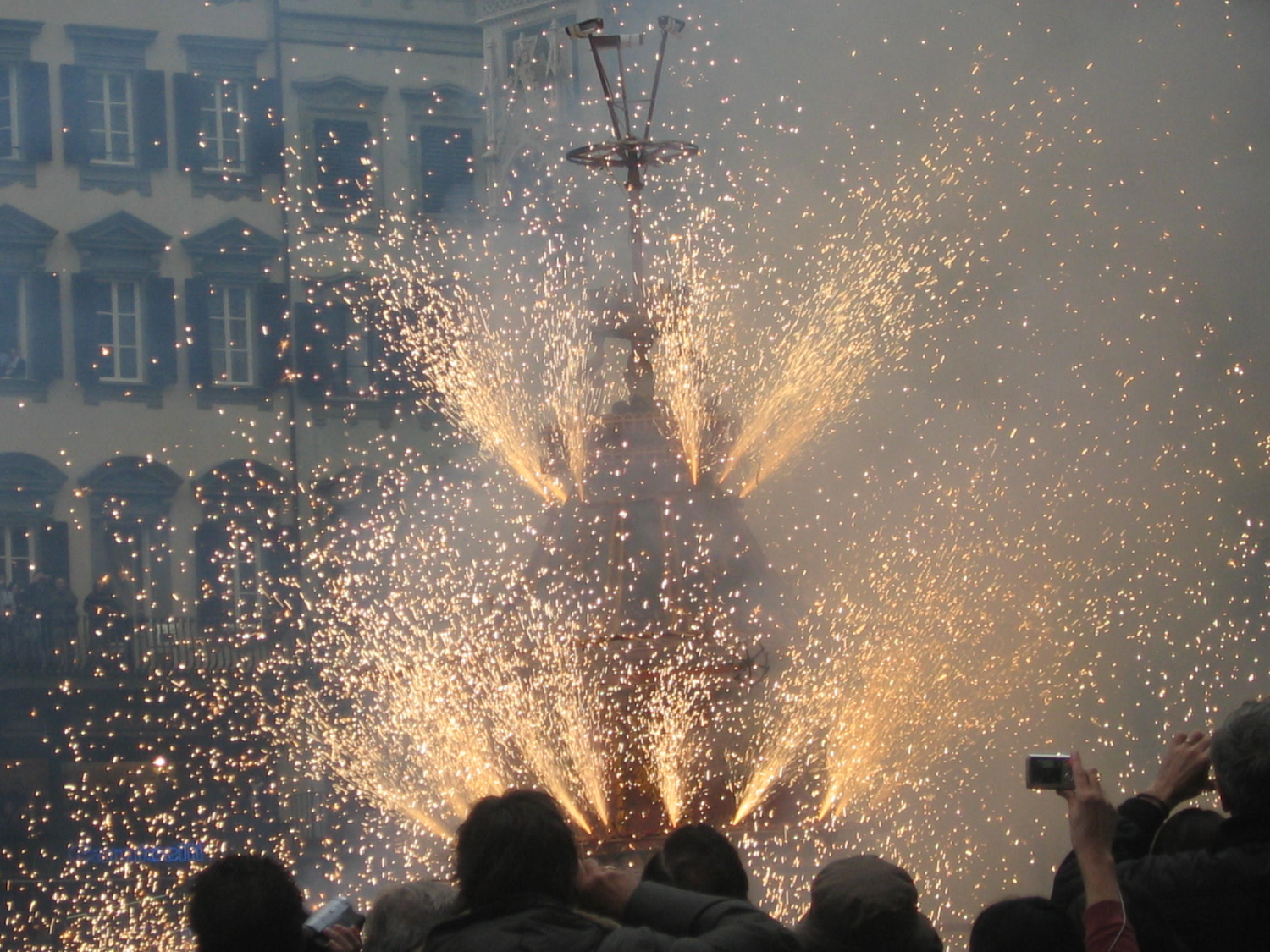
Fig 8. Piazza of San Giovanni
Fig 9. Baptistery of San Giovanni
Figs 10 & 11. Scioppio del Carro ( ‘Explosion of the Cart’)
St John the Baptist is the star patron of the city and appears to be the urban favourite today.
The Piazza of San Giovanni is the heart-centre of the old city. Three inter-related buildings constitute this urban and spiritual space: the Cathedral –Duomo; the Baptistery, and the bell-tower (Campanile). These structures are inextricably linked by important historical, religious, and artistic events to this day.
Religious festivals abound, with the most spectacular and fervent being staged on the 24th June each year, for the feastday of St John.
On Easter Sunday too, from the 15th century, the city enacts an historical festival called the Scioppio del Carro or the ‘Explosion of the Cart’. A 500 year-old cart packed with fireworks is hauled by six oxen, garlanded with the first flowers of spring – on their way to the Cathedral. During midday Mass, a wire stretching to the high-altar inside the church is fitted with a mechanical dove (the "colombina") , which bears a flame that goes all the way to the cart.
The pyro-tecnic explosion ensues, symbolizing the flame of the Holy Spirit and the new Easter Light, while the bells of the campanile resound.
San Miniato
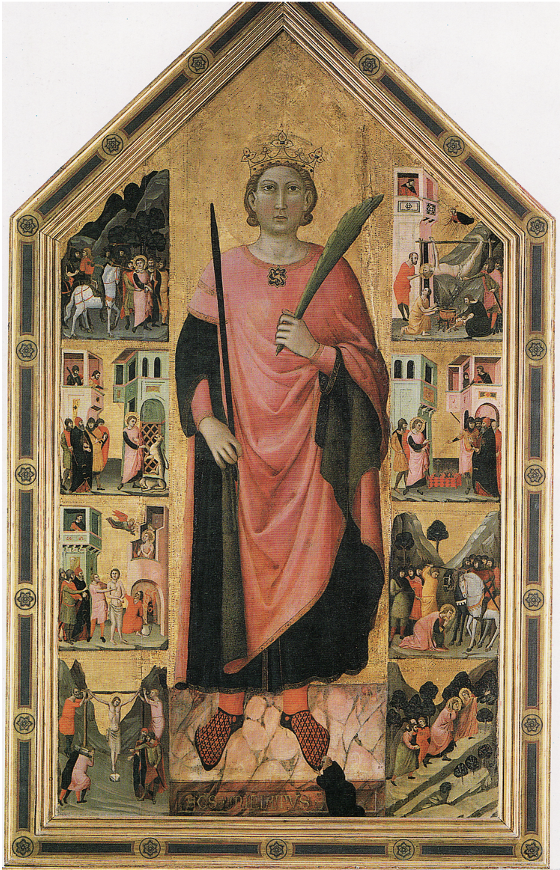
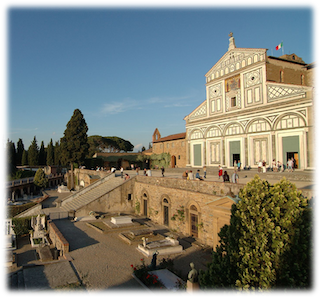
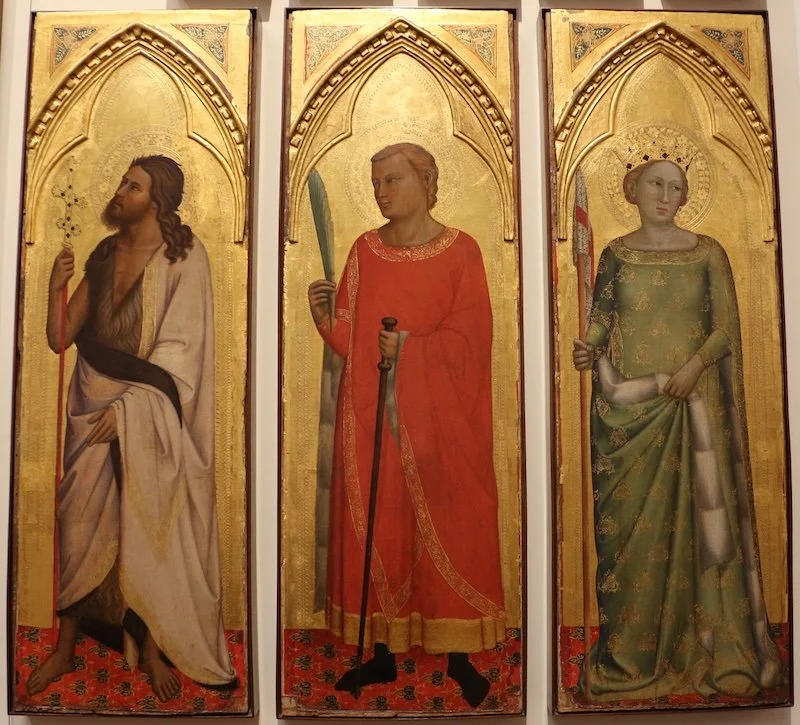
Fig.12. Altarpiece of San Miniato, Jacopo di Casentino, 1320.
Fig.13. Church and monastery of San Miniato al Monte (1013+)
Fig.14. San Pancrazio Altarpiece: San Miniato in the central panel (red cloak and martyrs feather)
St Miniato, the only early Christian martyr of Florence, is interned in his dedicatory church of San Miniato al Monte, gloriously placed on the hill of Florence (fig.13). A powerful narrative icon of St Miniato heralds the site of the saint’s relics in crypt of the church, and celebrates the site as a place of pilgrimage and prayer throughout the ages (Fig.12).
The hill upon which the church of San Miniato is built was also the site of the first Christian cemetery of Florence. Catacomb-like’chambers for the dead have been excavated here, and some date back to the 2nd century of the early Christian era. According to tradition, Miniato was born of a royal family from Armenia so he is depicted with a crown and eastern-style netted shoes and an exotic Oriental broach. Miniato also bears the green palm, attribute of his martyrdom.