Artistic Practice: Materiality and the Medieval mind

Fig 1 Bernardo Daddi, Orsanmichele Madonna, 1347, Oratory of Orsanmichele, Florence
My recent book, “Techniques of Painting and Gilding in late Medieval and early Renaissance Italy”, studies the materials and methods of the Italian Bottega or workshop of panel painters, from the 13th to the 15th centuries. It’s a book of learning through demonstration, discussion and application - based on my painting and teaching practice in suburban Elsternwick, Melbourne; and reflects the workings of a medieval Bottega in that participants learn skills, resolve design problems and produce works of sacred art themselves.
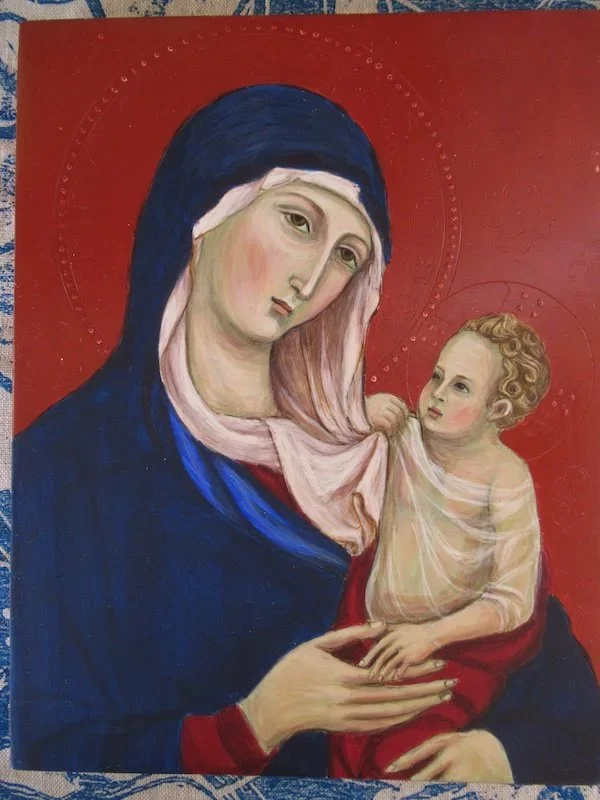
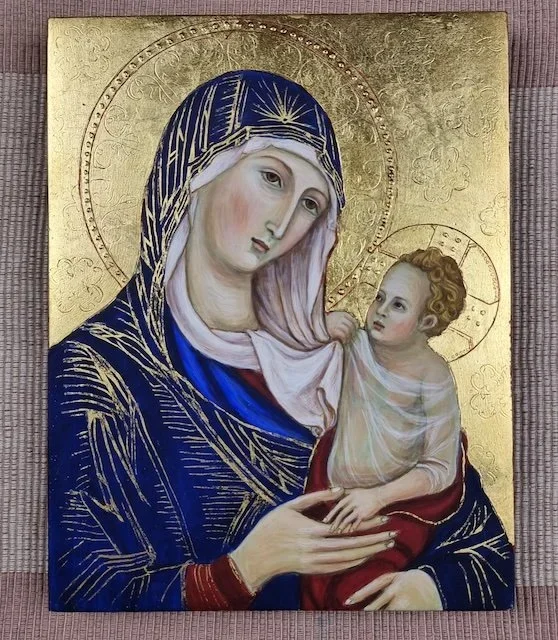
The medieval Bottega was central to the production of paintings, and other art objects, often for commission. The Florentine painter Cennino Cennini, in his enduring treatise, Il Libro dell’Arte, or ‘Craftsman’s Handbook’, provides a master-apprentice model for the workshop. His “hands-on "how-to" manual - instructs on the materials and methods for use by artisans - working in the 14th and 15th centuries. Grounded in and developed from Cennini’s treatise, along with his workshop model, my Elsternwick painters’ studio underpins the visual and instructional content of the book. It also continues a long ‘love story’ with the image of the Madonna and Child.
We can ponder ways that the maker and the making of an altarpiece might reflect a medieval aesthetic mind; first, through the artist’s devotional connection with the sacred subject; second, in the qualities inherent in the painter’s tools and materials, and third, in the sequential and evolutionary process of creating and making.
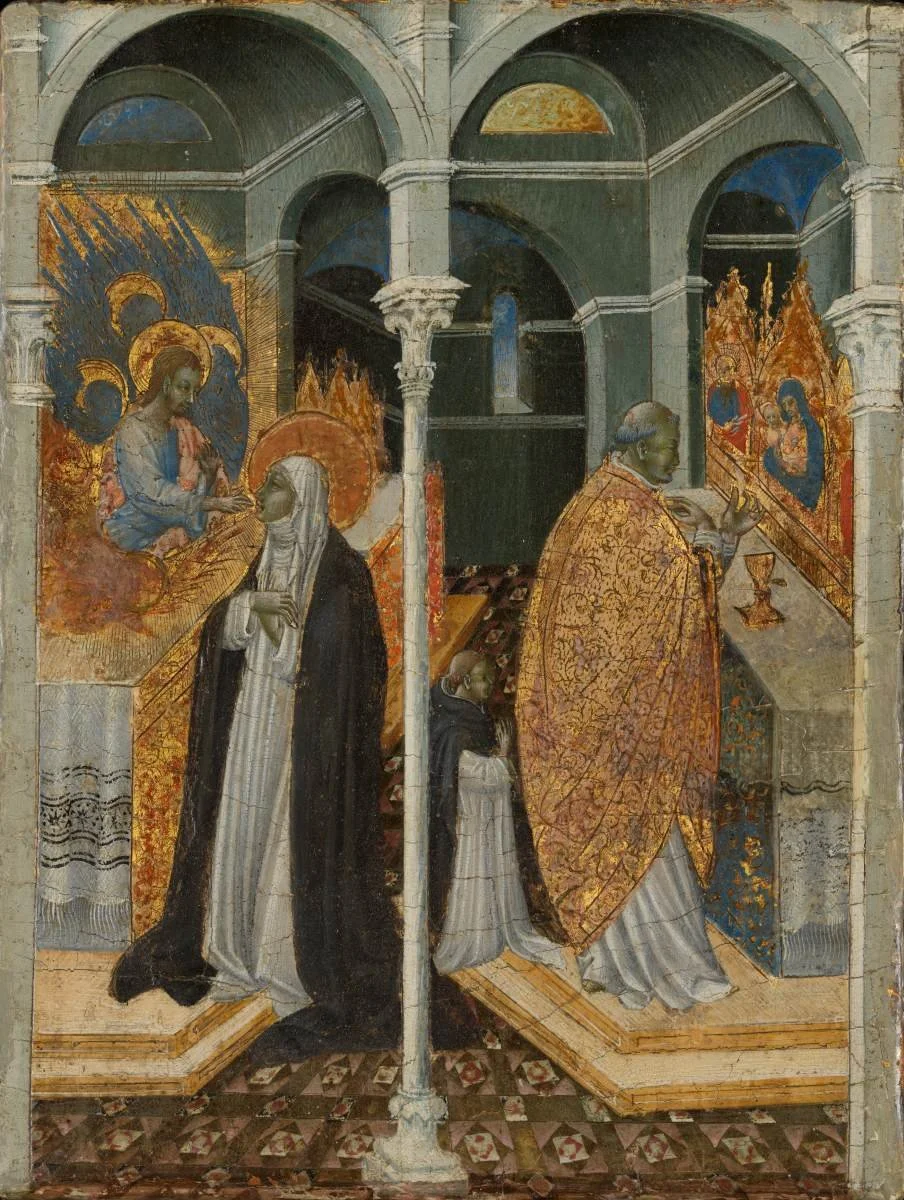
Fig 2 Govanni di Paolo, Miraculous Communion of St Catherine of Siena, Siena, c.1465, The MET, Robert Lehman Collection, New York
Madonna and Child
Carpenter, painters and gilders, as the makers of major works for church and chapel altars, were also active participants in communal devotions and formal worship. Many were members of guilds and confraternities, where the altarpiece of the Madonna and Child held a crucial symbolic and liturgical focus. Ss the main altarpiece subject, Mary as mother also invited reverential devotion, …especially as a provider of divine nourishment through the Eucharistic bread. Giovanni di Paolo’s Miraculous Communion of St Catherine of Siena (fig.2) depicts the ‘elevation of the host’ by the priest at Mass – directed to the altarpiece of the Madonna and Child; While to the left, the 14th century mystic receives the consecrated host - the ‘body of Christ’, as her spiritual food; And where Christ himself is envisioned as the administering priest.
Bernardo Daddi with his Florentine workshop, was commissioned by the Confraternity of the Madonna of Orsanmichele, to replace a miracle-working pillar icon, badly damaged by fire in the Orsanmichele grainstore. Daddi’s post-plaque painting, of 1347, is the enshrined Orsanmichele Madonna, still in situ in Florence. The artist well knew the spiritual potency of that ancient icon. His ‘replacement’ image - clearly perpetuated the Madonna as the great intercessor - who intervened to end the plague in Florence – before its resurgence a few years later!
As bottega Masters, major Italian painters cemented an aesthetic of ideal or intrinsic beauty - in the depiction of the Madonna and Child. These notions were surely perceived through the lens of divine blessing, expressed through the Madonna’s powerful intercession;And drew deeply on the shared experiences of devotional networks. The 13th century Dominican theologian, Albert Magnus, theorized this notion, writing on the ideal physical beauty of Virgin Mary as being a direct manifestation of her spiritual state as ‘full of grace’. The artist’s signature, too, when it does appear, illuminates the intent of the painter of the sacred. Duccio’s inscription at the base of his Maesta altarpiece, for example, reads as a prayer for city, community and self: "Holy Mother of God, be thou the cause of peace for Siena, and life to Duccio, because he painted thee thus."
Painters tools
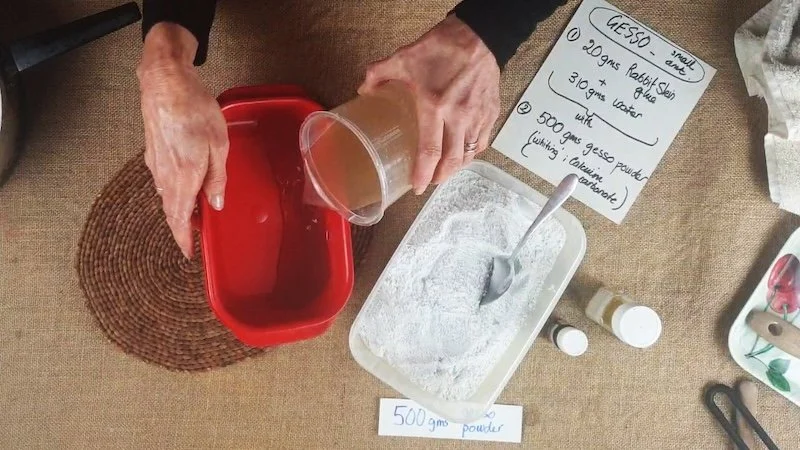
Fig 3 Preparing the gesso solution
A master’s apprentice first learnt to prepare the ground (or surface) of the wood panel. Numerous layers of warm white gesso, painstakingapplied with a large brush, primed the ground for the later painting and gilding. Gesso, or gypsum, was a locally mined substance of either Calcium Carbonate or Sulphate - quarried from Bologna and Volterra. After refinement into ‘whiting powder’, it’s mixed with warmed and liquified animal glue; most often sourced by boiling the skins of rabbits (fig.3).
What connections with material substances might be established in these initial stages of altarpiece-making? And what memories do materials carry? Umberto Eco, in “Art and Beauty in the Middle Ages”, states that the Medieval viewpoint tended to observe nature and its elements, as a reflection of the transcendent world. (p.5)
Shells, and sea-bone matter, constitute the formation of ancient white chalk (calcium carbonate) - created by natural elements, and the long processes of time and change. White absorbs all the colours of the rainbow; and white reflects brilliant light. This reverence for luminosity, can also be located within the context of prevailing belief in the biblical narrative of Creation. As the Creator Spirit moves over the earth, it is filled with life and breath /spiritus. The white surface from which the painted image emerges, thereby acts as a ‘sacred ground’ (fig.4). And in that sense too, may be interpreted as a revered secondary relic of God’s creative breath.
Well before the invention of sandpapers, artisans embarked on the tedious process of scraping down the gesso, until the surface was entirely flat. Cennini advised his apprentice to dust black charcoal all over the rough white gesso to amplify any cracks or bumps! A flat-edged tool was then repeatedly scraped over the gesso, so that, in Cennini’s words - only when the entire area is ‘as white as milk’, and as ‘smooth as silk’, is the panel ready for the evocation of the sacred image.
As drawing tools, charcoal sticks made from willow or grapevine twigs –were used to establish the initial design onto the gesso panel; with a feather used as a duster! Cennini instructs in the making of ‘willow coals’, by baking and charring sticks from the willow-tree -to coal (fig.5). Paint brushes, too, were crafted by hand from naturally sourced materials. For a fine-line brush, Cennini advised the use of the hairs of a minever tail; making bunches of various sizes, and binding them into the hollow of a hen’s feather. For larger and stronger brushes, white hog’s bristles were attached to a goose quill (fig.6).
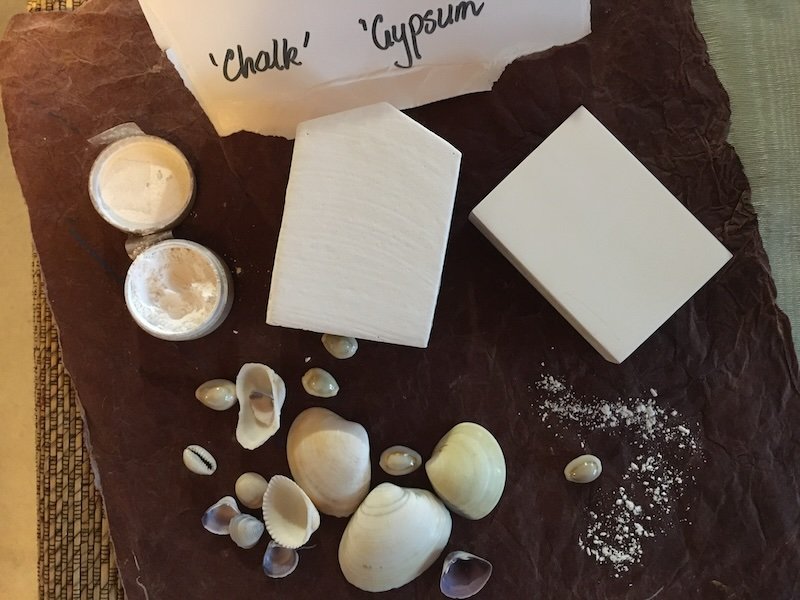
Fig 4 Gesso power; Chalk; shells; Calcium Sulphate
Painters’ Materials
Pigments, the colouring component of paint, were traditionally derived from mineral, vegetable and animal sources; along with the results of experiments in alchemy. The medieval palette, as Daniel Thompson evocatively writes, ‘was treated almost like a collection of precious stones, to be grouped in the painting with as much regard for their intrinsic beauty as possible.’ (fig.7). Pure colours such as yellows, blues and reds were often used alone, without being mixed with other values, and in. reverence to their origins.
Painters clearly acknowledged the inherent qualities of pigments. Natural earth colours - earth ochres and iron oxides, for example, were valued as ancient in nature - and concealed within a divinely created ground; While pigments derived from rocks and clays were deemed mysterious, harmonious and intrinsically beautiful; thereby manifesting the beauty ordained by the Creator. Through a simple process of gently pounding, geological matter is converted to pigment powder, with all the beauty of iron revealed; And just as the earth absorbs rain, its pigments were observed to be readily soluble in water – connected timelessly with its divine Source.
Semi-precious mineral stones like the deep-blue lapis lazuli (fig.9), along with the blue-green malachite, (fig.10), first needed to be ground to a course powder before refinement with further processing. The substance was then stored in little jars, brimmed with water to prevent dehydration. Pigments used by monks, nuns and lay artisans - to illuminate manuscripts or wood panels, were initially manufactured in the workshop or monastic scriptorium. By the later 14th century, colours could also be purchased from an apothecaries’ shop; and were sold alongside traditional medicines such as spices and herbs.
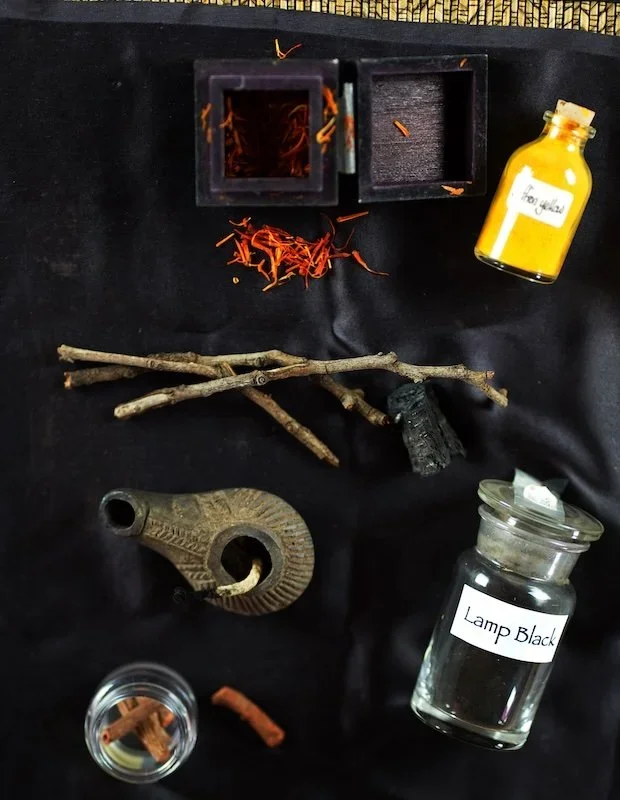
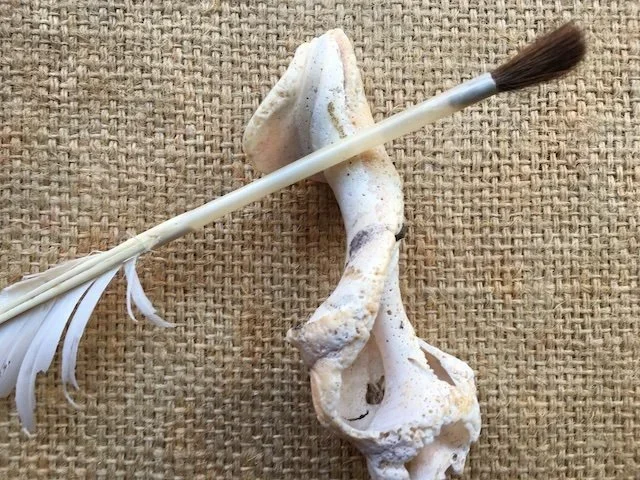
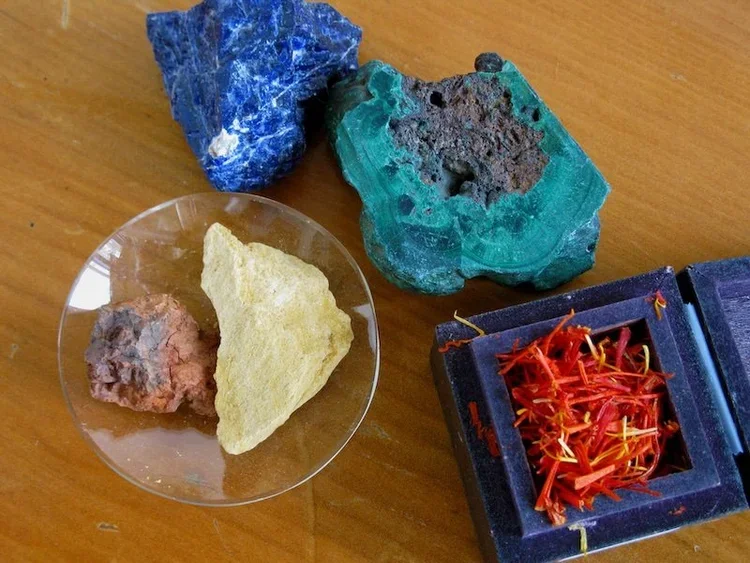
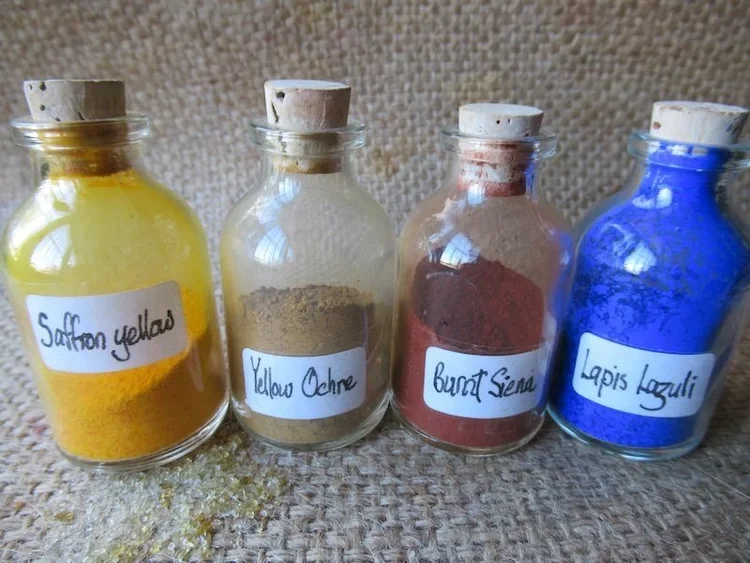
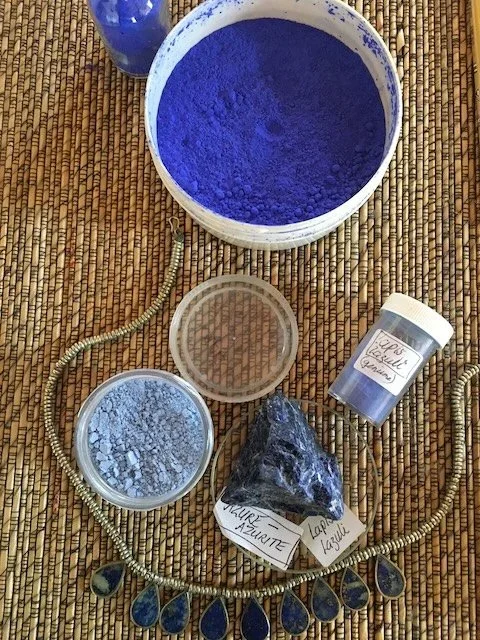
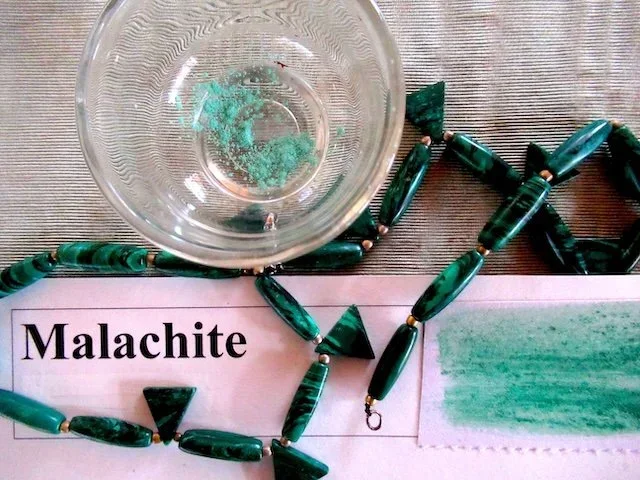
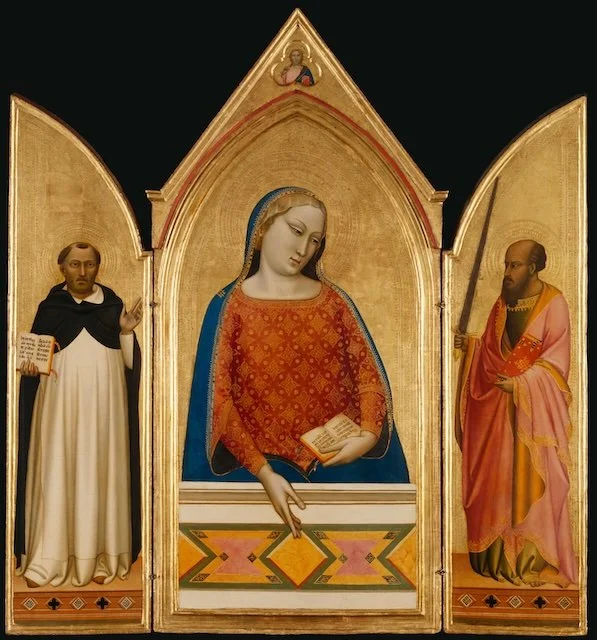
Fig 11 Bernardo Daddi, The Virgin Mary with Saints Thomas Aquinas and St Paul, c.1335, Florence, J. P Getty Museum
Colour symbolism
Aaesthetic sensibility was also informed by the symbolism associated with various colours and can be further associated with Neo-Platonism, which taught that ideal beauty reflects the Divine presence or essence. Bernardo Daddi’s Florentine panel of The Virgin Mary, about 1335, follows the symbolic conventions and aesthetic values of colour - associated with the holy Icon of the ‘Mother of God’ (fig.11). Ultramarine blue pigments refer to the weightlessness of the Spiritual, which transcends the sensual. The ‘Mother of God’ is thus most often depicted in an outer robe of rich deep-ultramarine blue, since - as the virgin mother, she is the pure sacred vessel for the miraculous incarnation of the Christ.
Medieval pigment-makers were also alchemists. Experiments with chemical reactions between vinegar and the native red sulphide-of-mercury - ancient Cinnabar, produced the rich-bright red colour of Vermilion (Fig.12). The under-dress of the Madonna is frequently painted in this red; denoting a deep humanity, and a profound love.
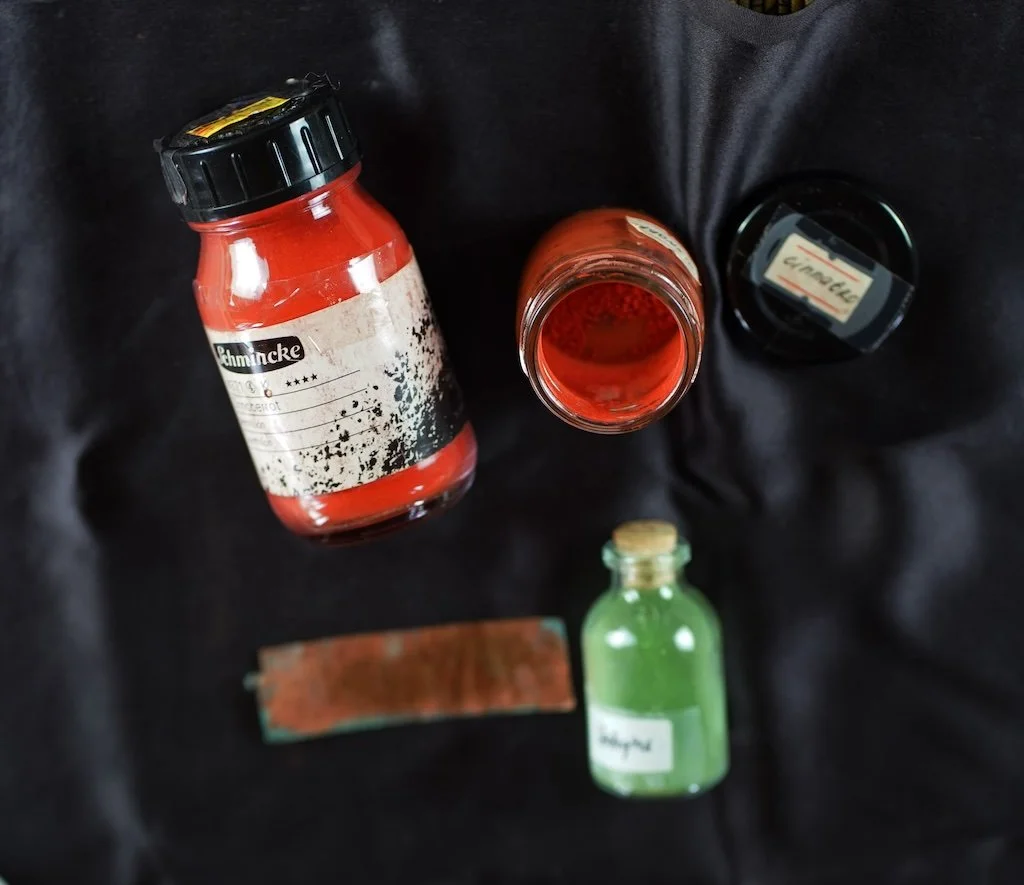
Fig 12 Vermilion pigment - Verdigris (green)
Evolutionary process of creating and making
The process of painting is one that involves a gradual evocation and evolution of the image. This ‘Slow Art’, where the maker acknowledges the subject as sacred, emerges through a process of concentrated contemplation, and it invites a necessary connection between subject and maker.
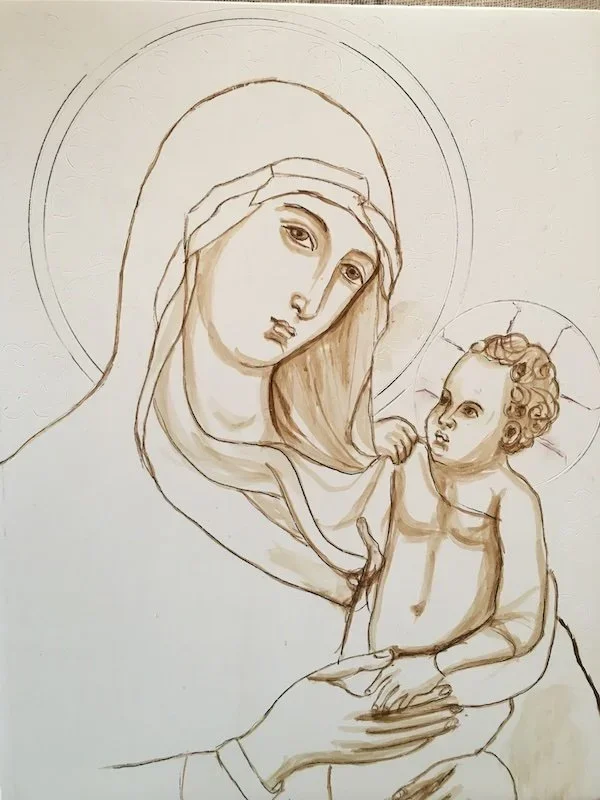
A full-size ‘cartoon’ drawing is first made on paper using charcoal, establishing the initial composition. The prototype panel painting used is Duccio di Buoninsegna’s timeless image of the Madonna and Child with Six Angels, c.1305 (fig.13). The imagery further materialised on the gesso panel itself, with charcoal marks, and then the painting of lines and shadows in a monotone earth pigment mixed with water. This time-honoured practice - of establishing the underdrawing before the application of painted colour overlayers, was recorded by Theophilus as the membrane technique in his twelfth-century text - On Divers Arts (fig.14).
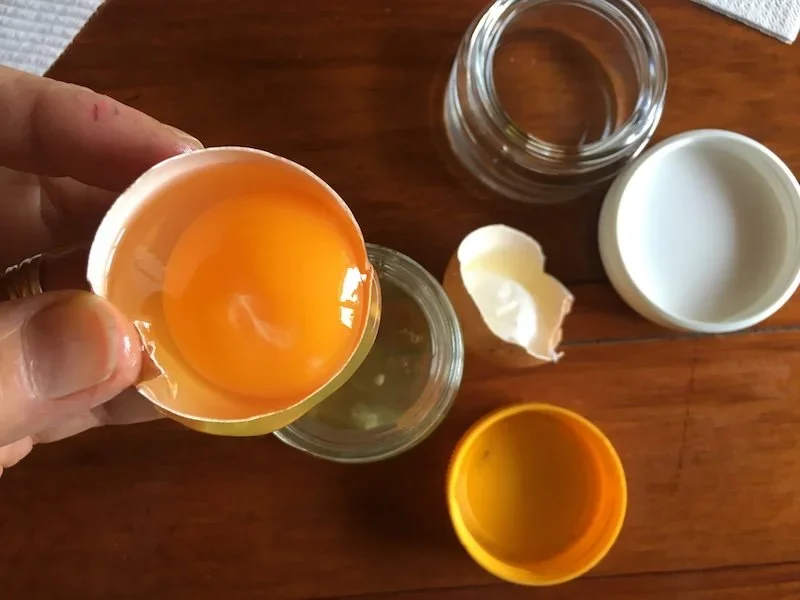
The making of egg tempera paint involves the breaking of a hen’s egg! The natural emulsion of egg yolk is bound with colour pigments, making a water-soluble and fast-drying paint (fig.15). The application is reliant on semi-transparent overlays of colour, … creating a smooth translucent surface, … where the white gesso ground acts as a reflector of created and uncreated light.
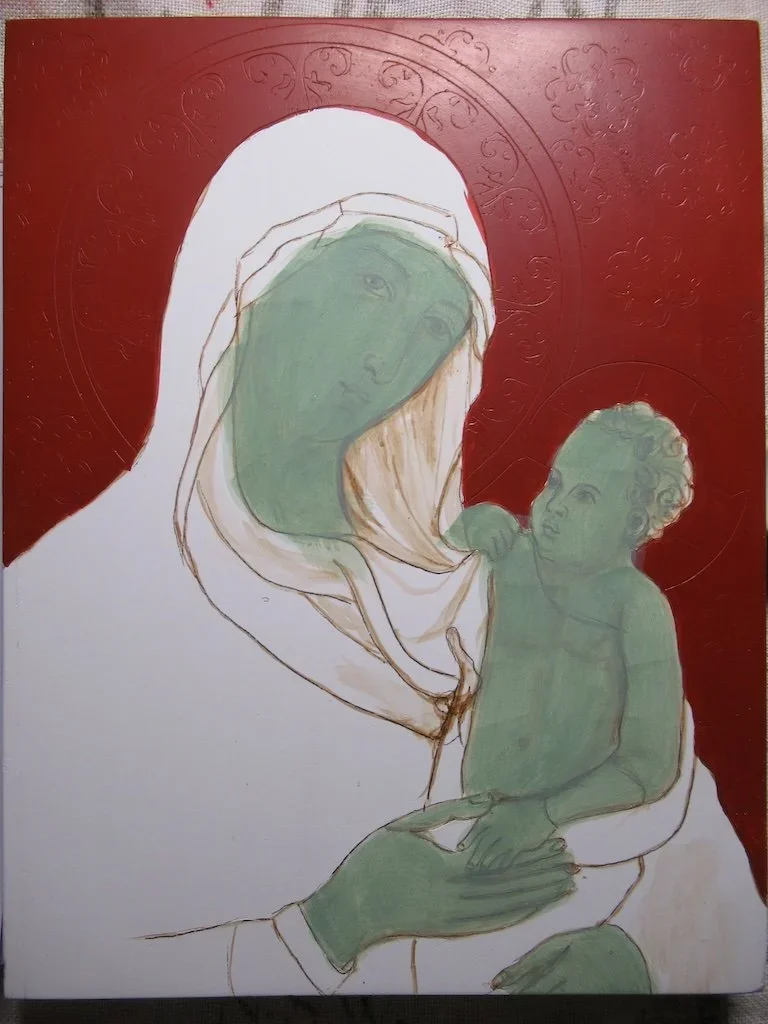
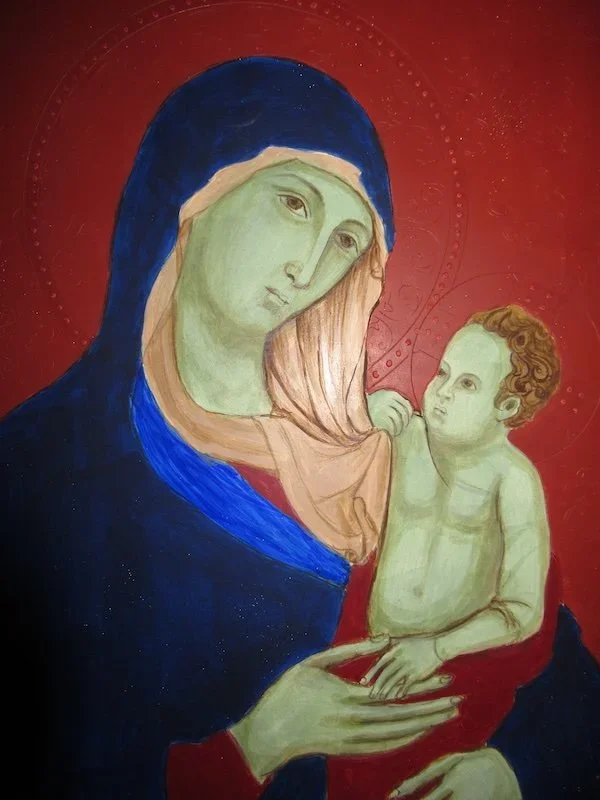
Distinct stages of painting are discernible in the workshop methods of Italian panel-painters. The core underpainting is layered on as flat semi-transparent areas of colour. For the flesh, a little white is mixed with Italian earth green - terre verde. (fig.16). Through the subsequent evolutionary stages of the membrane technique, the artist acknowledges the materialisation of the Sacred. Form evolves from simple obscurity - towards the manifestation of ideal beauty – expressed through colour, clarity and radiance (Figs. 16-19). This reverential connection with the sacred subject, and the immersive participation in the painting process, lends itself to meditation;… and where too, the state of interior creativity is irrevocably connected to the image itself.
The medieval artistic mind is not ‘alien’ to us. A deep connection can be found in the practice of ‘slow art’, ‘deep work’, and in the seeking of sacredness in things.