Painting drapery
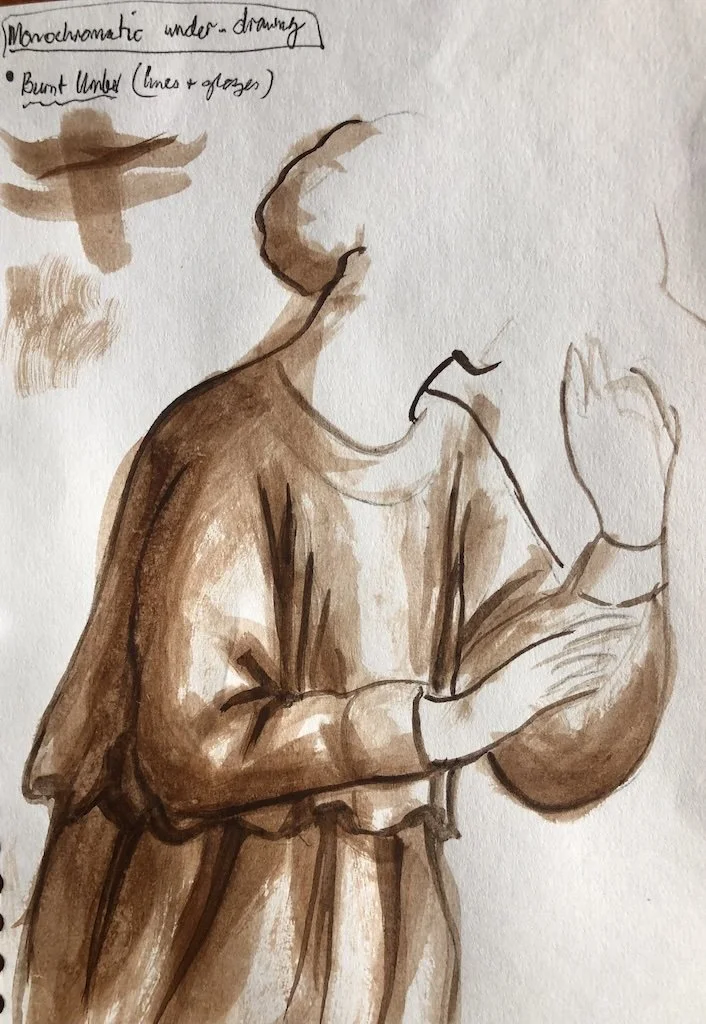
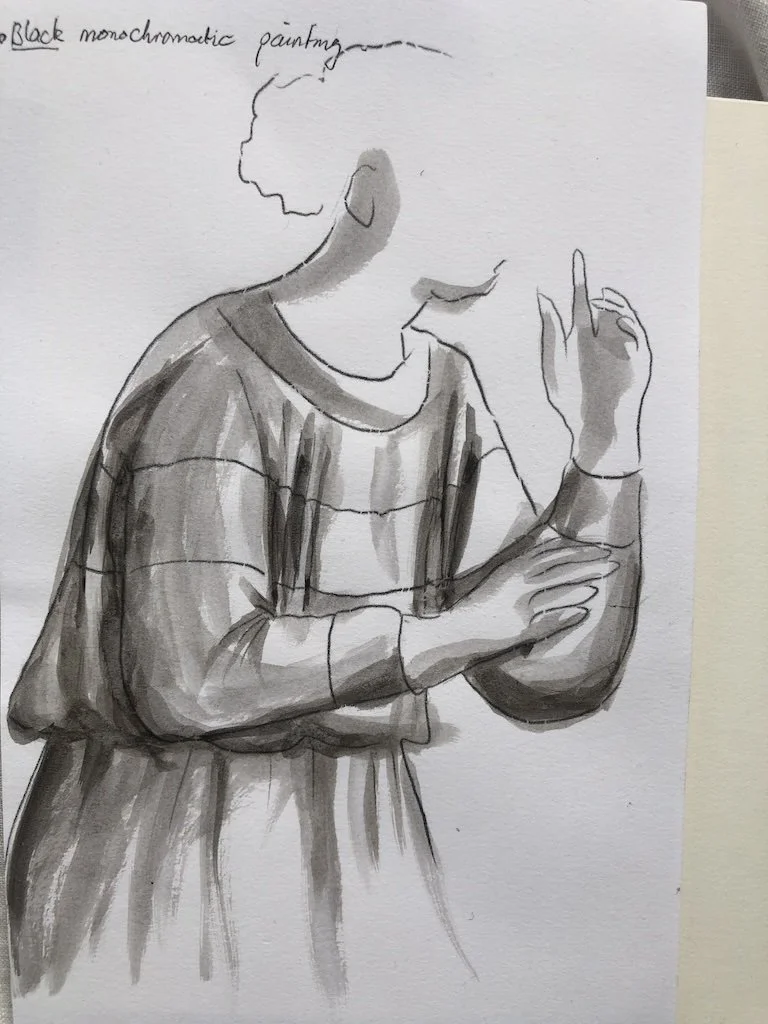
Tonal underpainting
Step 1
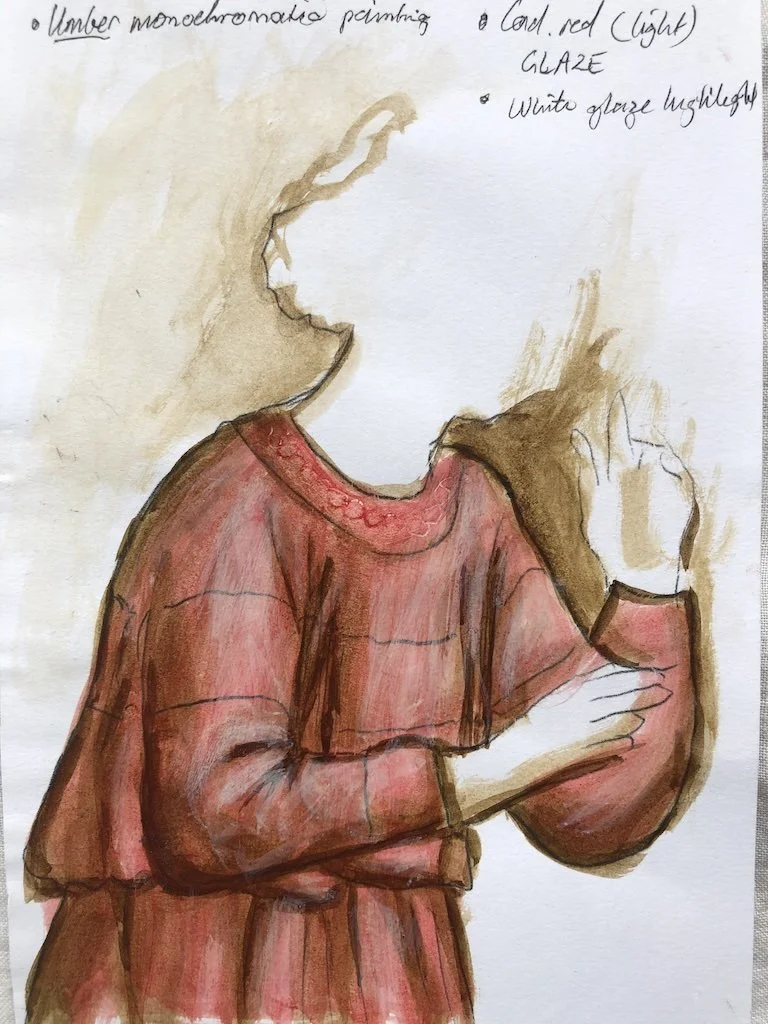
For the monochromatic underpainting of the figural drapery: Use any tonal value such as black, burnt umber, or raw umber.
Linework applied initially for the darkest fold areas
Then apply glazes (of the same colour value) to establish the range of shades from darkest to lightest areas;
Achieve the graduation through overlaying the same glaze colour to deepen the shadows.. Leave the highlights of the drapery as the white ground of the gesso panel or watercolour paper.
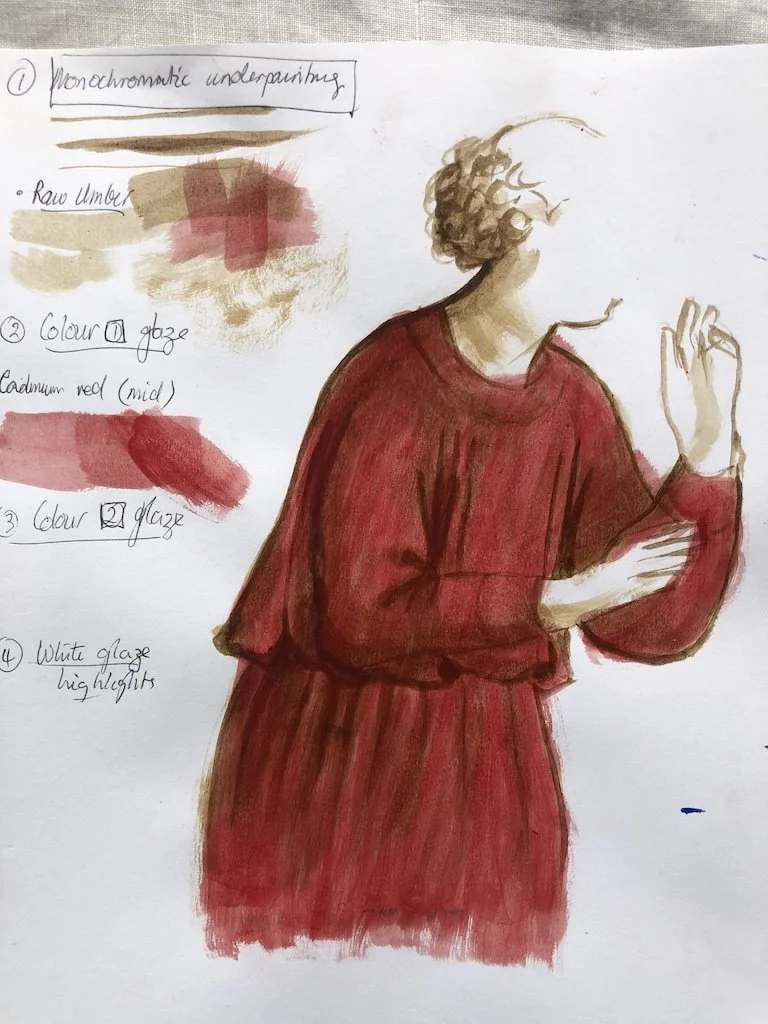
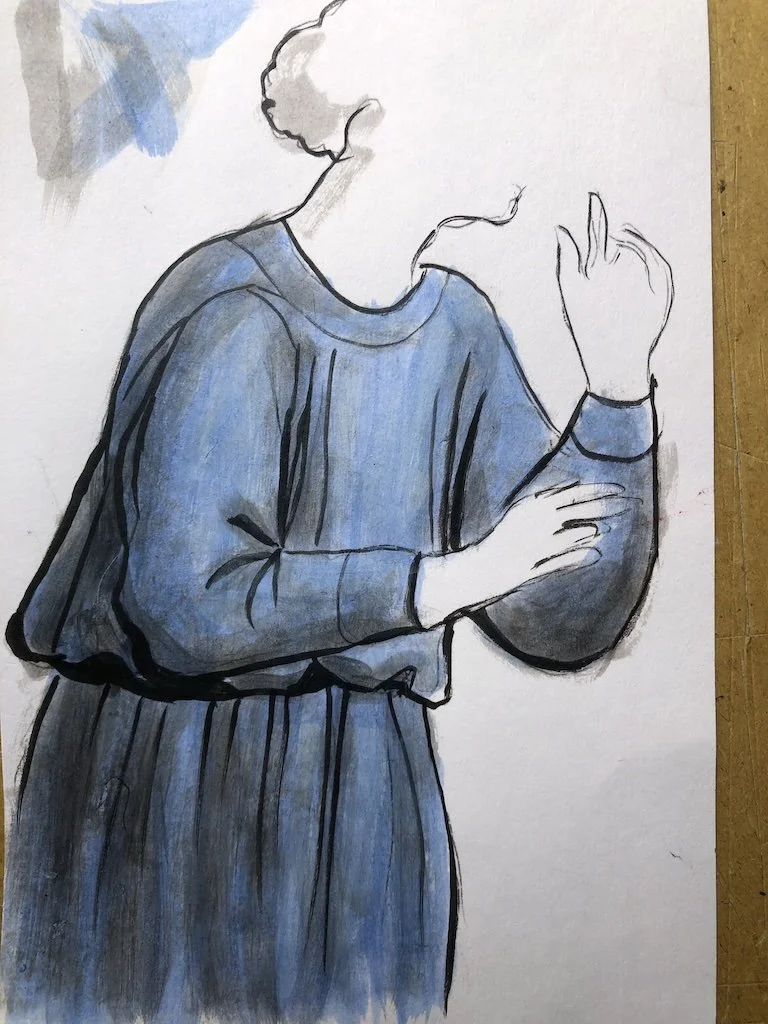
Colour glazes
Step 2
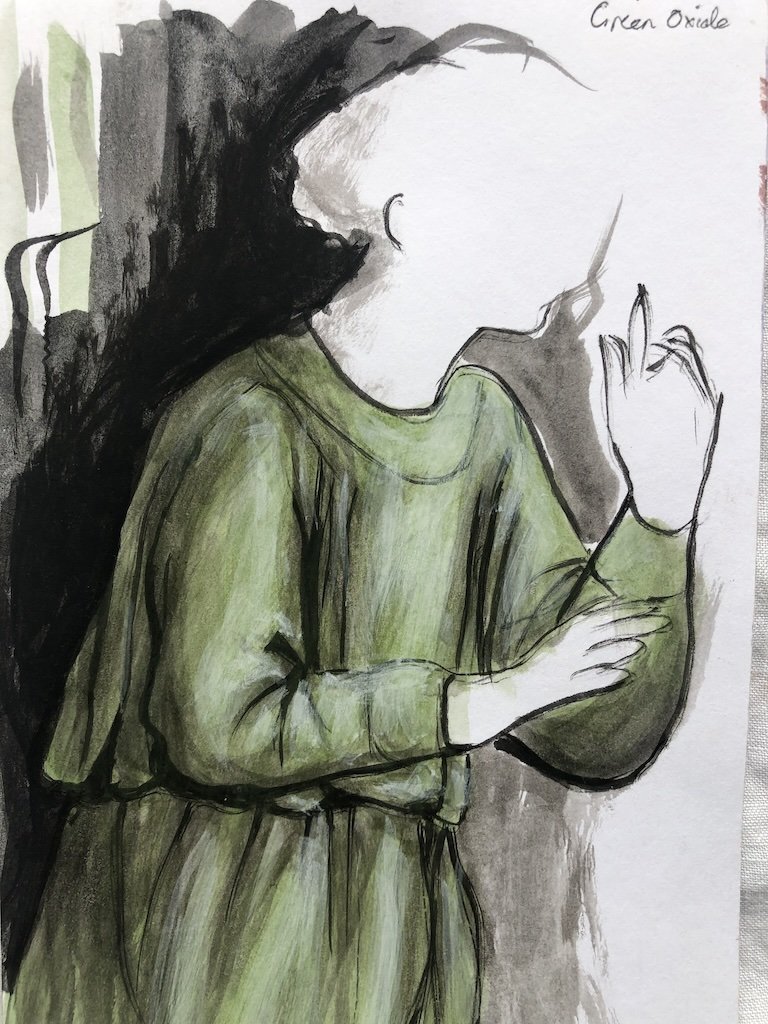
Choose a pigment colour for the drapery core colour eg Cadmium red in this example (or Ultramarine blue, yellow ochre,Cadmium yellow, green oxide etc.
Apply the glaze layers with a large flat or round brush, evenly covering the drapery area.
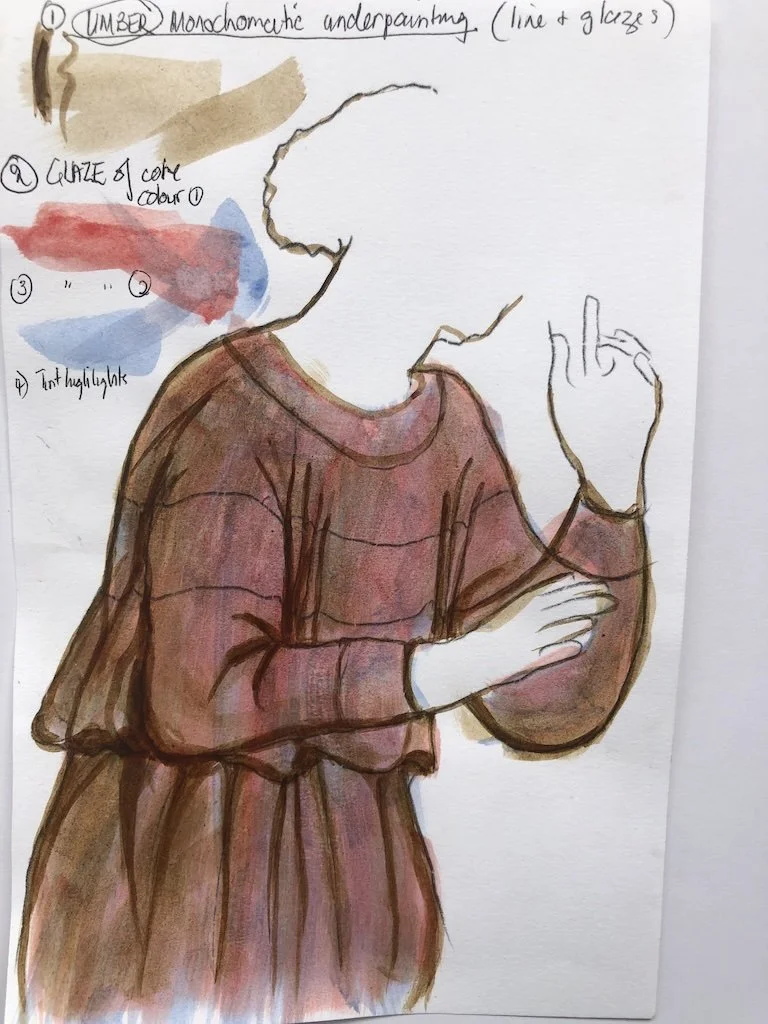
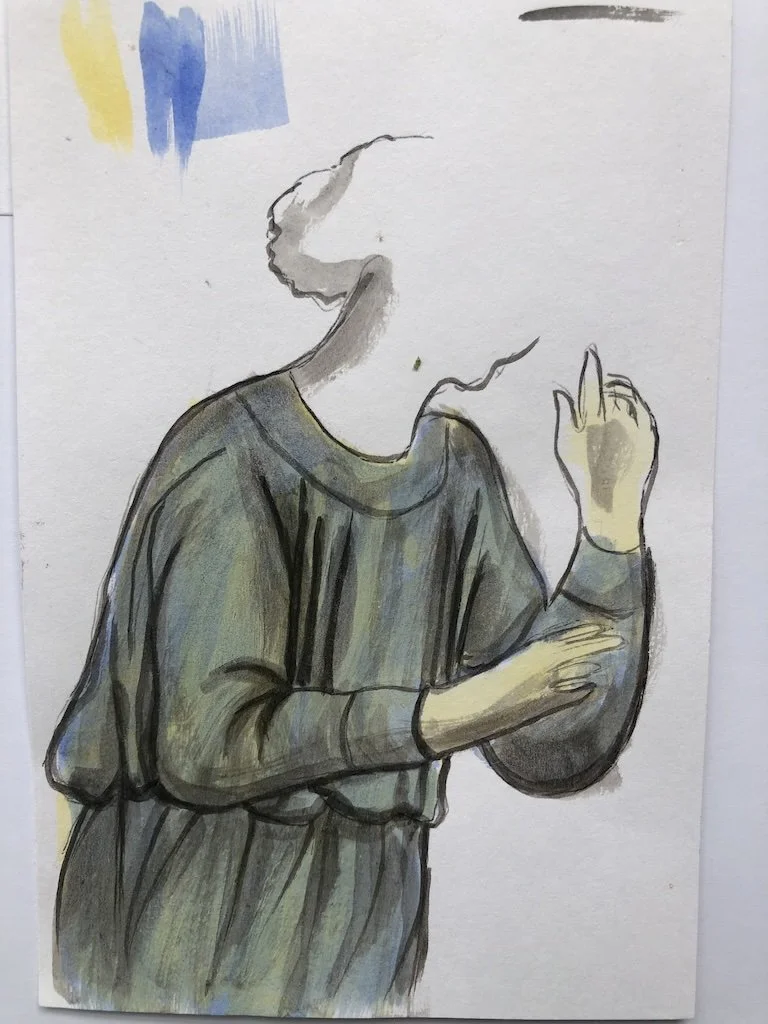
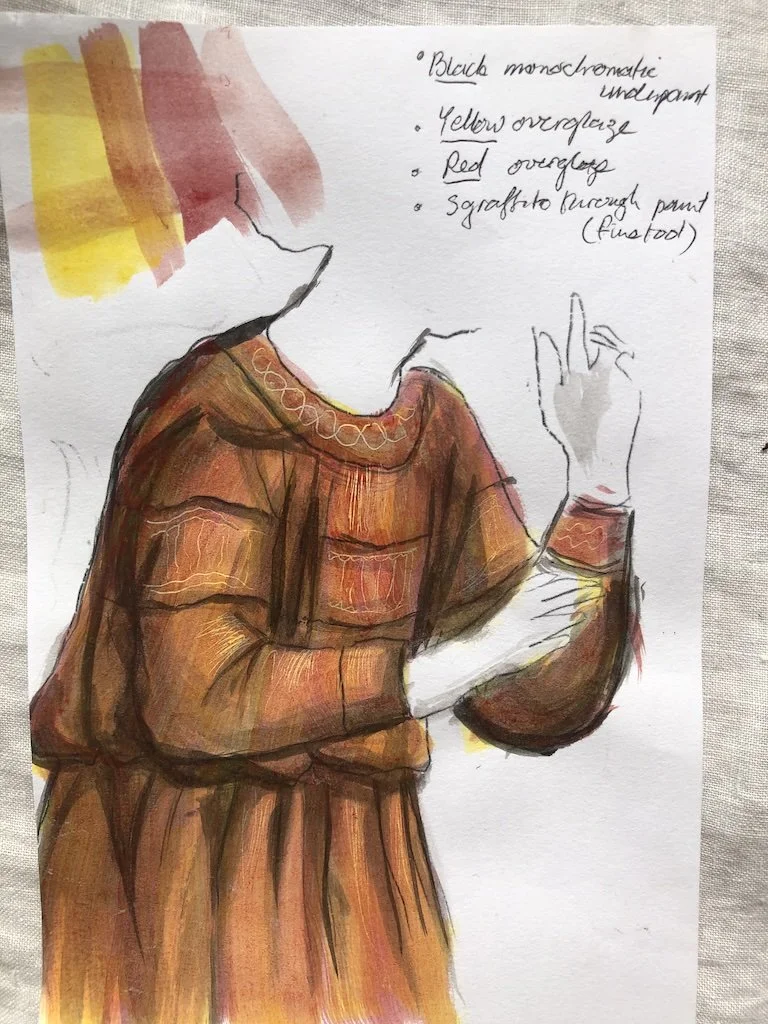
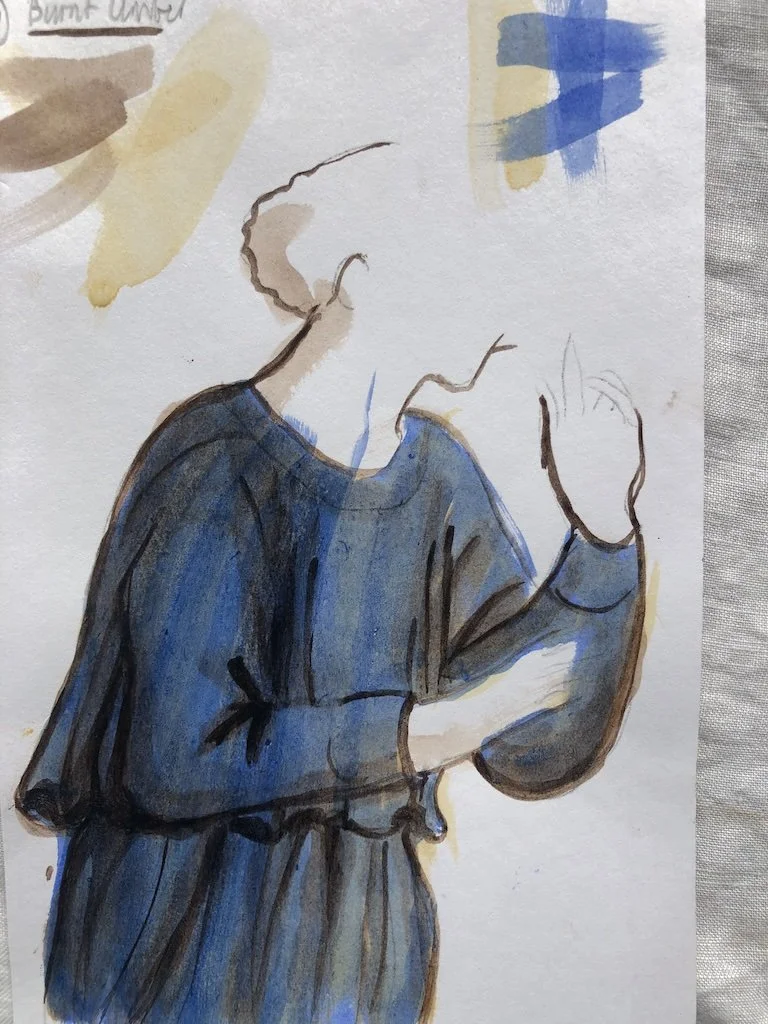
Visual colour mixing
Over-glaze with a different colour value, when the initial glaze colour is dry.
Suggest using primary colours, so as to produce a lovely nuanced secondary colour
For example: blue over red for lilac-purple values , blue over yellow = green values ); yellow over red = orange values;
NOTE: (3rd image): Scraffito or ‘scratching through’ patterns can be created using a toothpick etc. Sgraffito the top paint layer to reveal the undercolour layer
Glaze highlights - white
Step 3
Make a Titanium white glaze
Discern the highlight areas of the drapery. These will be on the areas of the tonal underpainting that were originally left as white ground.
Layer or scumble the white transparent glaze in the direction of the bodily form; and to the upper areas of the form, where the light is discerned to illuminate the form.
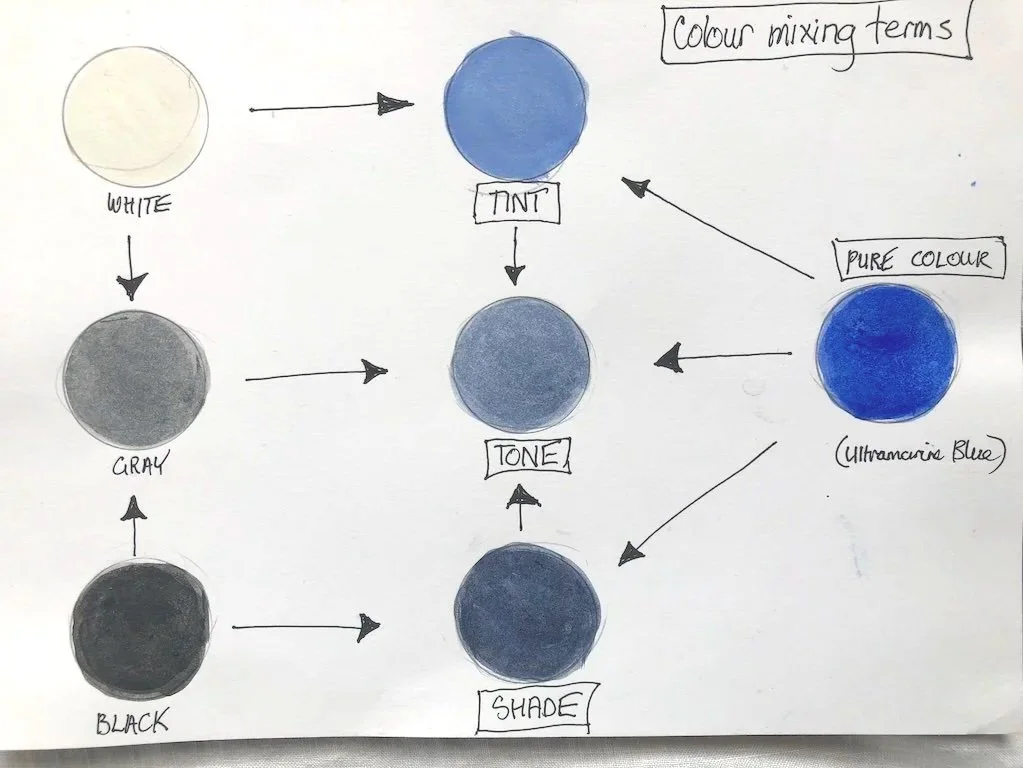
NOTE: In this method of painting, the modelling of the form is created through using one colour value in association with its tint (adding white), tone (white & black), and shade (black/dark value)